Introduction
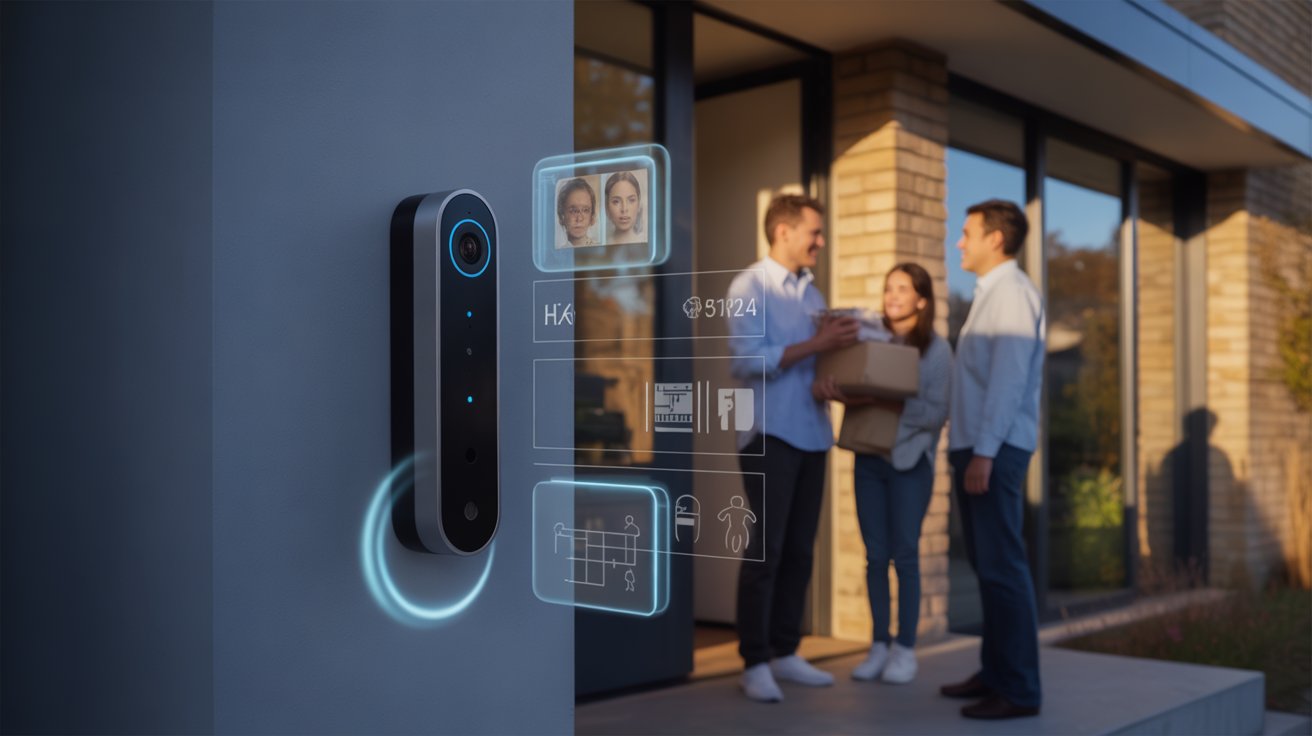
Artificial intelligence (AI) has rapidly become a defining technology across industries, and home security is no exception. One of the most visible and widely adopted expressions of AI in the consumer space is the AI-enhanced doorbell camera. These devices blend hardware (camera, microphone, speaker, motion sensors) with cloud-based and edge-based software (computer vision, machine learning, natural language processing) to provide homeowners with smarter, more reliable, and more convenient ways to monitor and interact with visitors. This article explores how AI improves doorbell cameras, the benefits and challenges, key features to look for, privacy and legal considerations, and tips for optimizing your device — all with an SEO focus to help readers and site owners rank for relevant search queries.
What Are AI on Doorbell Cameras ?
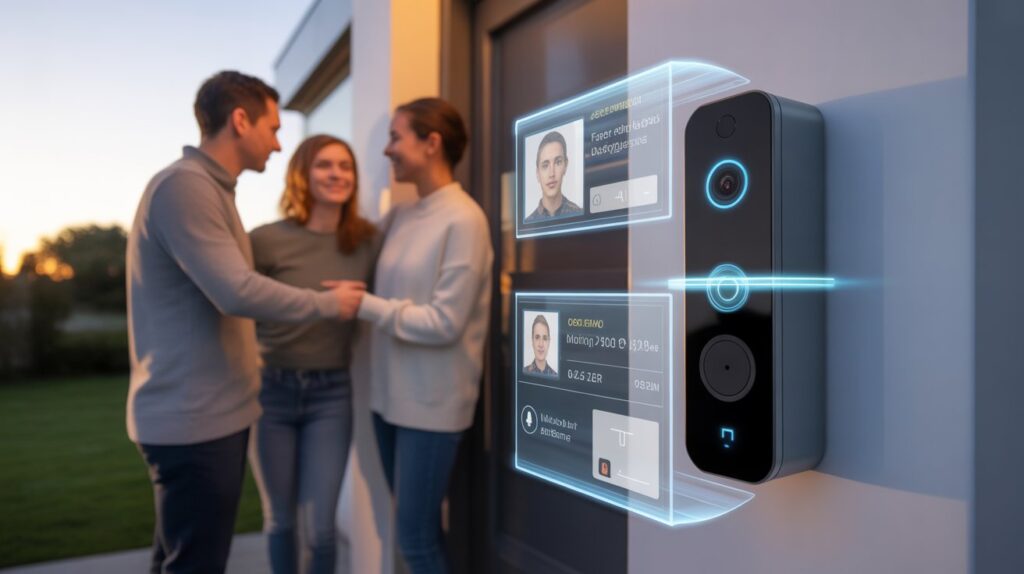
AI doorbell cameras are smart doorbells that incorporate artificial intelligence algorithms to analyze visual and audio data in real time. Rather than simply recording footage when motion is detected, these devices use AI to:
- Distinguish humans from animals and vehicles
- Identify familiar faces or recurring visitors
- Filter out false alarms caused by shadows, insects, or passing cars
- Classify packages left at the door
- Provide actionable alerts (e.g., “Person at front door,” “Package delivered”)
- Enable intelligent automation, such as sending recorded clips to cloud storage or triggering smart home scenes
AI processing may occur on the device (edge computing) for faster responses and better privacy, or in the cloud for more powerful analysis and continuous learning.
Why AI Matters for Doorbell Cameras
- Reduced false alarms: Traditional motion-triggered cameras often flood users with notifications caused by irrelevant motion. AI reduces this noise by recognizing the difference between a person and other movement sources.
- Improved security: Face recognition and behavior analysis can help identify suspicious activity faster and reduce response times.
- Convenience and automation: AI allows hands-free interactions and automations—e.g., automatically unlocking a door for recognized family members or turning on lights when a visitor approaches.
- Smarter package detection: With delivery volumes rising, AI can detect packages and send targeted alerts to reduce theft risk.
- Enhanced search and playback: AI-generated tags and metadata make it easier to find clips (e.g., “show me all person detections from last Friday between 3–6 PM”).
Key AI Features in Modern Doorbell Cameras
- Person Detection: The core AI feature; separates people from other objects to lower unnecessary alerts.
- Facial Recognition: Identifies known individuals (family, frequent visitors) and assigns labels to unknown faces. This feature varies by manufacturer in capability and privacy handling.
- Package Detection: Uses object recognition models to spot parcels and determine if they remain unattended.
- Motion Zoning and Activity Zones: Allows users to define areas where motion should be monitored. AI refines these zones to reduce alerts from irrelevant regions like busy streets.
- Sound and Audio Analysis: AI can recognize audio patterns such as door knocks, glass breaking, or a baby crying, and send specialized alerts.
- Behavioral and Anomaly Detection: Some advanced systems analyze patterns over time to flag unusual behavior (e.g., loitering or repeated ring attempts).
- On-device vs Cloud Processing:
- On-device AI provides lower latency and better privacy since raw videos need not leave the device.
- Cloud AI enables heavier computations, continuous updates, and cross-device learning at the expense of potential latency and greater data transmission.
Benefits for Homeowners
- More relevant alerts: Receive fewer, but more meaningful, notifications—e.g., “Visitor detected” instead of “Motion detected.”
- Time savings: Quickly find relevant events through AI-based search and summaries.
- Crime prevention: Visible AI-capable cameras can deter opportunistic criminals; face and behavior recognition can aid investigations.
- Delivery protection: Package detection and timed reminders reduce package theft risk and improve recovery odds.
- Accessibility and convenience: Real-time AI assistance can relay messages, screen visitors, or trigger automations for users with limited mobility.
Incorporate geographic modifiers (e.g., “AI doorbell camera USA”) and buyer intent phrases (e.g., “buy AI doorbell camera,” “AI doorbell camera review”) to capture a variety of searcher intents.
Choosing the Right AI Doorbell Camera
When evaluating models, consider these factors:
- AI capabilities and accuracy: How well does the device detect people, faces, and packages? Look for systems with strong reviews on false-positive reduction.
- On-device vs cloud processing: If privacy is paramount, prioritize devices with robust on-device AI.
- Subscription requirements: Many vendors require paid subscriptions for advanced AI features, cloud storage, or facial recognition labeling.
- Video quality and field of view: Higher resolution and wide-angle lenses improve AI performance and situational awareness.
- Night vision and low-light performance: AI should perform well during nighttime events; infrared vs color night vision can matter.
- Integration with smart home ecosystems: Compatibility with platforms like Amazon Alexa, Google Home, Apple HomeKit, or other smart security systems.
- Local storage options: If you prefer not to rely on cloud storage, check whether local SD card or NVR options exist.
- Data security and encryption: End-to-end encryption, secure firmware updates, and strong authentication practices are essential.
- Price and total cost of ownership: Include hardware cost, subscription fees, and potential installation or replacement costs.
Privacy, Legal, and Ethical Considerations
AI doorbell cameras raise important privacy and legal questions:
- Facial recognition legality: Laws vary by region. Some areas restrict face recognition usage or require explicit consent. Always check local regulations before enabling face recognition.
- Data retention and user consent: Understand how long footage is stored and who can access it. Vendors often retain footage in cloud servers; read privacy policies carefully.
- Neighbor privacy: Pointing cameras at public spaces or neighboring properties can raise legal and ethical concerns. Crop fields of view when possible and inform neighbors if you plan to install cameras facing shared spaces.
- Security risks: Cameras exposed to the internet can be targeted by hackers. Use strong, unique passwords, two-factor authentication, and keep firmware updated.
- Bias and accuracy: AI models can exhibit biases (e.g., lower accuracy on certain skin tones) if training data is not diverse. Choose reputable brands that address fairness and accuracy.
- Transparency and control: Look for devices that provide clear controls for when and how AI features run, and options to delete stored recordings.
Common Use Cases
- Visitor screening: Homeowners can see and talk to visitors, permit access for known guests, or decline unknown ones.
- Package protection: Detecting packages and sending immediate alerts to reduce porch piracy.
- Vacation monitoring: Enhanced motion analytics help homeowners get meaningful alerts while away.
- Elder or child monitoring: AI can monitor inbound visitors or delivery interactions for vulnerable family members.
- Small business storefronts: Doorbell cameras with AI can manage customer greetings, deliveries, and deter theft for small businesses.
Challenges and Limitations
- False positives and negatives: No AI is perfect; occasional misclassifications occur.
- Subscription dependence: Many AI features are locked behind recurring fees.
- Connectivity requirements: Cloud AI needs reliable internet; limited bandwidth impacts performance.
- Privacy trade-offs: Cloud-based convenience can mean handing over more personal data.
- Model drift and updates: AI models may need updates to maintain accuracy. Manufacturers vary in how frequently they update models and address biases.
Best Practices for Installation and Use
- Position the camera at an optimal height (typically 4–5 feet) for face visibility.
- Align field of view to capture visitors but avoid unnecessary recording of public sidewalks or neighbors’ windows.
- Use activity zones to reduce irrelevant alerts from busy streets.
- Enable two-factor authentication and regularly update firmware.
- Review and configure privacy settings: review retention periods, sharing options, and whether facial recognition is enabled.
- Test night vision and AI detection in different lighting and weather conditions and adjust angle or lighting to improve performance.
- Regularly check for software updates to get improved AI models and security patches.
Future Trends
- Improved on-device AI: As edge processors improve, more powerful models will run locally, offering faster responses and fewer privacy concerns.
- Multimodal AI: Combining audio, video, and contextual data (e.g., calendar, location) to create richer, more accurate alerts.
- Integration with city infrastructure: Smart city initiatives could enable secure, privacy-preserving data sharing for public safety (subject to regulation and oversight).
- Seamless identity verification: More reliable, privacy-respecting methods for verifying trusted visitors without storing face data long-term.
- AI-driven proactive security: Predictive models that anticipate suspicious patterns and suggest preventative measures.
Conclusion
AI-enabled doorbell cameras represent a major leap forward from basic motion-activated recording devices. By applying computer vision and machine learning, these devices reduce false alerts, add meaningful context to events, and provide automation that improves both security and convenience. However, homeowners must weigh the benefits against privacy, legal, and ethical concerns and choose products that align with their values and regional regulations.
For SEO-driven content creators, focusing on keyword-rich but user-friendly articles that answer practical questions—such as how AI improves doorbell cameras, privacy implications, and buying guidance—can attract informed readers ready to evaluate and purchase these devices. With careful installation, smart settings, and awareness of legal considerations, AI doorbell cameras can be a reliable and intelligent addition to modern home security.