- → At VivaTech 2026 (June 17-20), France confirmed a wave of record investments in AI data centers.
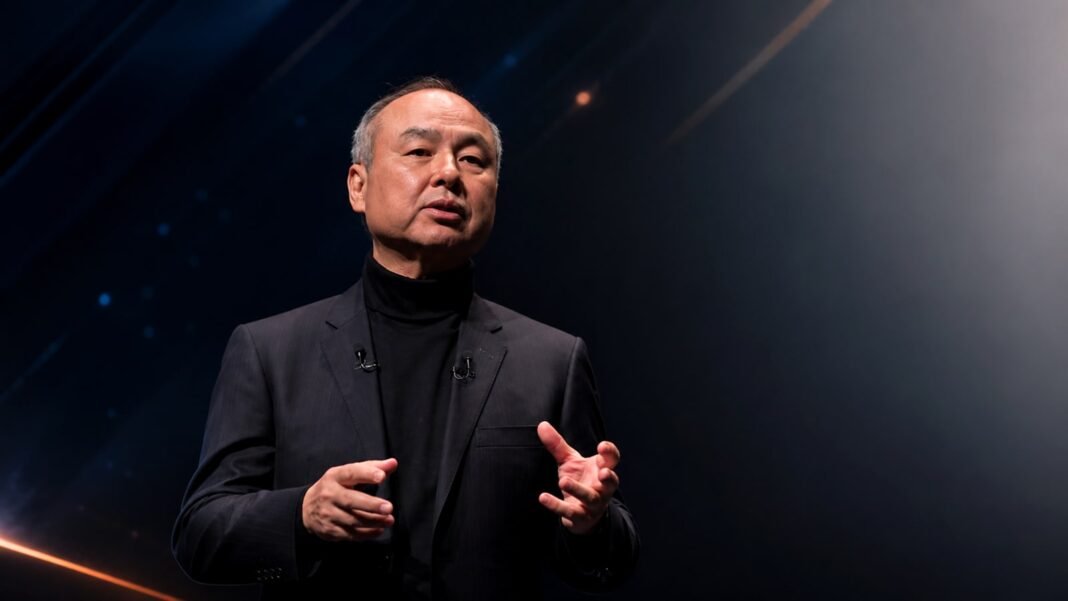
- → SoftBank invests up to €75 billion in three sites in Hauts-de-France (Dunkerque, Bouchain, Bosquel).
- → Nebius transforms the former Bridgestone site in Béthune into an €8 billion, 240 MW computing center.
- → Bull and Foxconn will manufacture components of the future Nvidia platform in France, an unprecedented industrial anchor.
A year ago, France was talking about ambition. In June 2026, it counts billions. Between the Choose France summit and the VivaTech show, announcements followed one after another to make France the heart of European AI computing. Behind the superlatives, a concrete reality: land, megawatts, and factories.
The challenge is no longer just to have the best startups, but to have the infrastructure that makes them run. And on this ground, France scores points. Overview, far from the noise of the fleas.
€75 billion · SoftBank, Hauts-de-France
€8 billion · Nebius in Béthune
240 MW · the Béthune site
June 17-20 · VivaTech 2026
01, The SoftBank mega-gamble
Up to 75 billion in Hauts-de-France
This is the most spectacular announcement. The Japanese SoftBank is investing up to 75 billion euros (including 45 billion euros firm by 2031) in three large data centers in Hauts-de-France: the port of Dunkirk, the former EDF power plant in Bouchain, and the Bosquel site.
The region, long marked by deindustrialization, is thus becoming one of the anchor points for AI computing in Europe. A strong symbol: these are former energy and industrial sites which are being transformed into digital infrastructures.
02, The wave
Nebius, Sestertius, and others
SoftBank is not alone. The Nebius company is converting the former Bridgestone site in Béthune into a major AI computing center: 8 billion euros investment, 240 megawatts of capacity. Other players, such as the French company Sesterce, are also deploying computing farms in Valencia and elsewhere.
SoftBank, Hauts-de-France up to €75 billion, three sites (Dunkerque, Bouchain, Bosquel), €45 billion firm by 2031.
Nebius, Béthune €8 billion and 240 MW on the former Bridgestone site, emblematic industrial reconversion.
IA Campus, Essonne the 1.4 GW gigafactory project led by Mistral, MGX, Bpifrance and Nvidia, extended to 3 GW nationally.
03, Industrial anchoring
Bull and Foxconn will manufacture the components in France
Beyond the data centers, it is the production chain that is being established. Bull (Eviden group) and Taiwanese Foxconn will jointly develop components of the future Nvidia Vera Rubin platform, with an initial investment of more than 120 million euros. The components will be tested in the Czech Republic, then assembled and validated at the Bull factory in Angers.
This is a major novelty: France is no longer content with hosting computing, it is starting to manufacture some of the equipment that makes it possible. A step towards sovereignty that is not just a slogan.
04, Computing for all
Choose France and access to computing for SMEs
All this is part of Choose France 2026, which announced around 93 billion euros of foreign investment, including 45 farms and 71 projects, re-amplified at VivaTech. But the money doesn’t just go to the giants. The AI Factory France (AI2F) program, supported by GENCI and Nvidia, opens access to computing power to startups and SMEs, which have until now been largely excluded due to lack of resources.
This is perhaps the most structuring effect: democratizing access to computing, so that the French ecosystem is not reduced to a handful of unicorns.
05, The reverse
Energy and sobriety: the other side of the coin
This race for data centers has a cost: electricity and land. A 240 MW site is the consumption of an average city. Aware of the risk, Île-de-France has voted for a strategy to supervise data centers, focusing on sobriety and heat recovery. The French advantage remains its low-carbon electricity, largely nuclear, which makes these infrastructures more acceptable than elsewhere.
The basic question remains: France wants to be the AI hub of Europe. She now provides herself with the material means. The bet will be played out over the decade.
To go further: Mistral: 1.4 GW campus in Paris · Nvidia GTC 2026: the H300 unveiled · The map of AI data centers in Europe · French AI startups
Frequently asked questions
- How much investment is France attracting in AI data centers?
- Several tens of billions of euros announced in mid-2026: SoftBank is investing up to €75 billion in Hauts-de-France, Nebius €8 billion in Béthune, and the Choose France 2026 program totals around €93 billion in foreign investments, including 45 farms.
- Where is SoftBank building its data centers in France?
- In Hauts-de-France, on three sites: the port of Dunkirk, the former EDF Bouchain power station and the Bosquel site. Investment can reach €75 billion, including €45 billion firm by 2031.
- What is the Nebius de Béthune project?
- Nebius is transforming the former Bridgestone factory site in Béthune into a major AI computing center: 8 billion euros of investment and 240 megawatts of capacity. It is an emblematic industrial reconversion.
- Does France manufacture AI hardware?
- Yes, it’s new for 2026. Bull (Eviden) and Foxconn will develop components of the future Nvidia Vera Rubin platform in France, assembled and validated at the Bull factory in Angers, with an initial investment of more than 120 million euros.
- Do SMEs have access to this computing power?
- More and more. The AI Factory France (AI2F) program, supported by GENCI and Nvidia, opens access to computing to startups and SMEs, which have until now been largely excluded due to lack of financial resources.
- Do these data centers pose an energy problem?
- Yes, that’s the downside. A 240 MW site consumes as much as an average city. Île-de-France has voted for a framework focusing on sobriety and heat recovery, and France is banking on its low-carbon electricity, largely nuclear, to limit the impact.
- Why does France want to be the AI hub of Europe?
- Because computing power has become the crux of AI. Without data centers, no models or sovereignty. By attracting these investments, France seeks to keep its startups, its data and its value on its territory rather than depending on American giants.