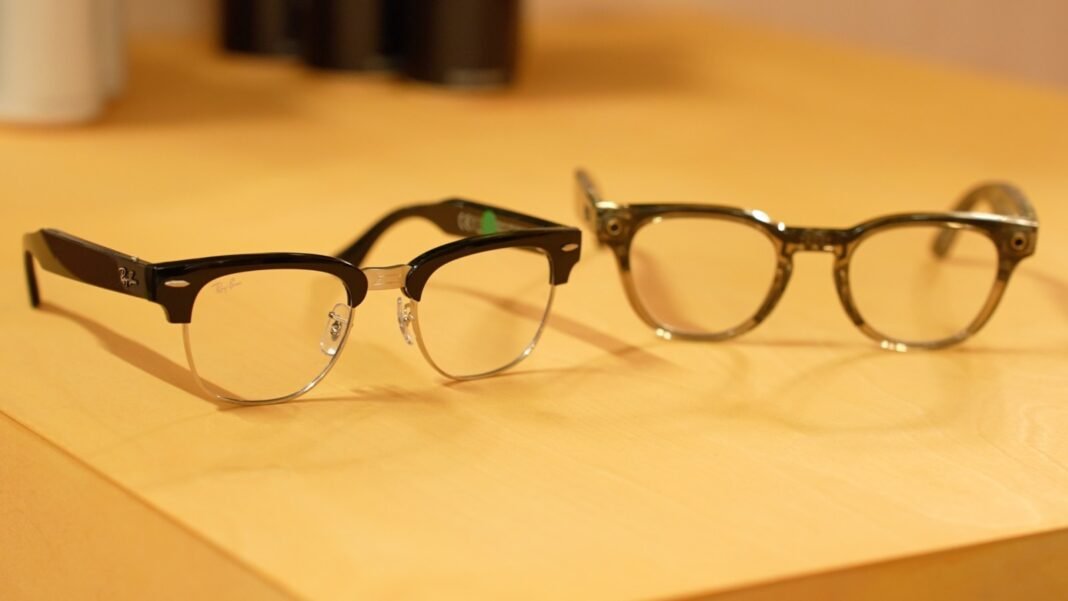
Apple still does not sell connected glasses, but its strategy is becoming clearer. According to Bloomberg, the brand is not banking on hardware to beat Meta, Google and Samsung…but on Siri. Apple would hope that developers will all support Siri AI by the arrival of the glasses, which will be much more versatile than competing glasses from their launch.
Meta has been selling connected glasses for several years, Samsung unveiled its Galaxy Glasses this summer and more and more brands are getting involved (HTC, Snap, Xreal, Even Realities, etc.). Apple, for its part, has still not launched into this sector. This delay does not seem to worry Cupertino: according to the Power On newsletter of November 15, 2026, Apple believes that the battle will be fought over the software, and more precisely over App Intents, the technology which allows apps to expose their functions to Siri.
The first beta of iOS 27.3, released in November, unlocks a promise made by Apple in 2024: Siri can now precisely control apps and their functions. For now, the function only works with Apple apps. Third-party developers will only have access to it in 2027. But Apple’s objective goes well beyond the iPhone: in its ideal world, it will be possible to order an Uber, launch a TV channel or trigger the recording of a sporting activity with its glasses, by speaking.
What will Apple’s glasses be able to do?
Apple’s real plan would be to create a Siri capable of controlling apps on an iPhone left in your pocket. The glasses wouldn’t run any third-party apps, but could command the iPhone to do things. Developers will therefore not have to design an app for the glasses, they will just need to make certain functions of their iOS app accessible to Siri.
Apple would consider this to be an advantage over the competition: Meta does not have a proprietary OS and depends on its AI agent Muse which relies on connectors plugged directly into services, without direct access to the phone. Only Google has this level of control with Gemini Intelligence, but developers are slower to adopt new features on Android.
Apple nevertheless forgets one aspect: Claude, GPT or Gemini can control apps just by analyzing their interfaces. Apple’s approach of asking developers for integrations is technically more complicated.
Apple imagines uses such as reserving a restaurant on OpenTable, ordering an Uber or Lyft ride, a coffee at Starbucks or movie tickets, or even shopping on Amazon. Each developer will need to integrate the necessary Siri functions into their iOS app. Other functions will be on the program such as:
- Visual Intelligence, to identify a building or find a recipe from the contents of the fridge. The glasses should have a camera for AI recognition, but not for filming people.
- Navigation with Maps, calls, messages and iPhone notifications.
- Translation of conversations and signs.
- Calendar, reminders, music and connected home.
Note that Apple’s first glasses should not have a screen, Apple would see them as “AirPods for the face”. The prototypes would run on a lighter version of visionOS 28 with a chip derived from old Apple Watch chips.
When will Apple glasses be released?
According to Bloomberg, Apple is aiming for a presentation at WWDC in June 2027, for deliveries before the end of the year. This date aims to convince developers to adapt their apps between now and the start of the school year, but comes with the risk of creating a gap of several months between the announcement and the release.
According to Gurman, the hardware is largely finalized, but the software is behind schedule. Apple has already experienced this problem with its home products, such as HomeView, and the project could be delayed. Nothing says that Apple glasses will be available in 2027. Another problem: in Europe, where Siri AI is currently blocked, there is no chance of seeing the glasses at launch today. But, by then, Siri AI could arrive in the EU.
All the tech news at a glance
Add Numerama to your home screen and stay connected to the future!

An exclusive editorial, a guide, a reading summary and the editorial agenda: this is what you will find every Thursday in AlwaysPlus, the tech newsletter written by Julien Cadot. Register for free here!