From South Korean banking data to indirect customer Microsoft environments, the FBI reports several compromises associated with ARTEX. AWS, for its part, describes agents used to steal access to AI models or attempt to bypass identity checks, with different results depending on the operations.
Censys identifies 1,465 accessible ARTEX consoles
As of November 4, Censys had spotted 1,465 hosts leaving their ARTEX console accessible. The FBI estimates that the actual deployment is likely much broader, with installations protected by firewalls or hosted on private networks not included in this count. The withdrawal of the GitHub repository by the initial developer, in October after the disclosure of the compromises, did not make the tool disappear: derived variations, localized versions and a commercial offer remain.
The FBI cites in particular South Korean financial establishments attacked in August, with stolen personal data concerning around 67,000 people. Another reported case: an ARTEX operation carried out in September against ConnectWise Cloud Backup customers. This supply chain attack resulted, according to the federal agency, in the compromise of more than 2,250 downstream Microsoft tenants.
The FBI recommends restricting sensitive access
In its separate alert issued Friday, the FBI said some intrusions achieved privileged access in less than three hours after initial targeting. ARTEX accelerates, according to the agency, the sequence of offensive techniques. For Amazon Threat Intelligence, the processes used are not new; the contribution of agents lies in the speed and persistence of operations.
CJ Moses attributes the successes observed to basic shortcomings: default or hard-written identifiers, abandoned keys in code or public elements. It also mentions interfaces and inference endpoints lacking authentication, as well as unpatched software. The manager considers mastering these fundamentals to be the most effective protection.
The FBI is asking all organizations to implement the recommendations in its Flash Alert, particularly those using Internet-exposed applications, self-service portals, cloud environments, or systems owned by partners and vendors. It advises limiting access to sensitive services to networks considered reliable, to private connections or to specific administration channels. Enterprise applications must also be subject to policies and permissions based on the zero-trust model.
The evening letterFree · 7 p.m.
Do you want the best AI tools before the rest?
We test and decipher the new AI tools every evening, in 5 minutes. Free.
Included upon registration: our selection of the best AI guides & comparisons.
Choose your pace
Free · No spam · Unsubscribe in 1 click
AWS describes key theft that feeds other agents
The FBI and Amazon Threat Intelligence report the offensive use of ARTEX, an open source framework for penetration testing, against banks, government, energy and healthcare organizations, among other critical sectors around the world. Amazon’s MadPot sensors spotted two campaigns between October 3 and November 5. One was massively looking for identifiers to consume AI models without paying.
Agents stole API keys, then injected into ARTEX’s Model Gateway to put other agents to work looking for additional access. CJ Moses, director of information security at AWS, detailed their operations on Friday: validating identities with provider identity and token services, inventorying storage and reviewing permissions. Targets, he said, included model managed services, secrets, parameter stores, and application identities; cloud credentials were also used to access the models.
Among the LLM gateways and proxy platforms targeted were One API, New API, Veloera, Sub2API and LiteLLM. The campaign also targeted AI application creation tools: Dify, FastGPT, Langflow, RAGFlow, Open WebUI, LobeChat and Ollama.
Server control rejects synthetic faces
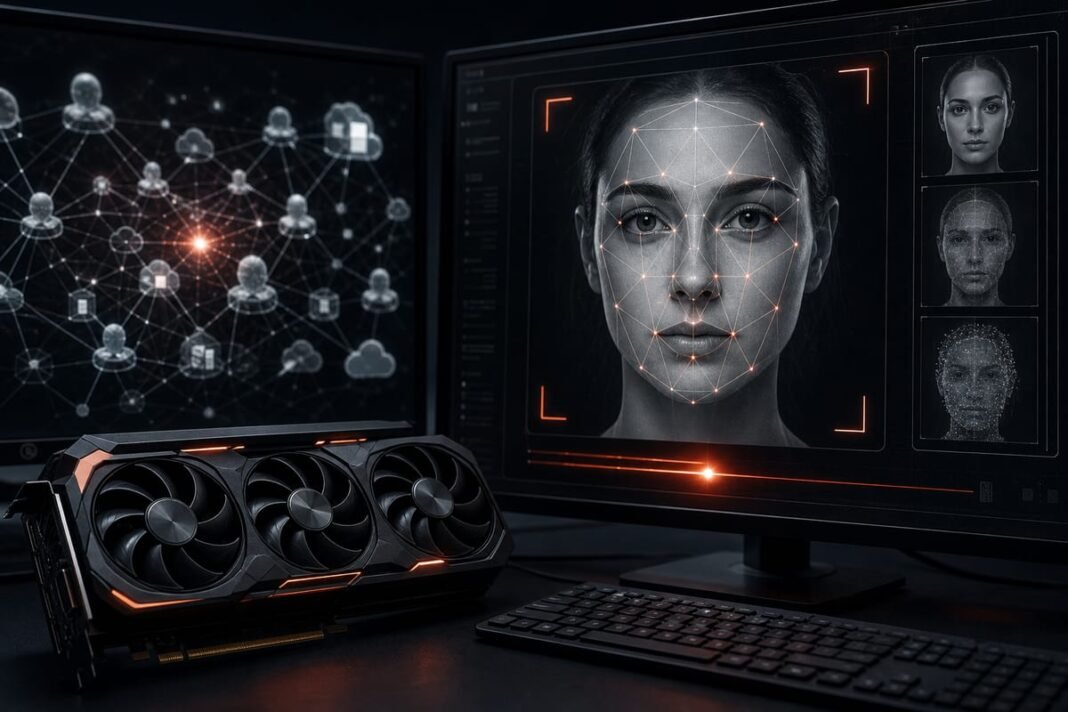
The other campaign observed by Amazon aimed to steal cryptocurrencies from two exchange platforms. The attackers used ARTEX to fabricate real-time deepfake videos against their KYC checks, including live selfies, and fake ID photos for document checks. According to CJ Moses, several sessions were running simultaneously, with agents dividing up finding ways to withdraw, cleaning account balances, producing video, and circumventing checks.
Agents had reverse-engineered a vendor’s live detection protocol, down to facial detection events, face tracking, and coordinates guiding the user’s requested movements. They completed the gesture sequence with a face placed less than 7 pixels from the target. Despite this precision, the server refused the deepfake on each attempt of this sequence.
In a separate session, a video channel based on an open source facial animation model ran on a single consumer GPU. It reached 11.5 frames per second, a rate Moses judged to be close to expectations for live video monitoring. For documents, agents made camera metadata consistent with the actual dimensions of the JPEG and preserved the original compression tables, which are usually overwritten when an edited image is saved again.