Starmind: FCC gives green light to one million SpaceX AI satellites – ZDNET
Published on ZDNET – Tech & Telecoms News
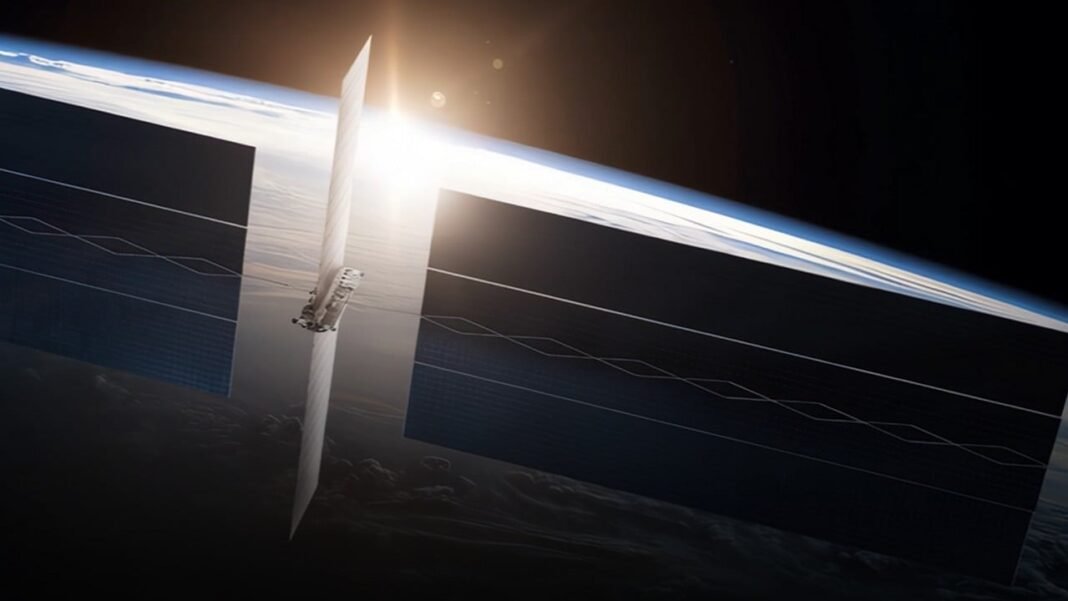
This is a giant step towards fully autonomous space infrastructure. The Federal Communications Commission (FCC), the telecommunications regulatory authority in the United States, has officially granted SpaceX authorization to deploy a pharaonic constellation of one million next-generation satellites. Baptized “Starmind”this project aims to propel artificial intelligence directly into low orbit, redefining global standards for connectivity and computing.
From broadband to the orbital supercomputer
Until now, SpaceX’s Starlink subsidiary had focused on a specific objective: providing high-speed, low-latency Internet access, particularly in white zones and remote regions of the planet. With Starmind, Elon Musk and his teams are radically changing scale and paradigm.
It is no longer just a matter of relaying data, but of processing it in real time from space. Each satellite in the constellation will be equipped with powerful artificial intelligence chips, designed to operate in the extreme conditions of the vacuum of space.
According to documents submitted to the FCC, Starmind will function as a giant neural network in orbit. Satellites will be able to communicate with each other by laser, analyze massive flows of data without having to systematically send them back to Earth, and make autonomous decisions.
The motivations behind the Starmind project
Why send a million AI-powered servers into space? The reasons are multiple and strategic:
- Unload land infrastructure: Data centers on Earth consume astronomical amounts of electricity and water to cool servers. By outsourcing some of the heavy AI calculations to space, SpaceX hopes to harness solar energy in orbit in an almost unlimited way.
- Almost zero latency for critical applications: For autonomous vehicles, defense, telemedicine or industry 4.0, every millisecond counts. Processing information as close as possible to the end user using orbital AI constellations will eliminate the delays inherent in terrestrial transmissions.
- Resilience and security: A decentralized network of a million smart nodes is, by definition, impossible to cripple by a ground-based cyberattack or natural disaster.
A green light under conditions
Obtaining this license from the FCC was not a simple formality. The Starmind project has raised numerous concerns within the scientific community and other aerospace players.
Faced with criticism regarding the proliferation of space debris and light pollution – criticisms already leveled against Starlink – the FCC has attached particularly strict regulations to its agreement. SpaceX will have to guarantee that each satellite has automatic deorbit systems at the end of its life to avoid lasting congestion in low Earth orbit. In addition, protocols will need to be put in place to avoid any collision with astronomical telescopes and other space missions.
Towards a new technological era
With the green light granted to Starmind, SpaceX confirms its desire to dominate not only the launch and telecommunications market, but also that of cutting-edge artificial intelligence.
If the deployment schedule promises to be titanic and will require hundreds of Starship rocket launches, the realization of this project could well mark the beginning of a new era: one where the Internet and AI no longer rest only on the floors of terrestrial data centers, but watch over us from the stars.
Here is a fluid, modern and impactful rewrite of your content, optimized for the web (with clean HTML tags):
    SpaceX : Feu vert pour les data centers spatiaux et vaste donation d'actions


        SpaceX obtient le feu vert pour ses data centers spatiaux et annonce une donation d'actions historique

        Dix mois après le dépôt de sa demande, SpaceX a reçu l'autorisation de la part des autorités américaines de construire ses futurs centres de données en orbite. L'entreprise d'Elon Musk en a profité pour dévoiler un vaste plan de donation d'actions au profit de la jeunesse américaine.

        C'est une première mondiale : la Commission fédérale des communications (FCC) a officiellement approuvé le déploiement par SpaceX de près d'un million de satellites dédiés à l'hébergement de centres de données dans l'espace, selon une information de CNBC. Cette validation intervient à peine dix mois après le dépôt initial du dossier en janvier.

        Brendan Carr, président de la FCC, a officialisé la nouvelle sur le réseau social X, soulignant que la constellation « Starmind » de SpaceX – à l'instar de celles de ses rivaux – permettra aux États-Unis de conforter leur avance dans le domaine de l'intelligence artificielle grâce à l'énergie solaire spatiale. Une initiative saluée par Elon Musk, qui a répondu : « Vraiment très reconnaissant. Ce sera un atout considérable pour l’Amérique et pour le monde. »

        Ce feu vert est toutefois assorti de conditions strictes : le premier satellite devra être opérationnel d'ici 2033 et la constellation complète devra être déployée d'ici 2040. Le projet impose également des protocoles rigoureux en matière de sécurisation des communications, de mises à jour régulières et d'atténuation des débris orbitaux. Rappelons que plusieurs acteurs, dont Amazon, Viasat et l'American Astronomical Society, s'étaient vivement opposés au projet.

        Une puissance de calcul alimentée par le Soleil en continu

        D'après les documents transmis à la FCC, ces satellites évolueront sur des orbites comprises entre 500 et 2 000 kilomètres d'altitude. L'objectif stratégique est de produire de l'électricité dans des zones où le rayonnement solaire est quasi ininterrompu, afin d'alimenter des supercalculateurs dédiés à l'IA.

        Face au scepticisme d'Amazon quant à la faisabilité technique du projet, Brendan Carr n'avait pas hésité à tacler ses dirigeants en mars dernier, les invitant à se concentrer sur leur propre constellation – alors en retard sur son calendrier – plutôt que de critiquer les ambitions de SpaceX.

        Des actions SpaceX offertes aux enfants américains

        Parallèlement à cette avancée technologique, SpaceX et Elon Musk ont annoncé une initiative philanthropique d'envergure. Celle-ci cible les « Trump Accounts », des comptes d'investissement défiscalisés destinés aux enfants et instaurés par la réforme fiscale de 2025 voulue par Donald Trump (les impôts n'étant dus qu'au moment du retrait des fonds). Ouverts à tous les mineurs américains, ces comptes bénéficient d'une dotation initiale de l'État de 1 000 dollars pour les enfants nés entre 2025 et 2028.

        Dans un communiqué officiel, SpaceX s'engage à verser une action de classe A nouvellement émise dans chaque compte Trump actif. Un geste doublé à titre personnel par Elon Musk, ce qui représente potentiellement deux actions par enfant américain. De son côté, Gwynne Shotwell, la présidente de l'entreprise, a annoncé un don personnel de plus de deux millions d'actions.

        À travers cette démarche, SpaceX affirme vouloir bâtir l'infrastructure du futur et œuvrer pour une humanité multiplanétaire, tout en estimant que la propriété des entreprises à l'origine de ces technologies révolutionnaires doit être partagée avec la prochaine génération d'Américains.
Improvements made:
- Structure : Adding semantic tags (
etc.) and a more catchy main title. - Style : A more fluid journalistic tone, modernized turns of phrase and better prioritization of information (introduction in bold).
- Clarity: Clarification of technical (AI, solar energy) and financial (investment accounts) issues.