ZDNET Morning of November 26, 2026: The financial sector tests quantum, alert at 1Password and AI flies into space
Every morning, the ZDNET editorial team takes stock of the tech news that is shaping the professional world. Security, infrastructures of the future, new frontiers of artificial intelligence… Here are the three major subjects that caught our attention this November 26, 2026.
1. Security incident at 1Password: the digital fortress shaken
This is an earthquake in the world of password management. 1Password, a market leader in digital safes, has confirmed that it is the subject of a major security incident.
According to initial information communicated by the company, a flaw in the third-party supply chain may have allowed malicious actors to access certain metadata and, potentially, internal configurations. Rest assured: at this time, 1Password insists that master passwords and encrypted user vaults have not been compromisedthanks to their “zero-knowledge” security architecture.
This incident nevertheless serves as a reminder of the growing vulnerability of the tools we consider our ultimate shields. A thorough investigation is underway, and CISOs (Chief Information Systems Security Officers) around the world are holding their breath as they await a full audit.
2. The financial sector is evaluating quantum: the race against time has begun
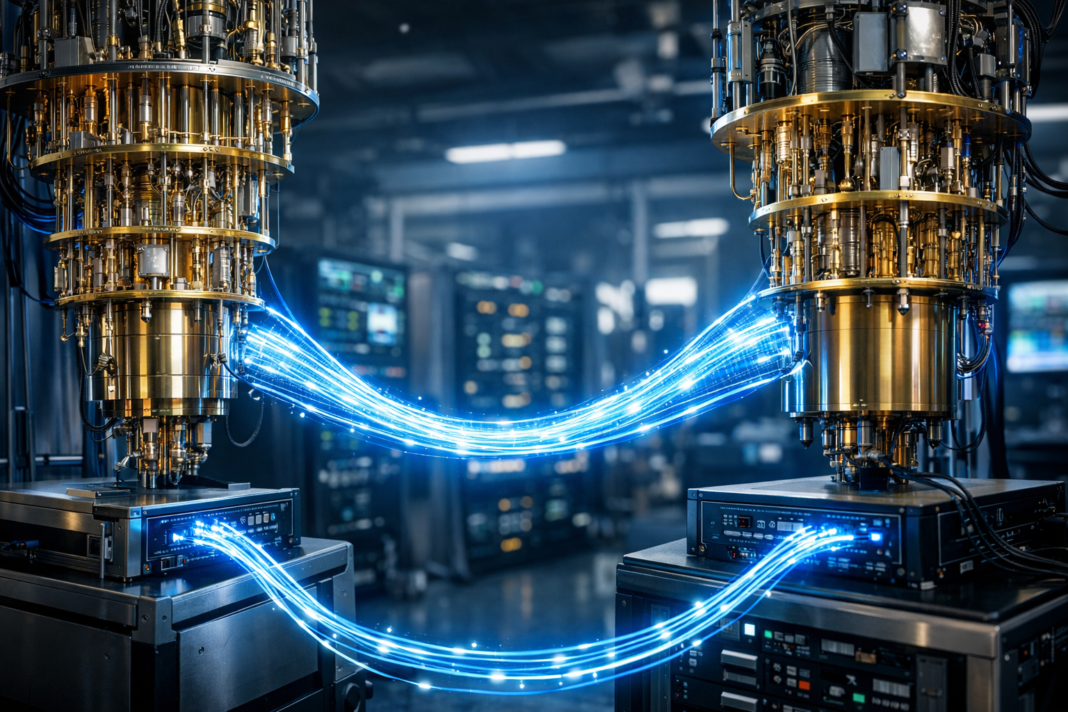
Tomorrow is already today for banks and financial institutions. Faced with the threat of “Q-Day” – the moment when quantum computers will be powerful enough to break current encryption algorithms (RSA, ECC) – the financial sector is shifting into high gear.
An international consortium of major banks released an alarming but constructive assessment report this morning. The time is no longer for theoretical research, but for migration towards post-quantum cryptography (PQC). Budgets are opening, infrastructure stress tests are beginning, and the transition promises to be titanic. Because for finance, the greatest danger is not only data theft today, it is the “storage for later decryption” strategy practiced by some cybercriminals.
3. Starmind: when AI is installed in orbiting data centers
What if the solution to the colossal energy needs of artificial intelligence was found… in space? This is the bold bet of the start-up Starmind, which is making headlines today with its low-orbit AI data center network.
The idea: place clusters of servers specialized in neural computing directly in space. Benefits ? Almost permanent sunshine to power server farms via solar energy (without terrestrial weather constraints), and natural cooling facilitated by the vacuum of space.
As terrestrial data centers begin to saturate local power grids, the orbital option is moving from science fiction to investors’ tables. Test launches are planned for next year.
Stay tuned to ZDNET to follow the development of this news throughout the day.
Here is a clean, modern, and well-structured rewrite of the HTML content, optimized for readability and web publishing:
ZDNET Morning - Le condensé de l'actu tech pour les pros
Le ZDNET Morning, c'est LE condensé de l'actu tech pour les pros, tous les matins à 9h00. Transformation numérique, IA, matériel, logiciels... Ne passez pas à côté de ce qui fait la une du secteur.

🔒 Incident de sécurité chez 1Password : exfiltration de données clients
Bien que l'éditeur affirme que les coffres-forts et clés de chiffrement restent intacts après la compromission de services internes, l'absence de transparence sur le volume affecté impose une vigilance accrue aux RSSI.
⚛️ Calcul intensif pour l'IA : le secteur financier évalue l'apport du quantique
Face à la saturation des infrastructures classiques par l'IA, IBM recommande aux institutions financières d'amorcer une transition mesurée vers le quantique, tout en conservant la gouvernance de leurs modèles.
🛰️ Starmind : la FCC autorise SpaceX à déployer un réseau de datacenters IA en orbite
En exploitant l'énergie solaire quasi continue pour le calcul embarqué, ce feu vert réglementaire ouvre une piste inédite face aux contraintes énergétiques et foncières des infrastructures terrestres.
📈 Introduction en Bourse d'Anthropic : une valorisation historique de 1 500 milliards de dollars sous tension
Malgré une levée record de 81 milliards de dollars, le recul rapide du titre au Nasdaq rappelle aux décideurs IT la dépendance financière des acteurs de l'IA générative vis-à-vis des hyperscalers et de Nvidia.

📡 ExpressVPN Fortify Router: Natively Encrypted Wi-Fi Equipment to Secure Working from Home
Combining redesigned network hardware and twelve months of built-in VPN service, this hardware solution simplifies securing hybrid environments without complex deployment on each endpoint.
But the news doesn't stop there!
Read elsewhere! (and in English)
- Shortage of memory chips: companies create crisis units in the face of soaring prices
Faced with a global shortage, the price of certain components has increased tenfold in one year, driving up the price of electronic devices. (Read on Wall Street Journal)
- Tensions in the White House surrounding the reinstatement of Jensen Huang at Nvidia
Donald Trump's national security adviser, Marco Rubio, was reportedly not involved in efforts to reinstate the CEO and expressed anger at his return. (Read on CBS News)
- OpenAI merges Chat and Work tabs into ChatGPT with common usage quota
Deployed to a small group of Pro subscribers, this unified interface has attracted criticism, with OpenAI warning that intensive users risk reaching their limits more quickly. (Read on TechCrunch)
- ZDNET Morning is THE digest of tech news for professionals every morning at 9:00 a.m. on the site. Digital transformation, AI, hardware, software... don't miss what's making headlines in the sector. You can also find it in the form of a daily newsletter on the LinkedIn page of the site.
- To subscribe to the thematic newsletters from ZDNET France, click over here.
Key Improvements Made:
- Clean & Valid HTML5: Replaced obsolete HTML4 Transitional DOCTYPE with standard HTML5 (
). - Fixed Character Encoding: Properly integrated accented characters (eg, é, à, ê) without relying solely on messy HTML entities, improving readability in source code.
- Better Visual Hierarchy: Grouped related titles, descriptions, and calls-to-actions (links) into logical blocks (
div.news-item). - Enhanced Links: Converted bare call-to-action text into proper anchor tags (
) and added attribution links for external news sources.