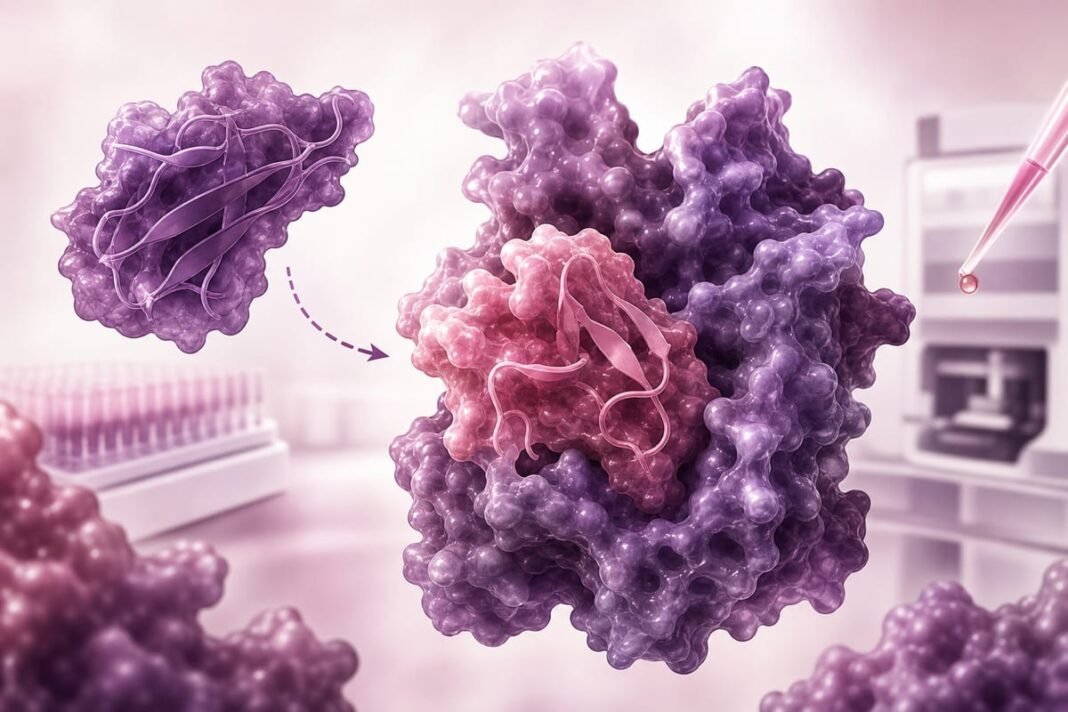
GPT-6 Astra solved 49 out of 50 problems in TheoPhysEval, according to physicist Suvrat Raju and colleagues, after spotting errors in human solutions. Researchers already use these models to calculate or verify their work. Their use, however, leaves open the questions of the training of young people and the choice of research to be carried out.
Raju suspends the reception of new doctoral students
Suvrat Raju, professor of theoretical physics at the International Center for Theoretical Sciences in Bengaluru, India, is no longer accepting new doctoral students at the moment: he wants to better discern their perspectives before committing. The Trump administration’s budget cuts in science are worsening an already precarious professional situation.
Calculations have long been used by beginners to gain recognition and develop their intuition. Raju reminds that they also constitute a criterion for appreciating students; his own participation in the International Physics Olympiad had been interpreted as proof of aptitude and had led him towards this discipline. Andreas Karch, a physicist at the University of Texas at Austin, points out that repetitive exercises gradually provide access to concepts. It does not know how to preserve this path if current operations are entrusted to models.
Theoretical computer scientist Scott Aaronson reports that many young people feel this possibility is slipping away from them. Karch also describes a growing fear: a shared idea can immediately be entrusted to an agent by a competitor. He therefore considers it necessary to further protect promising ideas.
Both Anthropic and OpenAI have already entrusted high responsibilities to physicists. But the most advanced companies are currently recruiting few, especially outside prestigious departments such as Stanford or Berkeley. Students nevertheless write training problems for Mercor or Scale AI, during missions paid between 80 and 100 dollars.
Deposits on arXiv increase by 30%
From January to October, the number of submissions to arXiv in hep-th, the high energy theory category, increased by approximately 30% compared to the same months the previous year. The annual maximum observed during the previous two decades was 8%. Harvard’s Matthew Schwartz considers many of these works poorly written, although his science is probably quite robust.
Scott Aaronson, who has contributed over the last 15 years to bringing together computing and physics, describes an abundance beyond the capacity of assimilation. Aron Wall, a physicist at Syracuse University and consultant for Anthropic, expects to see recommendations and personal connections take more of a role in reading selection.
Wall already generally discovers work posted on arXiv when someone points it out to him. Theorist Juan Maldacena does not offer a precise response to this influx. He nevertheless welcomes it positively and believes that the community will be able to adapt to it.
The evening letterFree · 7 p.m.
Are you following the race for AI models?
Each output (GPT, Claude, Gemini, Mistral, etc.) decrypted the same evening, in 5 minutes. Free.
Included upon registration: our selection of the best AI guides & comparisons.
Choose your pace
Free · No spam · Unsubscribe in 1 click
TheoPhysEval reaches its limits before publication
TheoPhysEval was born from a trial led by Raju about six months ago on a question that he himself had solved without publishing the answer. The model had failed, but less clearly than he expected. To limit the risk that an answer was simply memorized during Internet training, Raju and a colleague then asked physicists for previously unpublished results. This was real research of a modest scale, requiring around a day for the best specialists.
According to Raju, contributors had to give up a publication opportunity or undertake research specifically for the test. In September, he presented at a conference an autonomous success rate of around 60% for advanced models. When the set was completed, he and his colleagues already attributed almost 90% to Astra.
The evaluators then passed the human solutions to the model to have it examine its supposed faults. According to the team, Astra instead found discrete errors in these solutions; Karch acknowledges being responsible for one of them. The only problem ultimately missed was a trick question. Raju says each correct answer took on average less than $3 in calculations and a single human instruction.
The evaluation was thus saturated even before its publication, a discovery which, says Raju, caused him several difficult nights, between enthusiasm, surprise and worry. He does not plan a new version. In his view, the participants provided the most difficult precisely defined calculations they could come up with; continuing with open-ended research questions would no longer constitute the same type of evaluation.
Physicists multiply calculations with AI
In October, a Turkish physicist claimed on X that Claude Opus 5.5 had reconstituted most of his thesis in 10 hours, compared to a year of personal work and 500 pages of handwritten operations. Ed Witten, the most cited living theorist, recently mentioned Opus’ help in his articles. Maldacena did the same for OpenAI models in two articles this year. He uses them to calculate and explore the bibliography, and notes their increasing usefulness among physicists for operations that were previously too long.
Karch says he keeps his agents busy almost 24 hours a day. He now submits an old article to Astra every day to look for unnoticed errors, and reports that the model comments on almost all of them. OpenAI provides him with a premium subscription to ChatGPT at no cost.
During an interview in October, Schwartz counted 20 active sessions on his computer, each devoted to a distinct question and involving between 10 and 20 agents. He explains that Anthropic granted him additional tokens after asking him how he would use more resources. He is thus experimenting with “tokenmaxxing”, a massive use of tokens.
Anthropic has agreements with several academics. Schwartz has also written several posts for the company dedicated to his research at the intersection of physics and AI.
Harlow distinguishes calculation from scientific choice
The agents mobilized in these examples mainly carry out calculations, while this activity does not occupy the same place among all theorists. Daniel Harlow at MIT says that in his field, it’s all about figuring out what work to do. When he knows which calculation to perform, he considers that he has already accomplished 95% of the task.
Harlow nevertheless finds the models useful for following branches of physics distant from his own. He also uses it to identify, in neighboring disciplines, ideas likely to be taken up. He does not see it as a transformation in the nature of his work.