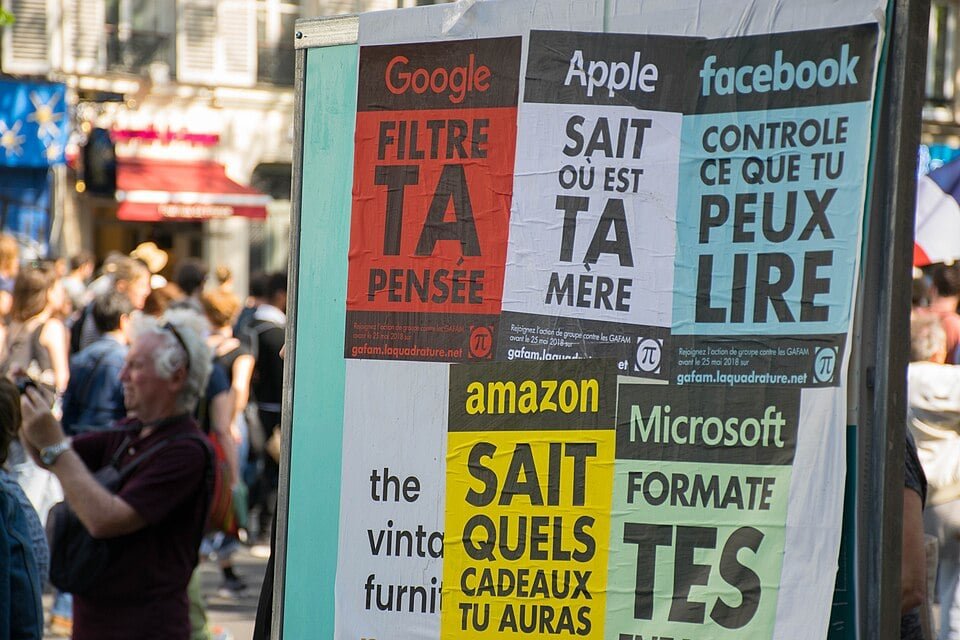
This is an impressive figure, which appears in the report of the Commission of Inquiry into Structural Dependencies and Systemic Vulnerabilities in the Digital Sector: Gafam pays less than 0.6% of the fines that Europe has imposed on them, recently cited its rapporteur, MP Cyrielle Chatelain (The Greens), which Pierre-Yves Gosset, coordinator of digital services at Framasoft, has just highlighted (see below).
26 sanctions since 2010
In its chapter 6 “Competition law: always a step behind” (pages 171 and following of the PDF of volume 1), the report published in July summarizes the fines which have been inflicted on these giants: 26 sanctions against Gafam under competition law since 2010, and a total of 17 billion euros in fines.
“Due to their centrality, the five major US platforms have been subject to intensive monitoring by competition authorities, which has resulted in numerous sanctions:
– for Google (Alphabet group): twelve sanctions, including eight with fines, representing a cumulative amount of 12.1 billion euros;
– for Apple: six sanctions, including four with fines, for a cumulative amount of 3.6 billion euros;
– for Meta: three sanctions, including two with fines, for a cumulative amount of 998 million euros;
– for Microsoft: three sanctions, including one with a fine, for an amount of 561 million euros;
– for Amazon: two sanctions.”
“Most of the practices giving rise to sanctions consisted, for each platform, of creating differentiated access between its own products and those of its competitors and of making the latter invisible. Market power may also have been used to impose unacceptable economic conditions on stakeholders such as content publishers and news agencies.”
The sanctions imposed exceed 17.2 billion euros since 2010. “Google alone accounts for 70% of the amount of fines awarded to the five players, thus demonstrating the repetition of illegal practices,” observes the report (p.188).
Several years to be applied
Amounts that could seem significant (if we neglect to relate them to the gigantic profits of these companies), except that… the report explains (p. 140 et seq.):
“The sanctions pronounced by the DPC [Data Protection Commission, la Cnil irlandaise] take several years to apply due to the suspensive nature of appeals against them. Fines only become payable after being confirmed by a court: even if no appeal is filed against the DPC’s decision, it must apply to the Circuit Court to have its decision confirmed.
“The recovery of the fine can therefore only take place at the end of all the disputes resulting from the sanction, which means that a certain number of fines of high amounts have not yet been recovered” explained Ms. Marie-Laure Denis [présidente de la Cnil]. The problem is amplified by the delaying procedures brought by the large platforms, which systematically challenge the sanctions against them in court.
In fact, only 0.6% of the sanctions imposed by the DPC between January 1, 2020 and December 31, 2024 have been recovered. Several fines, totaling 2,485 million euros, imposed on Meta between 2021 and 2023, have still not been collected, due to appeals still pending. The 875 million fines imposed on TikTok have also not been recovered.”
 © National Assembly – report
Recovery of fines imposed by the CNIL and the Irish Data Protection Commission
(report on behalf of the commission of inquiry into structural dependencies and systemic vulnerabilities in the digital sector and the risks for the independence of France, p. 142 of volume 1)
An Irish Authority “notoriously incapable of confronting Big Tech”
Added to this is the fact that complaints are processed through Ireland, which poses a problem. The report states:
“Mr. Bastien Le Querrec, a lawyer and member of Quadrature du Net, denounced during his hearing an authority “notoriously incapable of dealing with Big Tech”, “marked by revolving door phenomena and high turnover, which hamper the processing of complaints and investigations”. Along the same lines, Mr. Max Schrems mentioned the recent appointment of Ms. Niamh Sweeney as commissioner of the DPC, who had worked for six years as a lobbyist for Meta, at Whatsapp then at Facebook.
(…) revenues linked to digital activity, and more particularly to the registration of subsidiaries of American giants, represent almost 35% of Irish GDP. Ireland’s handling of complaints concerning major players in its economic activity constitutes, for the rapporteur, a major conflict of interest and cannot continue.
The rapporteur therefore calls on the French authorities to defend the removal of the one-stop shop rule to transfer control and sanction competence under the GDPR to the EDPS. [Comité européen de protection des données] for the biggest platforms.”
“Let’s go claim…”
This information, which went under the radar on the very low amount paid by Gafam, was transmitted this Friday by Pierre-Yves Gosset on LinkedIn (thank you!), where his entire post is worth reading, between a reminder of the GDPR which provides for sanctions of up to 20 million euros or 4% of the global annual turnover and a little story from the NEC.ESS Résistances nationaux conference, where Cyrielle Chatelain told him her source. As he says, “conclusions: read the parliamentary reports, don’t talk about sovereignty 10 years too early, and let’s claim the money that GAFAM owes us!”
Illustration at the top of the article: posters from La Quadrature du Net on Gafam (Google, Apple, Facebook, Amazon, Microsoft) in 2018. Photo Jules Xenard / Wikimedia Commons / CC by-sa
Read also
GDPR, data centers and investments: the proposals of the parliamentary report for digital sovereignty – July 17, 2026
Google and Shein explode CNIL fines – February 10, 2026
Brussels sanctions Google with historic fine, Trump threatens Europe with trade retaliation – September 8, 2025
The record of the Irish DPC does not earn it only praise – May 3, 2021