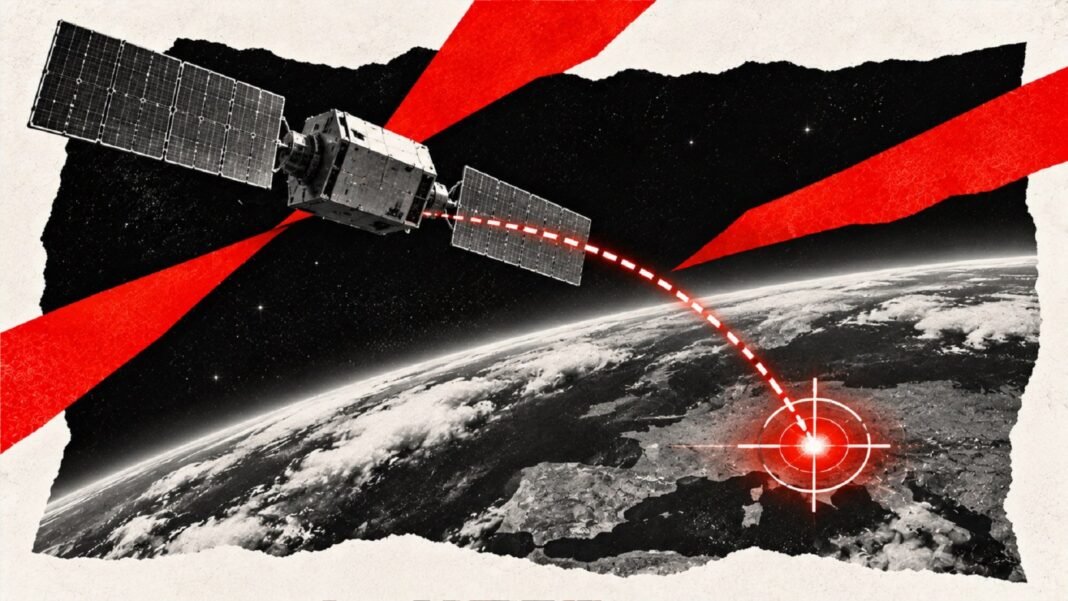
Missile maker MBDA Deutschland and German startup Atmos Space Cargo have signed an agreement to develop a “precision orbital deep strike” capability, dubbed PODS. The project is based on a capsule initially designed to bring back scientific experiments from orbit.
Bomb the Earth from space. This, in short, is what the concept of precision orbital deep strike, or PODS (Precision Orbital Deep Strike), is. And it is precisely a capacity that could soon develop in Europe, and more particularly in Germany, as part of a merger between two companies.
Atmos Space Cargo announced this Wednesday, November 18, in a joint press release, that it had signed an agreement with MBDA Deutschland (the German branch of the MBDA missile company, one of the defense giants in Europe) to design, develop and test a Precision Orbital Deep Strike project.
For Atmos, this is a notable development in its activity: until now, the startup mainly focused on space logistics. Founded in 2021 in Lichtenau, Germany, this young company is developing Phoenix, a capsule equipped with an inflatable heat shield, which must bring experiments carried out in orbit back to Earth.
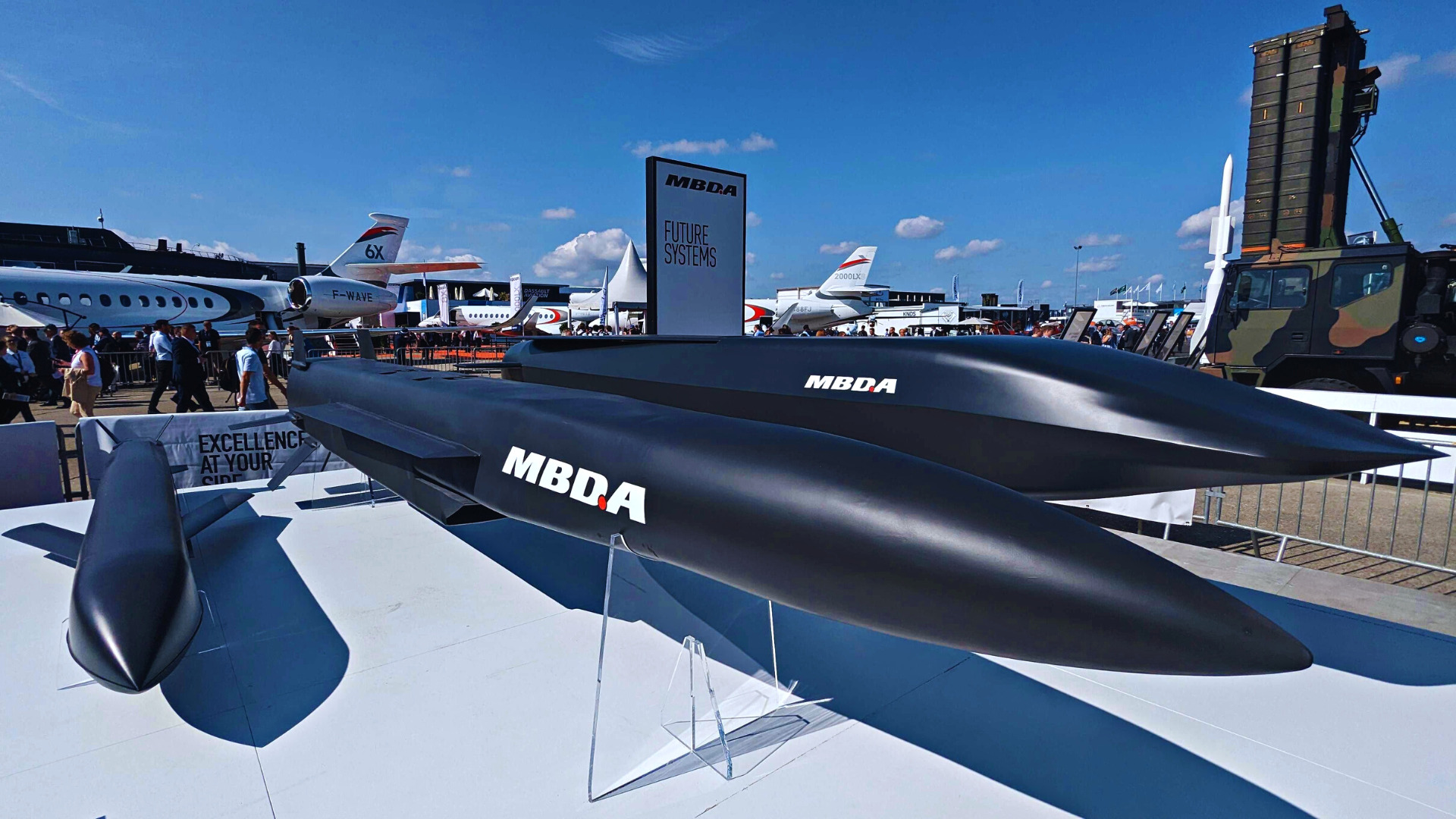
For its part, MBDA is a heavyweight, specializing in the manufacture of missiles and hybrid systems, such as this drone-missile designed to saturate enemy air defenses – the famous remotely operated munitions, which are being developed in all directions. The group has more than 21,000 employees and belongs to Airbus, BAE Systems and Leonardo.
For Europe, the precision strike capability launched from space is relatively new. Until now, this terrain has been explored by the USSR, then by Russia and China. The United States has also carried out research in this direction. Now, it is the turn of the Old Continent to get started.
According to Thomas Gottschild, Managing Director of MBDA Deutschland, this involves offering the armed forces “ a sovereign and highly innovative European capacity “. Sebastian Klaus, boss of Atmos, sees in the round trip to orbit a new layer of “ strategic infrastructure », capable according to him of strengthening Europe’s “conventional deterrence”.
What would an orbital strike look like?
The press release first mentions studies on the architecture of the system, its technical feasibility and the integration of military loads, with possible technological demonstrations. According to Military Zone, Atmos would pull from Phoenix an orbital transfer and return vehicle, capable of remaining in orbit for months thanks to its own propulsion and electrical power. MBDA would be responsible for the explosives and guidance.
We would therefore have a machine placed in low orbit, at an altitude of a few hundred kilometers, which would dive into the atmosphere on command to strike a specific target. The two partners specify that PODS will be a military system separate from civilian Phoenix capsules. At this stage, the agreement concerns feasibility studies, and there is no guarantee that the technique will work.

The weapon will indeed have to withstand a long stay in space, then the extreme heat of re-entry into the atmosphere.
However, at this stage, Atmos only has one flight to its credit. In April 2025, Phoenix 1 took off on a SpaceX Falcon 9 rocket and fully deployed its inflatable shield. But its trajectory had to be modified for the needs of the main load of the launch, and the capsule fell into the South Atlantic, approximately 2,000 kilometers from the coast of Brazil, without being able to be recovered.
The company has since raised funds to build more Phoenix 2 capsules, which will have their own engine to choose where they land.
Weapons legal on paper, but vulnerable?
Legally, the 1967 Space Treaty prohibits placing weapons of mass destruction in orbit, but it says nothing about conventional weapons. The project therefore benefits from a “gray zone”, as noted by Zone Militaire. In contrast, the same treaty and the 1972 Convention on International Liability for Damage Caused by Space Objects make Germany responsible for what Atmos and MBDA would do in space.
This is undoubtedly why the press release insists so much on respecting the law and the necessary authorizations.
On a military level, a machine in low orbit cannot remain above a target: it parades around the Earth according to a predictable trajectory, which the adversary can follow. To stay above a fixed point, you would have to orbit at the same speed as the Earth’s rotation, which is done in a geostationary orbit, which is much further away, at almost 36,000 kilometers above sea level.
In low orbit, the machine would remain within range of a direct ascent anti-satellite weapon, that is to say a missile fired from the ground to destroy an object in orbit – this would certainly generate a cloud of debris, but the threatened country would undoubtedly prefer to pulverize the PODS, judging that it is a lesser evil in the face of a successful orbital strike.
Atmos and MBDA have given neither timetable nor budget, and specify that concrete developments will be the subject of separate evaluations and agreements.


All the tech news at a glance
Add Numerama to your home screen and stay connected to the future!