The shift towards inference, the weight of tokens and risk management are pushing companies to reconfigure their infrastructure choices. Between political constraints on data centers, hardware shortages and scarce skills, platform teams are gaining a central role. Forecasts from Forrester and Gartner point to increased internalization and budgets under pressure.
Local opposition and shortages weigh on infrastructure projects
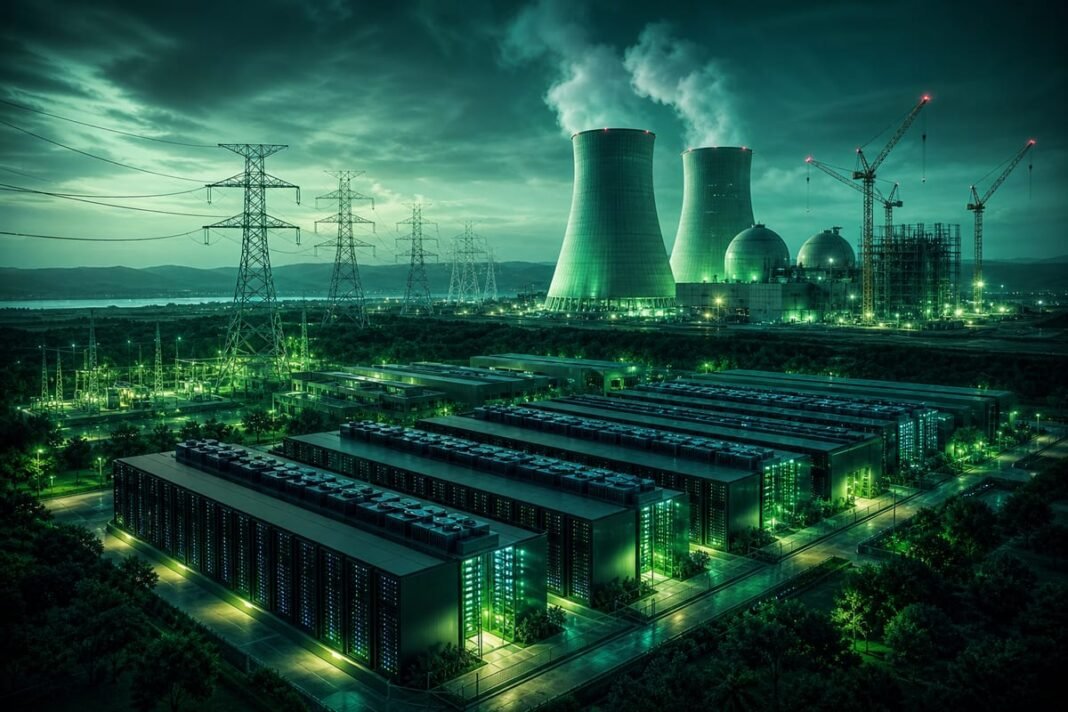
The 2026 midterm elections have highlighted persistent public opposition to major data center projects. Initiatives aimed at repatriating AI workloads on site will have to deal with this resistance. At the same time, storage teams faced rising memory prices and a shortage of new capacity in 2026, tensions that are expected to continue to influence pricing for IT buyers in 2027. Even when funding follows, internal infrastructure plans also face skills shortages. The human investment required to operate an AI platform is substantial and not all organizations are able to absorb these costs in the same way.
Inference redistributes load and promotes distributed architectures
The shift from training to inference is expected to fundamentally change infrastructure design requirements in 2027. Training mobilizes sustained throughput between tightly synchronized compute, storage, and networking, which has driven the rise of large AI data centers. Conversely, inference can run on more accessible hardware and requires bringing workloads closer to users to limit latency, a particularly strong imperative in industry and robotics. Specialists anticipate that inference will become the driving force of self-managed AI infrastructures in 2027, based on more diversified chips and deployed on more distributed sites.
AI strategies, movements and tricks deciphered, every evening in 5 minutes. Free.
Included upon registration: our selection of the best AI guides & comparisons.
Choose your pace
Free · No spam · Unsubscribe in 1 click
Budgets under pressure: tokens and governance at the forefront
The multiplication of agents increases the risks and increases the bills linked to the tokens. These costs already complicate the trade-offs between developing or buying, and are expected to increase with the generalization of agents. Gartner estimates that by 2027, companies that automate their IT operations with uncapped variable pricing models linked to the use of tokens will exceed their initial forecasts by more than 50%. Beyond expenses, management must also consider the overall profitability of investments and the potential financial consequences of an agent acting without authorization.
The internal platform becomes the orchestrator of AI workloads
As usage increases, platform engineers will need to choose the execution environment for an increasing number of workloads, assigning each to the most cost-effective agentic model or service, whether public cloud or on-premises infrastructure, while ensuring performance, resilience, security and governance. After ten years of occasional appearances from cloud-native and DevOps, many organizations now have platforms fragmented according to teams and tools. For Torsten Volk (Omdia), this fragmentation must fade as the risks of agentic AI increase, putting platform teams at the center. Executives will look for more control and lower-cost alternatives to cutting-edge and hosted offerings. In this context, the ability to centralize resource management between heterogeneous environments is presented as determining for integration and operational efficiency.
Internalization and executive risks: predictions for 2027
Forrester anticipates that 30% of large companies will build private AI infrastructure dedicated to inference next year, driven by rising risks and the protection of sensitive data. This dynamic of internalization is part of the continuity of two years of acculturation to language models and agents. On the executive level, Scott Sinclair (Omdia) predicts that in 2027, at least one CEO of a Fortune 500 company will leave his position or be ousted because he has not generated a positive return on his investments in AI.