Two geologists from the University of Wollongong, Australia, published on November 4, 2026 in Nature an explanation for the Great Unconformity. This gap sometimes erases more than a billion years of Earth’s rock records, and it has intrigued geologists for about 150 years.
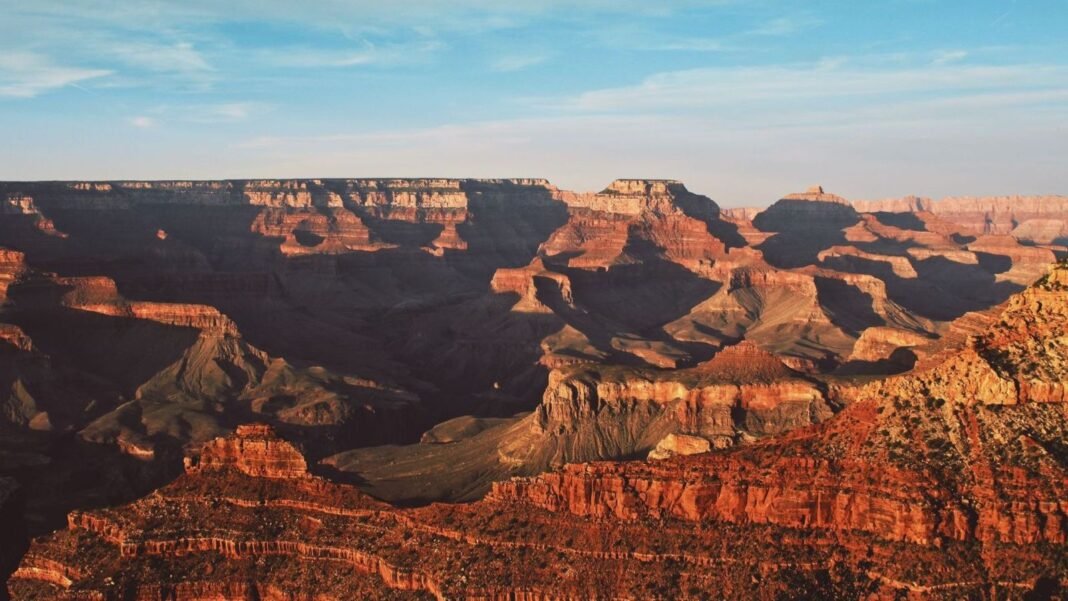
Normally, rocks tell the story of Earth in order. The oldest layers are at the bottom, the most recent at the top, and we find this history even in the grains of sand. However, at the Grand Canyon, in Northern Europe or Northern China, sediments approximately 540 million years old rest directly on granite which can exceed a billion years old. Depending on the location, between 200 million and more than a billion years of geological records are missing. Geologists call this hole the Great Unconformity.
In a study published in Nature on November 4, 2026, Santosh Dhungana, doctoral student at the University of Wollongong, and his thesis supervisor Nicolas Flament proposed a culprit. According to them, entire continents were lifted up and then sunk by very slow currents in the depths of the planet.
But how can hundreds of millions of years of rock disappear? Since the first description of this gap in the Grand Canyon at the end of the 19th century, geologists have put forward several avenues. They cited falling sea levels, mantle movements, or erosion by glaciers during “Snowball Earth,” the period 720 to 635 million years ago when the planet may have frozen over almost entirely.
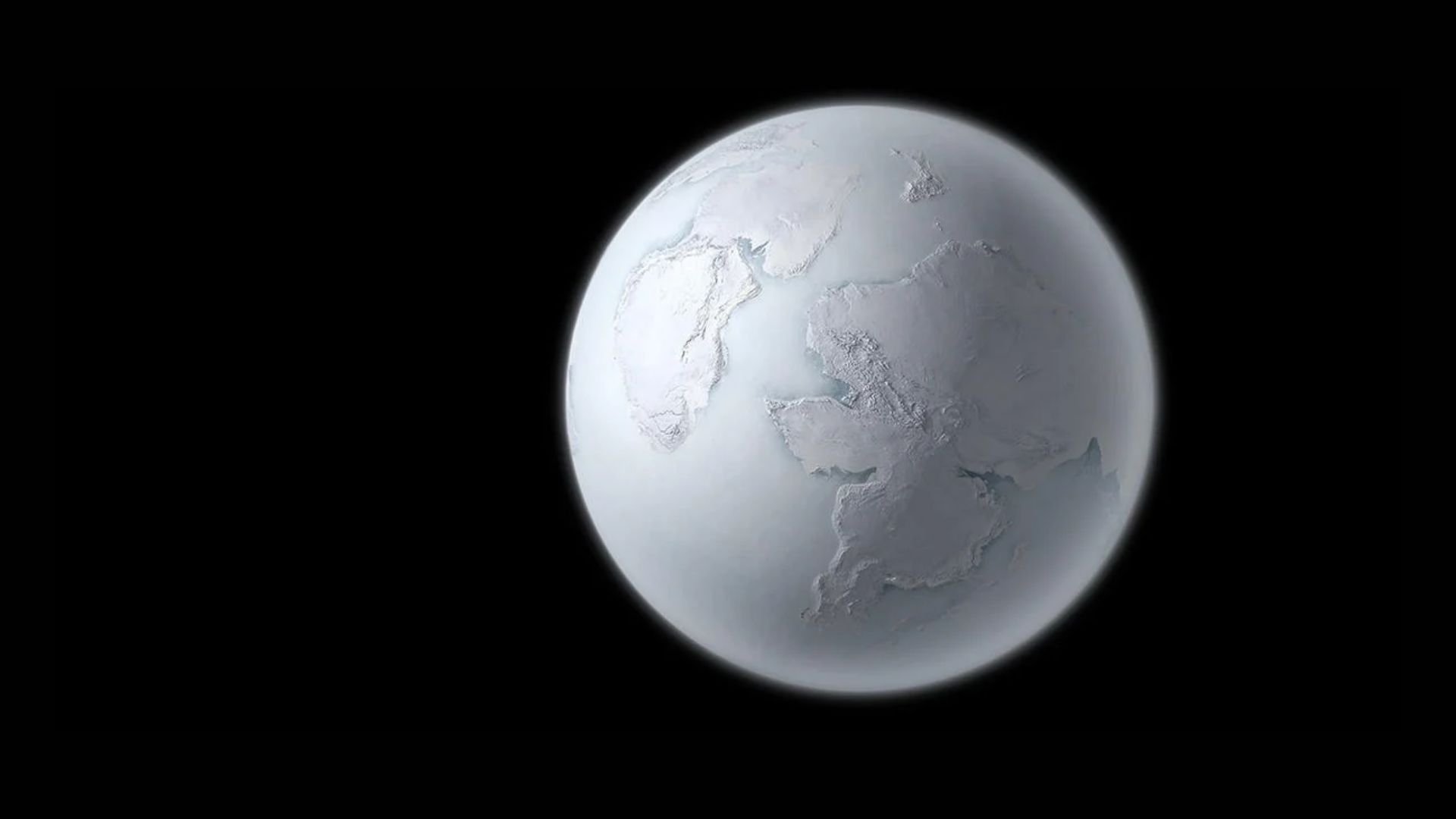
None had really been tested, and the two authors write it bluntly in their article: “The cause(s) of the Great Unconformity are unknown“. The glacial trail also encountered a simple objection: if the ice had covered the entire globe, it would have had to flatten the rocks everywhere, which is not the case.
Continents lifted, then planed by ice
To decide between these hypotheses, the researchers simulated a billion years of mantle convection on a supercomputer. The mantle is a layer of hot, solid rock, which deforms very slowly, between the crust and the core of the Earth. The hot material rises there, the cold material descends, and these currents raise or lower the surface over thousands of kilometers.
In most models, Laurentia, the ancestor of North America, rose for hundreds of millions of years until about 540 million years ago, then slowly sank. Baltica, the ancestor of part of Northern Europe, and Northern China follow the same scenario in most models, at a time when these blocks did not occupy their current place on the globe at all.
“ This rising and falling movement constitutes the ideal scenario for the formation and preservation of the Great Unconformity », Explain the two scientists in The Conversation.
However, ice still plays a role in this scenario. The long uplift phase overlaps with the Snowball Earth period, and glaciers wear away rock much more efficiently than rivers. According to the two researchers, the caps therefore mainly planed the land that the mantle had raised. Once these continents descended, over the last 540 million years, the sea covered them and buried the worn surface under new sediments, which preserved it until today.
A scenario based on very uncertain cards
The authors themselves recognize that their models overestimate the magnitude of these vertical movements. They therefore rely on the general trend rather than the exact values. They also warn that “the solution of the models presented strongly depends on the tectonic reconstruction, for which the uncertainty is large and increases as we go back in time“.
This giant erosion shortly preceded the Cambrian Explosion, around 530 million years ago, when a multitude of animals appeared in a short time. The authors believe that these upheavals in the landscape could have modified the chemistry of seawater and encouraged this diversification, an avenue that they propose to explore.

All the tech news at a glance
Add Numerama to your home screen and stay connected to the future!