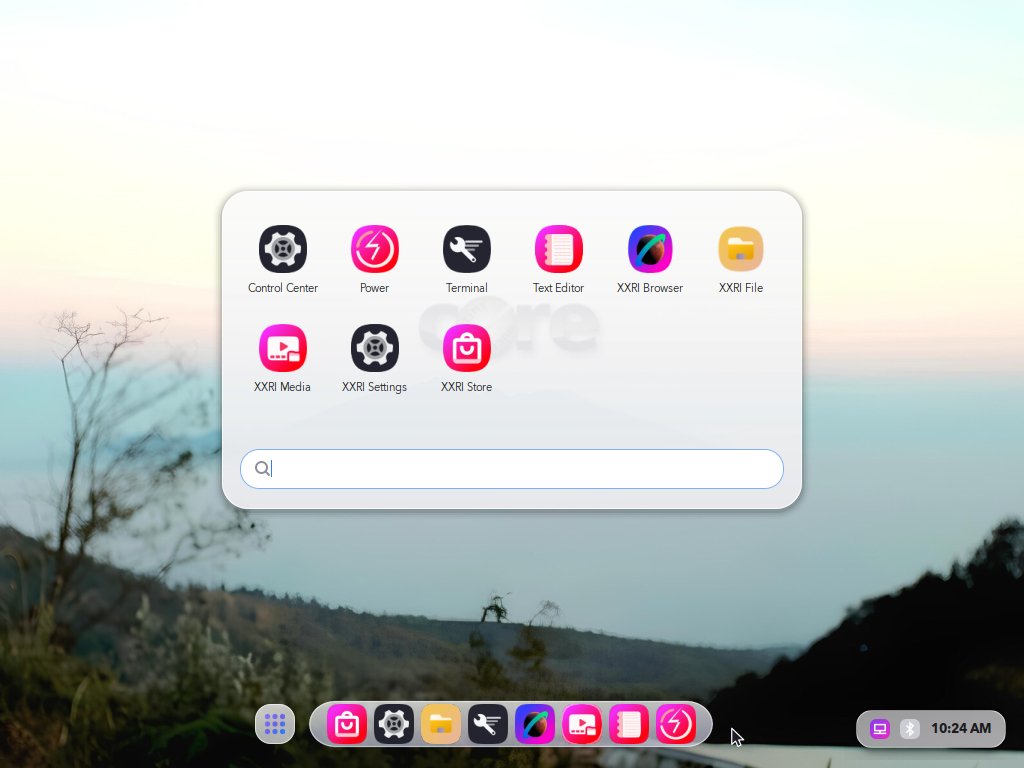
Linux distribution XXRI-OS-LITE, Ph. Jack Wallen/ZDNET.
The essential points to remember from the XXRI-OS-LITE Linux distribution
- XXRI-OS-LITE is a modern version of the lite Linux distribution.
- Thanks to its own desktop environment, it manages to do what most lite distributions cannot do.
- It is still in an early stage of development, so it may not be ideal for everyday use.
There are more Linux distributions than you can imagine. Distributions for everyday office use, AI, multimedia, supercomputing, big data, servers, and everything in between. There are also Linux distributions created specifically for old or low-performance hardware, generally referred to as “lightweight” distributions. They can include specialized kernels, low-resource applications, and desktop environments particularly suited to low-power machines.
My Favorite Lightweight Linux Distributions
Among the list of lightweight Linux distributions that I consider reliable choices, the following distributions almost always top the list:
1. Bodhi Linux
Bodhi Linux has long been one of my favorite lightweight Linux distributions, mainly because it offers the Moksha desktop environment (which is a fork of Enlightenment), combining equal parts efficiency and aesthetics.
Thanks to Moksha, Bodhi Linux is a great option for older hardware.
The only downside some might find to Bodhi is that the Moksha desktop environment is quite different from anything they may have used before.
2. Linux Lite
Linux Lite uses a custom Xfce desktop environment and comes with a decent selection of applications, so you can be productive right out of the box.
There you’ll find Chrome, LibreOffice (including Base, for creating databases), GIMP, Photo Manager, Deja Dup Backups, VLC media player, a USB image burning tool, an on-screen keyboard, Timeshift (for restore points), and much more.
3. Xubuntu
Xubuntu is essentially a version of Ubuntu equipped with the Xfce desktop. As it uses Xfce, it is highly customizable. And just like Linux Lite, Xubuntu includes all the software you need to get started, such as LibreOffice (office suite), Firefox (web browser), Thunderbird (email client), Transmission (torrent client), Catfish (file search tool), GIMP (image editor), Rhythmbox (music player), Parole Media Player, and Atril Document Viewer.
With the exception of Bodhi Linux, the other two options may seem a bit outdated. This is because Xfce prioritizes speed and customization more than aesthetics. While this doesn’t mean that the systems mentioned above are any less usable, if you prefer a desktop operating system with a more modern design, you may be somewhat disappointed with these. That’s why when I first discovered this strangely named system, XXRI-OS-LITE, I was immediately excited.
There is now another lightweight Linux option, but one that doesn’t neglect aesthetics. If you’ve followed me long enough, you know that how a Linux desktop looks is just as important as how it works (in my eyes).
So here is XXRI-OS-LITE
As its name suggests, XXRI-OS-LITE is a lightweight Linux distribution perfectly capable of bringing your old hardware back to life. But this distribution goes a little further than most lightweight distributions by also offering a modern desktop that does not rely on the terminal window and is absolutely simple. XXRI-OS-LITE is not only lightweight, it is stylish and easy to use.
XXRI-OS-LITE can run on a system with very few resources. The minimum requirements are a Pentium II or K6-2, 256 MB of RAM and 700 MB of storage space!
XXRI-OS-LITE is aimed at those who:
- Have a device dating from 2000 to 2019.
- Have used Windows 7 or XP and want an operating system that still works.
- Tried Ubuntu and found it only made things worse.
- Have limited system resources (like RAM) but still need speed.
- Want to have a modern office without purchasing a new machine.
If you recognize yourself in this description, XXRI-OS-LITE might just be for you.
The XXRI-OS office
The XXRI-OS desktop consists of a dock, desktop menu, and system tray, which combine to create a pleasant, macOS-inspired desktop. If you click on the desktop menu, you will see the few software installed by default, including a control center, power menu, terminal, text editor, web browser, file manager, media player, settings app, and app store. That’s all.

When you click to open a program, the first thing you’ll notice is how quickly it opens…practically instantly. Lightweight distributions tend to be fast, but not that fast. It feels like you’re using COSMIC Desktop (from System76) on a Thelio (which is a real beast when it comes to desktop computers). It’s a speed that you don’t often see.
XXRI-OS-LITE is based on Tiny Core Linux and is the lite version of XXRI-OS (which is still under development). At the same time, XXRI-OS-LITE is still at an early stage of development, which means there will be problems. The difference between the two (besides the fact that one is a lite distribution and the other is not) is that the LITE version comes with a bare minimum of software. Normally, this would not be a problem since there is a program store with a graphical interface.
A glaring problem
However, I encountered a problem worth noting. Even though I could connect to the Internet with the operating system (both through the browser and from the command line), the App Store refused the connection. I initially chalked this up to an early development issue, but after a little digging I started to think that maybe it was the repository that was offline; so I waited a few hours before checking again. Same problem. I then went to the XXRI-OS-LITE Discord server and discovered that this was a known issue.
Apparently the App Store works fine with Wi-Fi, but not with Ethernet. As this issue is known, I’m sure it will be resolved soon. In the meantime, I decided to try an AppImage file to see if it would work properly.

Jack Wallen/ZDNET
I uploaded my Quillwriter application as an AppImage, and the operating system automatically detected that it was an executable file. It then asked me if I wanted to grant it the necessary permissions and then integrate it into the system (i.e. add it to the desktop menu). After that, the app opened very quickly (as fast as on my M1 MacBook) and worked exactly as expected.

Jack Wallen/ZDNET
Even with this App Store issue, XXRI-OS-LITE shows a lot of promise, so much so that if the developers can keep the project going, I could well see this distro surpassing current best-in-class distros. And with an aesthetic that makes XXRI-OS-LITE look like a serious desktop distribution, anything is possible.
He still has a way to go
Before you embark on the XXRI-OS-LITE adventure, know that, as I mentioned before, the project is still in its early stages, which means that it needs to be further improved before it is ready for the general public. Despite everything, this Linux distribution is off to an excellent start: it is fast, elegant and easy to use. It runs on hardware that most would have already considered destined for the trash, and it proves that a lightweight Linux distribution doesn’t need to look like it came straight out of the early 2000s.
Would I recommend it over the other three lightweight distributions I mentioned above? Not right now, but once the developers fix the App Store issue, that could change very quickly.
Try XXRI-OS-LITE and find out for yourself what it’s all about. Keep in mind that although the current version is 2.7, it feels a bit newer than that. Still, it’s a great start to a lightweight and promising Linux distribution.
I’m very excited to see what XXRI-OS-LITE has to offer in the future.
Source: “ZDNet.com”
Linux distribution XXRI-OS-LITE, Ph. Jack Wallen/ZDNET.
The essential points to remember from the XXRI-OS-LITE Linux distribution
- XXRI-OS-LITE is a modern version of the lite Linux distribution.
- Thanks to its own desktop environment, it manages to do what most lite distributions cannot do.
- It is still in an early stage of development, so it may not be ideal for everyday use.
There are more Linux distributions than you can imagine. Distributions for everyday office use, AI, multimedia, supercomputing, big data, servers, and everything in between. There are also Linux distributions created specifically for old or low-performance hardware, generally referred to as “lightweight” distributions. They can include specialized kernels, low-resource applications, and desktop environments particularly suited to low-power machines.
My Favorite Lightweight Linux Distributions
Among the list of lightweight Linux distributions that I consider reliable choices, the following distributions almost always top the list:
1. Bodhi Linux
Bodhi Linux has long been one of my favorite lightweight Linux distributions, mainly because it offers the Moksha desktop environment (which is a fork of Enlightenment), combining equal parts efficiency and aesthetics.
Thanks to Moksha, Bodhi Linux is a great option for older hardware.
The only downside some might find to Bodhi is that the Moksha desktop environment is quite different from anything they may have used before.
2. Linux Lite
Linux Lite uses a custom Xfce desktop environment and comes with a decent selection of applications, so you can be productive right out of the box.
There you’ll find Chrome, LibreOffice (including Base, for creating databases), GIMP, Photo Manager, Deja Dup Backups, VLC media player, a USB image burning tool, an on-screen keyboard, Timeshift (for restore points), and much more.
3. Xubuntu
Xubuntu is essentially a version of Ubuntu equipped with the Xfce desktop. As it uses Xfce, it is highly customizable. And just like Linux Lite, Xubuntu includes all the software you need to get started, such as LibreOffice (office suite), Firefox (web browser), Thunderbird (email client), Transmission (torrent client), Catfish (file search tool), GIMP (image editor), Rhythmbox (music player), Parole Media Player, and Atril Document Viewer.
With the exception of Bodhi Linux, the other two options may seem a bit outdated. This is because Xfce prioritizes speed and customization more than aesthetics. While this doesn’t mean that the systems mentioned above are any less usable, if you prefer a desktop operating system with a more modern design, you may be somewhat disappointed with these. That’s why when I first discovered this strangely named system, XXRI-OS-LITE, I was immediately excited.
There is now another lightweight Linux option, but one that doesn’t neglect aesthetics. If you’ve followed me long enough, you know that how a Linux desktop looks is just as important as how it works (in my eyes).
So here is XXRI-OS-LITE
As its name suggests, XXRI-OS-LITE is a lightweight Linux distribution perfectly capable of bringing your old hardware back to life. But this distribution goes a little further than most lightweight distributions by also offering a modern desktop that does not rely on the terminal window and is absolutely simple. XXRI-OS-LITE is not only lightweight, it is stylish and easy to use.
XXRI-OS-LITE can run on a system with very few resources. The minimum requirements are a Pentium II or K6-2, 256 MB of RAM and 700 MB of storage space!
XXRI-OS-LITE is aimed at those who:
- Have a device dating from 2000 to 2019.
- Have used Windows 7 or XP and want an operating system that still works.
- Tried Ubuntu and found it only made things worse.
- Have limited system resources (like RAM) but still need speed.
- Want to have a modern office without purchasing a new machine.
If you recognize yourself in this description, XXRI-OS-LITE might just be for you.
The XXRI-OS office
The XXRI-OS desktop consists of a dock, desktop menu, and system tray, which combine to create a pleasant, macOS-inspired desktop. If you click on the desktop menu, you will see the few software installed by default, including a control center, power menu, terminal, text editor, web browser, file manager, media player, settings app, and app store. That’s all.
When you click to open a program, the first thing you’ll notice is how quickly it opens…practically instantly. Lightweight distributions tend to be fast, but not that fast. It feels like you’re using COSMIC Desktop (from System76) on a Thelio (which is a real beast when it comes to desktop computers). It’s a speed that you don’t often see.
XXRI-OS-LITE is based on Tiny Core Linux and is the lite version of XXRI-OS (which is still under development). At the same time, XXRI-OS-LITE is still at an early stage of development, which means there will be problems. The difference between the two (besides the fact that one is a lite distribution and the other is not) is that the LITE version comes with a bare minimum of software. Normally, this would not be a problem since there is a program store with a graphical interface.
A glaring problem
However, I encountered a problem worth noting. Even though I could connect to the Internet with the operating system (both through the browser and from the command line), the App Store refused the connection. I initially chalked this up to an early development issue, but after a little digging I started to think that maybe it was the repository that was offline; so I waited a few hours before checking again. Same problem. I then went to the XXRI-OS-LITE Discord server and discovered that this was a known issue.
Apparently the App Store works fine with Wi-Fi, but not with Ethernet. As this issue is known, I’m sure it will be resolved soon. In the meantime, I decided to try an AppImage file to see if it would work properly.
Jack Wallen/ZDNET
I uploaded my Quillwriter application as an AppImage, and the operating system automatically detected that it was an executable file. It then asked me if I wanted to grant it the necessary permissions and then integrate it into the system (i.e. add it to the desktop menu). After that, the app opened very quickly (as fast as on my M1 MacBook) and worked exactly as expected.
Jack Wallen/ZDNET
Even with this App Store issue, XXRI-OS-LITE shows a lot of promise, so much so that if the developers can keep the project going, I could well see this distro surpassing current best-in-class distros. And with an aesthetic that makes XXRI-OS-LITE look like a serious desktop distribution, anything is possible.
He still has a way to go
Before you embark on the XXRI-OS-LITE adventure, know that, as I mentioned before, the project is still in its early stages, which means that it needs to be further improved before it is ready for the general public. Despite everything, this Linux distribution is off to an excellent start: it is fast, elegant and easy to use. It runs on hardware that most would have already considered destined for the trash, and it proves that a lightweight Linux distribution doesn’t need to look like it came straight out of the early 2000s.
Would I recommend it over the other three lightweight distributions I mentioned above? Not right now, but once the developers fix the App Store issue, that could change very quickly.
Try XXRI-OS-LITE and find out for yourself what it’s all about. Keep in mind that although the current version is 2.7, it feels a bit newer than that. Still, it’s a great start to a lightweight and promising Linux distribution.
I’m very excited to see what XXRI-OS-LITE has to offer in the future.
Source: “ZDNet.com”
https://www.zdnet.fr/wp-content/uploads/zdnet/2026/11/distribution-linux-xxri-os-lite-pratique.jpg https://www.zdnet.fr/pratique/linux-pratique-ssais-xxri-os-lite-une-distribution-qui-redonne-vie-a-de-vieux-pc-destines-a-la-poubelle-508153.htm?utm_source=rss_feed&utm_medium=link&utm_campaign=unknown