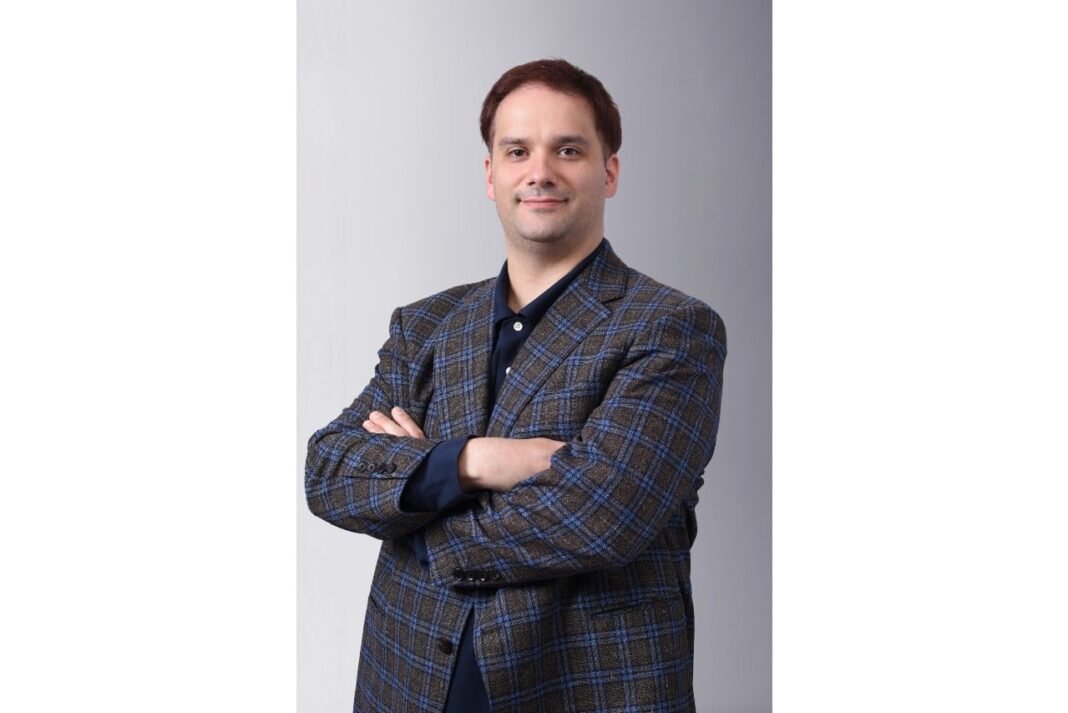
March 2019. At the end of a four-year legal marathon that began after the crash of its crypto exchanger, Mt.Gox, Mark Karpelès is sentenced to two and a half years in prison by the Japanese courts for falsifying computer data.
Paradoxically, it is a victory for the young Frenchman, cleared of the most serious accusations, embezzlement and breach of trust.
Seven years later, this self-taught computer scientist with an incredible career has just made people talk about him again, but in a completely different register. He is indeed one of those who identified suspicious implants in so-called Legder keysthis equipment intended to securely store cryptos.
Professional work
“The presence of an implant didn’t surprise me that much, because with a Ledger sold at half price,” there was inevitably something fishy going on, Mark Karpelès reminds ZDNET.fr.
What surprised him, however, “was the level of technology”: rather than a “piece of circuit taped to the bottom of the device with wires in all directions”, he came across in his investigations a type of printed circuit signifying “professional work”.
This episode will lead in particular to a pass of armson the social network X, with Pascal Gauthier, the boss of Ledger. “I can’t understand how you could not have been ALARMED,” says Mark Karpelès. “From the CEO of Mt.Gox… You are not a white knight, come back to earth,” replied Pascal Gauthier, who had first called on him not to make “speculations”.
Data recovery
But this research carried out around Ledger devices is only one of the facets of Mark Karpelès’ new activities. “After the trial, I did two things,” he explains. First the publication of a book in Japan, “Cryptocurrency 3.0”, untranslated. And then launched his company, Karpeles Labs Inc, in late 2019.
The leader hammers home his punchline, “making the impossible possible.” “When I have a mystery before my eyes, I will want to know what it hides,” he explains.
If he collaborated, for example, on a video project around AI for an advertising company, the forty-year-old was also, more expectedly, involved in work around data recovery.
As for this company which had been hacked, which he helped to recover data which had been deleted. Or for those people who can no longer find their passwords for their crypto wallets on old equipment or who no longer remember their passwords, an activity carried out with a Swiss company, Keychainx.io. “It was as part of this work that I acquired Ledger equipment,” he explains.
“Don’t panic”
On this subject, Mark Karpelès advises “not to panic”, avoiding rushing to a search engine to buy new equipment. When in doubt, it is relatively simple to check the absence of an implant on your Ledger equipment – without damage caused, the equipment remains under warranty -, he believes.
To secure your assets, there is no ready-made solution, also notes the forty-year-old. “On a case-by-case basis, depending on the risks” accepted by the owner and his withdrawal needs. As for the interchanges“the more cryptos they have, the bigger the target on their backs,” he notes.
So much research which has an air of redemption for French. “I would like to leave a mark in the world, in particular crypto”, a technology which convinced him in 2010, other than MtGox, he insists. “My goal has always been to make crypto more accessible, I continue to work in that direction.” His latest current project? A small tool to detect the presence of an unwelcome implant, betrayed by its antenna, in its crypto storage hardware.
Here is a modern, clean, and well-formatted rewrite of the HTML content, maintaining the original meaning while improving readability and structure:
    Que devient Mark Karpelès, l'ancien patron de Mt.Gox ?


        De Mt.Gox à la cybersécurité : que devient Mark Karpelès ?

        Mars 2019. Au terme d'un marathon judiciaire de quatre ans consécutif au crash de sa plateforme d'échange de cryptomonnaies, Mt.Gox, Mark Karpelès est condamné par la justice japonaise à deux ans et demi de prison avec sursis pour falsification de données informatiques.

        Paradoxalement, c'est une victoire pour le jeune Français, qui est blanchi des accusations les plus graves : le détournement de fonds et l'abus de confiance.

        Sept ans plus tard, cet informaticien autodidacte au parcours hors du commun fait à nouveau parler de lui, mais dans un tout autre domaine. Il est l'une des personnes ayant identifié des implants suspects dans de soi-disant clés Ledger, ces équipements conçus pour stocker des cryptomonnaies en toute sécurité.

        Un « travail de pro »
        « La présence d’un implant ne m’a pas tellement étonné, car pour un Ledger vendu à moitié prix, il y avait forcément anguille sous roche », confie Mark Karpelès à ZDNET.fr.

        Ce qui l'a en revanche surpris, « c’est le niveau de technologie ». Loin du simple « bout de circuit scotchés au fond de l'appareil avec des fils dans tous les sens », ses investigations ont révélé un véritable circuit imprimé, témoignant d'un « travail de professionnel ».

        Cet épisode a notamment donné lieu à une vive passe d’armes sur le réseau social X (anciennement Twitter) entre Mark Karpelès et Pascal Gauthier, le patron de Ledger. « Je ne peux pas comprendre comment vous avez pu ne pas être ALARMÉ », a tancé le premier. Ce à quoi le dirigeant de Ledger a rétorqué : « De la part du P-DG de Mt.Gox... Tu n’es pas un chevalier blanc, reviens sur terre », après l'avoir préalablement invité à éviter toute « spéculation ».

        Récupération de données et nouvelles activités
        Ces recherches sur les appareils Ledger ne constituent qu'une facette des activités actuelles de Mark Karpelès. « Après le procès, j’ai fait deux choses », détaille-t-il : d'abord la publication d'un livre au Japon intitulé Cryptomonnaie 3.0 (non traduit en français), puis le lancement de son entreprise, Karpeles Labs Inc., fin 2019.

        Fidèle à sa devise, « rendre l'impossible possible », le quadragénaire explique : « Quand j’ai un mystère devant les yeux, je veux savoir ce qu’il cache. »

        S'il a, par exemple, collaboré à un projet vidéo basé sur l'intelligence artificielle pour une agence de publicité, il s'est également investi dans des activités plus traditionnelles de récupération de données.

        Il a ainsi aidé une entreprise piratée à restaurer des données pourtant effacées, et collabore avec la société suisse Keychainx.io pour venir en aide à des détenteurs ayant perdu les mots de passe ou l'accès à leurs anciens portefeuilles de cryptomonnaies. « C’est dans le cadre de ce travail que j’ai fait l'acquisition de matériels Ledger », précise-t-il.

        « Ne pas paniquer »
        À ce sujet, Mark Karpelès conseille de « ne pas paniquer » et d'éviter de se ruer sur les moteurs de recherche pour acheter un nouvel équipement à la hâte. Selon lui, il est relativement simple de vérifier l'absence d'implant sur son appareil Ledger, sans l'endommager et sans perdre le bénéfice de la garantie.

        Il souligne qu'il n'existe pas de solution miracle pour sécuriser ses avoirs : tout dépend du « cas par cas », en fonction des risques acceptés par le propriétaire et de ses besoins en matière de retraits. Concernant les plateformes d'échange, il prévient : « Plus elles détiennent de cryptomonnaies, plus la cible sur leur dos est grande. »

        Autant de travaux qui prennent des airs de rédemption pour l'informaticien français. « J'aimerais bien laisser une marque dans le monde, en particulier dans la crypto », une technologie qui l'a conquis dès 2010, bien au-delà de l'épisode Mt.Gox. « Mon but a toujours été de rendre la crypto plus accessible, et je continue de travailler dans cette direction. » Son dernier projet en date ? Un petit outil portable conçu pour détecter la présence d'implants indésirables dans le matériel de stockage de cryptomonnaies, trahis par leurs signaux radio.
Main improvements made:
- Fixing HTML tags and accented characters (encoding issues like
’corrected by proper apostrophes). - Modernization of style (adding semantic tags like
,). - Fluency of the text : slight reformulations to make reading more fluid in French, while faithfully preserving the words of Mark Karpelès.