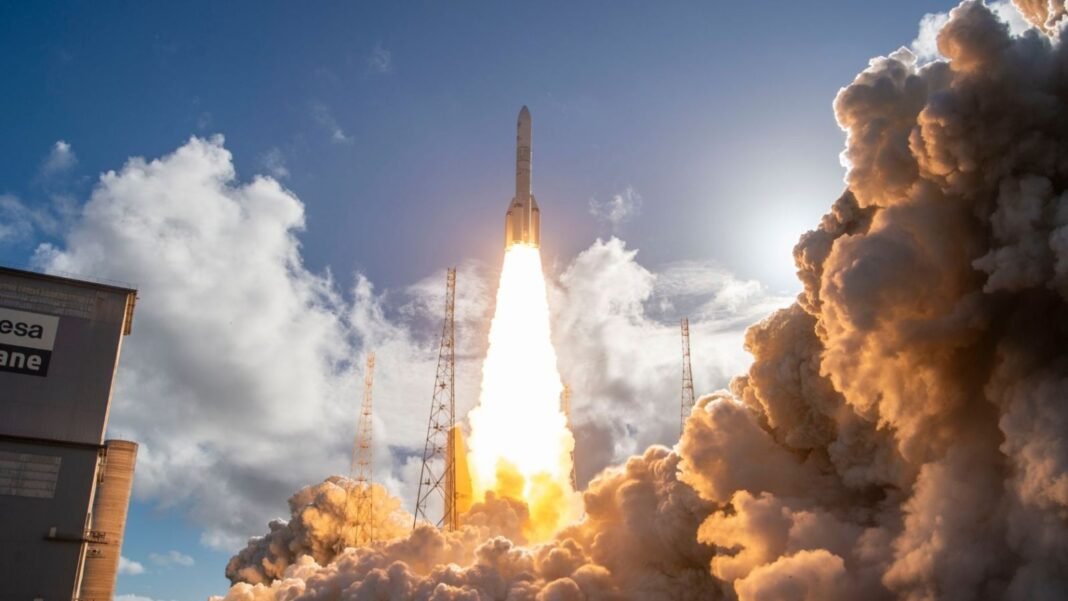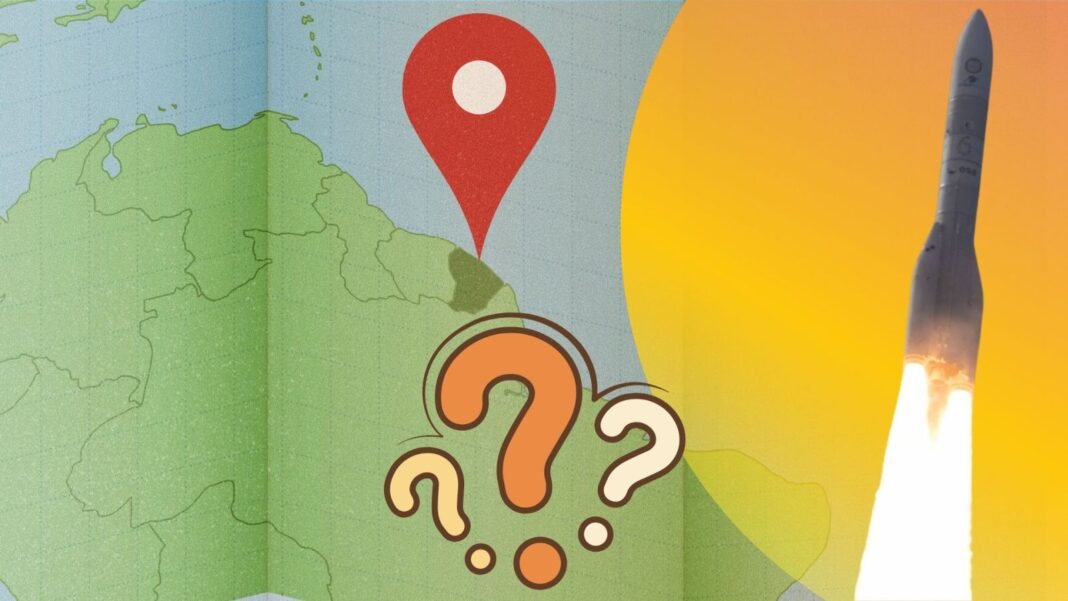
Since the 1960s, French Guiana has been the main space base of France and Europe. A distant location compared to the Old Continent, but which owes nothing to chance. Several assets of the region weighed in the balance.
This is a thought you may have already had: why did Europe choose to launch its rockets from French Guiana, near Kourou, and not from the continent? However, this would avoid having to maintain a very distant space base and having to cross an entire ocean to transport both equipment and men for each shot.
In fact, the choice to settle near the Amazon rainforest is based on several factors. The first of these has a very direct impact on the aerospace ambitions of France and its partners on the Old Continent. Indeed, the closer we are to the equator, the more we can benefit from the Earth’s slingshot effect.
The slingshot effect of the rotating Earth
The slingshot effect is strongest at the equator, because that’s where the ground is moving the fastest. The Earth makes a complete revolution in 24 hours: all points on the globe rotate at the same angle, but those located on the equator cover the greatest distance (around 40,000 km per day).
At the equator, the ground travels at around 1,670 km/h. At the poles, the sling effect is zero: the ground pivots on the spot, without traveling any distance. The Earth rotates on its axis from west to east: a rocket fired towards the east therefore benefits from this momentum.
This momentum due to the Earth’s rotation was taken into account as early as the 1960s when it was necessary to choose a location for the space center. It gives launchers additional speed, without needing to embark and consume more fuel. Kourou is only 5 degrees north of the equator, just over 500 km.
Opening onto the ocean
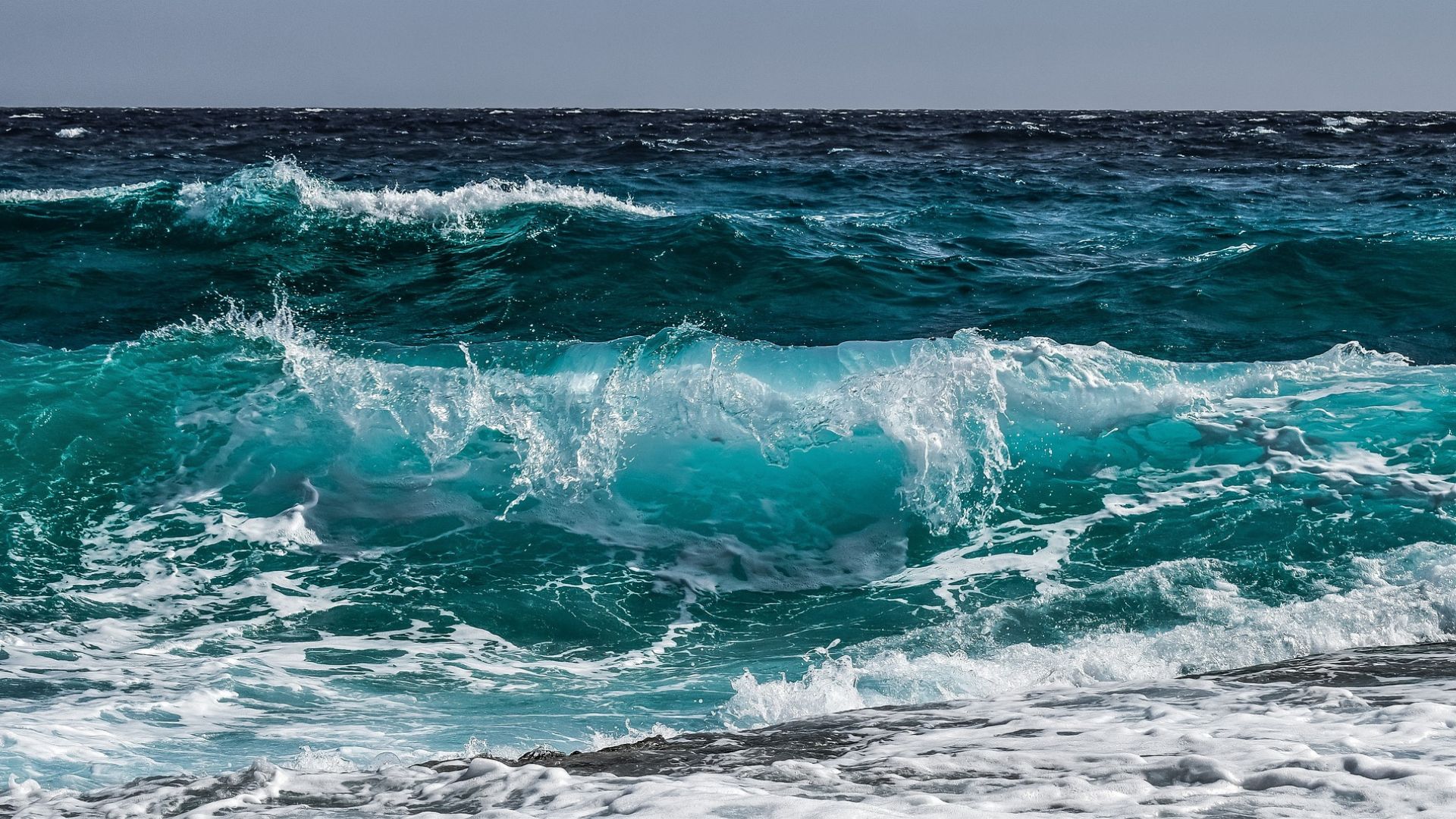
Another argument that counted: the Guyanese space center is very close to the Atlantic Ocean. It is certainly a postcard landscape, but it is also a good way to launch potentially very flammable and very explosive devices in directions where the risk is minimal. Just after takeoff, no land is flown over.
Teams are obviously monitoring sea and air traffic, as the launcher could disperse debris in the event of an incident. But the danger is much less than if the trajectories flew over inhabited areas. Given the position of the Guyanese space center, the shots are unobstructed over a range of 102 degrees, from due east to north, according to the ESA.
This matters when we want to access space: we must indeed aim towards the north to reach a polar orbit (that is to say a trajectory flying over each pole of the Earth). For a geostationary orbit (located above the equator, it allows a satellite to remain permanently above the same point on the globe), you must pull towards the east.
Minimal risks for earthquakes and cyclones
Other arguments have also pleaded in favor of French Guiana. This was particularly recalled by Philippe Pujes, then head of launch systems programs at the National Center for Space Studies (CNES), the French space agency. These assets were recalled in the dossier of the 60th anniversary of the Guiana space center, celebrated in 2024.
Thus, the region is not exposed to particular seismic risks: Guyana rests on the South American plate, and the closest border, with the Caribbean plate, is far from its coasts. Cyclonic activity is also non-existent in the area. If other natural hazards can occur, that makes it at least two fewer critical risks.
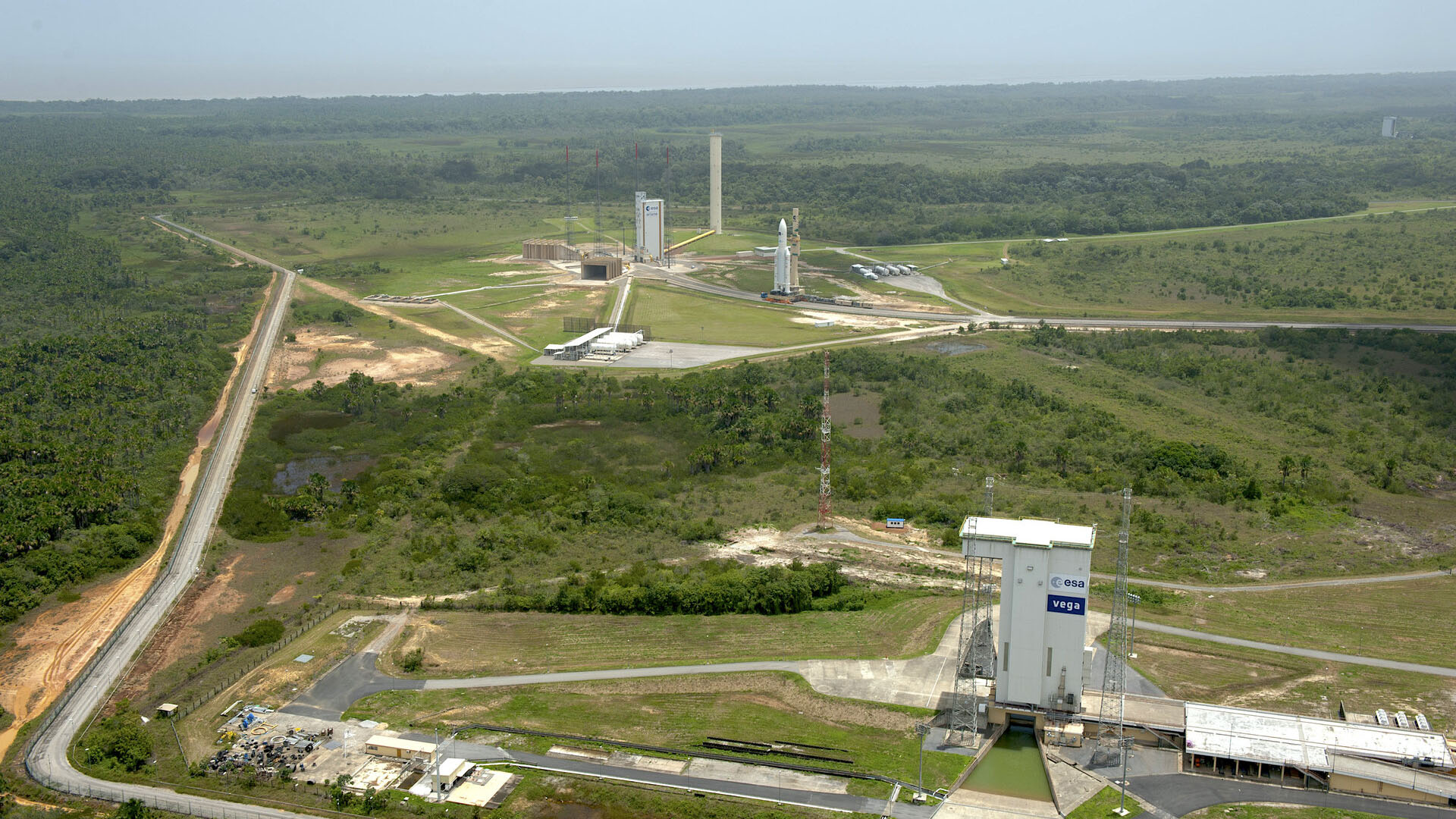
Finally, the surroundings of Kourou are hilly, which is practical for installing tracking resources (radars and telemetry antennas) and checking the correct behavior of each shot. In addition, infrastructure (roads, telecommunications, aerodrome, port, etc.) partially existed. This facilitated the work of civil engineering to adapt and size them.
All the tech news at a glance
Add Numerama to your home screen and stay connected to the future!

An exclusive editorial, a guide, a reading summary and the editorial agenda: this is what you will find every Thursday in AlwaysPlus, the tech newsletter written by Julien Cadot. Register for free here!