According to TestMu AI, 81% of teams surveyed admit to having merged code produced by AI without fully understanding it. Its State of AI in Quality Engineering 2026 survey describes disparate control practices, while its leader recommends independent validation of the producing model.
Only 13% of teams prepare incident response
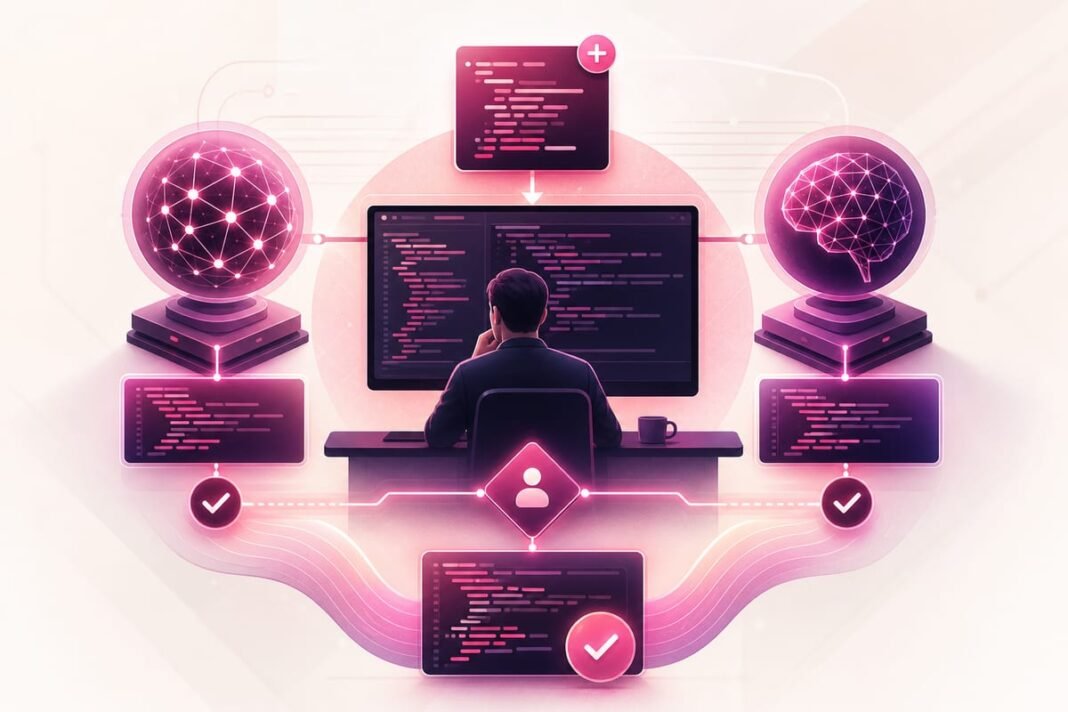
According to TestMu AI, only 13% of teams have an incident response system for previously published AI-related errors. Asad Khan, co-founder and CEO of TestMu AI, recommends subjecting all AI production to a validation system independent of the model from which it comes. This check should take place before any merger, then after each modification.
The manager affirms that the teams surveyed applying this discipline notice fewer defects in production. He predicts this practice will become the norm among engineering organizations that deliver code with AI.
The evening letterFree · 7 p.m.
AI transforming business?
AI strategies, movements and tricks deciphered, every evening in 5 minutes. Free.
Included upon registration: our selection of the best AI guides & comparisons.
Choose your pace
Free · No spam · Unsubscribe in 1 click
A second model does not guarantee understanding
Some teams outsource code evaluation to another large language model. For shipping misunderstood code, the survey indicates a proportion of 29% among teams using a model as a judge, compared to 15% among those who do not use this method.
According to Asad Khan, the use of AI now covers writing code as well as producing tests. Teams are also increasingly entrusting it with the assessment of their ability to be delivered.
Automated controls concern 41% of teams
Before integrating the generated code into an existing database, often already in production, 41% of teams carry out automated checks, according to TestMu AI. Human review is practiced by 55% of teams; 51% involve a team dedicated to quality assurance.
Asad Khan believes that verification capabilities are growing more slowly than the volume of code produced.