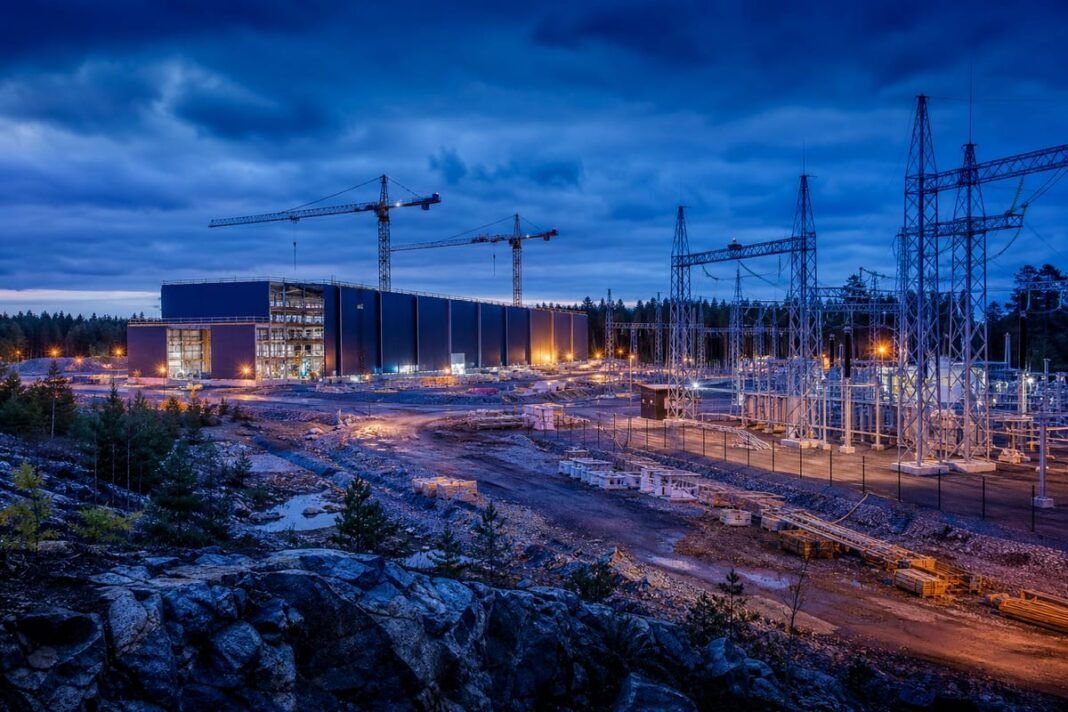
Finland asks Google to stop work on 13 billion euro data center expansion. Environmental rules are blocking two project installations, despite already having access to the Nordic electricity grid.
Projects slowed down by rules and local residents
In the United States, states where Democrats won decisive midterm elections account for about 45% of planned data center capacity. A significant part of the projects could thus be subject to political scrutiny. In Texas, where rules regarding high electricity loads are being prepared, a pre-election poll from the University of Houston indicates that 99% of likely voters want to make data centers pay for necessary network adaptations.
In Las Vegas, during a professional conference, builders and their advisors admitted their lack of listening to the residents of the planned sites. Operators and advisors also admit to having poorly communicated with communities about new AI data centers.
Land, contracts and financial guarantees
Land acquisitions for AI facilities reach $6 billion, while energy premiums rise. Public services demand certainty from manufacturers; in return, they need a guaranteed electricity supply. This mutual dependence strongly influences the selection of locations.
The evening letterFree · 7 p.m.
AI transforming business?
AI strategies, movements and tricks deciphered, every evening in 5 minutes. Free.
Included upon registration: our selection of the best AI guides & comparisons.
Choose your pace
Free · No spam · Unsubscribe in 1 click
Microsoft has broken its agreement with Nscale for a planned site in England after a power supply delay. Nscale’s contract portfolio represents $103 billion.
Nvidia is also taking financial risks, with $118 billion in guarantees intended to secure data center capacity and semiconductor supplies. These commitments support the growth of its AI activity.
Norway suspends network reservations
In Norway, the capacities already connected, reserved or requested represent 32.1 GW. The country has frozen new capacity reservations for data centers while it prepares power system protections.
OpenAI, for its part, has made a national commitment to energy flexibility: the company wants future sites to reduce their consumption during periods of electrical tension. Its campus in Georgia is the first example, but several key provisions of the agreement remain confidential.
More broadly, developers make commitments to public services and local communities.
Lambda deploys an optical network for its GPUs
Lambda puts Nvidia’s photonics technology into production in an AI computing package bringing together 10,000 GPUs. At this scale, the deployment tests claims about the power and reliability of Nvidia’s optical architecture.
The requirements also differ depending on the uses: inference does not require the same infrastructure as training. It favors reduced latency, hardware chosen according to the tasks, as well as suitable electrical and cooling devices.