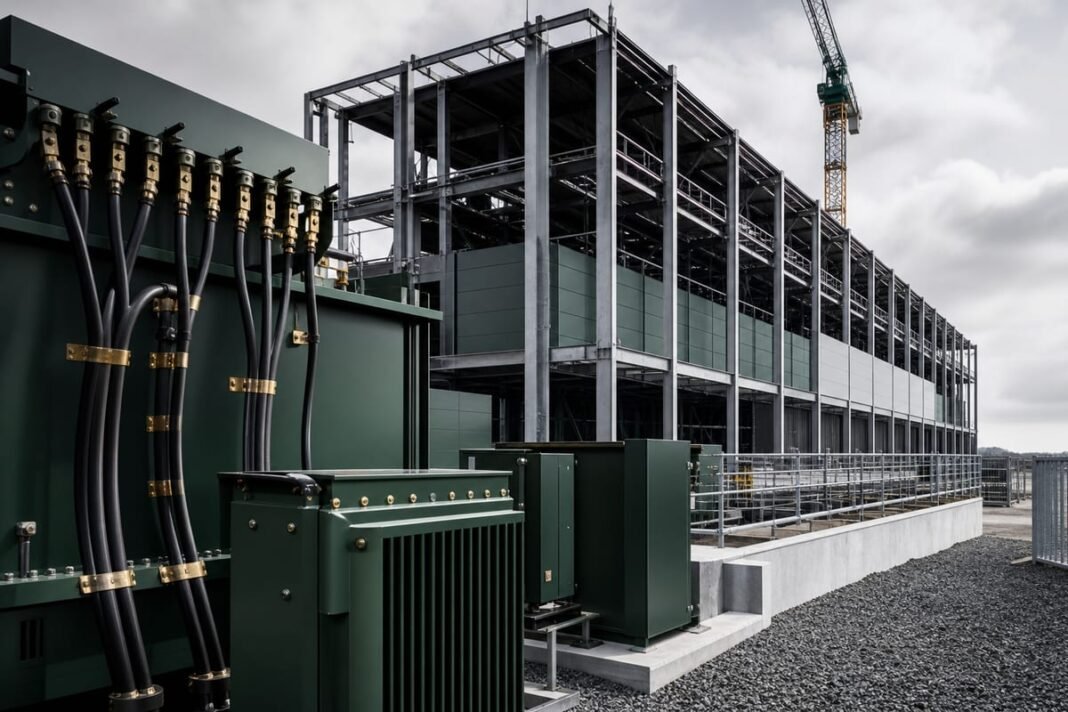
In the UK, Ofgem is proposing new requirements for electricity connections, while data center projects represent, according to the regulator, at least 80 GW of the recent increase in demands. Announced projects do not necessarily correspond to funded and ready-to-operate facilities. At the same time, memory suffers an effective shortage.
Nvidia proposes to invest in OpenAI
Nvidia has proposed an investment of up to $100 billion in OpenAI, coupled with the deployment of at least 10 GW of the manufacturer’s systems. In December 2025, the company clarified, however, that the final agreement remained to be concluded. It also indicated that it would not include any purchases from OpenAI in its chip reservations already recorded.
Chipmakers are increasingly investing in companies that are or could become their customers. When a beneficiary uses part of these funds to purchase equipment from its investor, the relationship simultaneously involves an investment and potential sales of equipment. The IT need can be genuine without being completely vendor independent.
Connection requests exceed funded projects
British electricity connection demands reached 125 GW, compared to 41 GW less than a year earlier, an increase mainly driven by data centers. Ofgem is considering commitment fees as well as additional validation steps. Developers should provide information on their commercial and financial preparation, particularly on their procurement procedures.
To open a center, you must first gather land, a power supply and equipment. Having a location and being in a hookup queue, even with a public announcement, does not necessarily mean you have signed a client. Financing may remain incomplete and power-up uncertain.
The evening letterFree · 7 p.m.
AI transforming business?
AI strategies, movements and tricks deciphered, every evening in 5 minutes. Free.
Included upon registration: our selection of the best AI guides & comparisons.
Choose your pace
Free · No spam · Unsubscribe in 1 click
Manufacturers repurpose already scarce memory
In the memory market, the tension concerns existing supplies. TrendForce reports an increase of approximately 93% to 98% in contract prices for conventional DRAM in the first quarter of 2026. Vendors favor servers, while cloud companies compete for available volumes. SK Hynix warns that the shortage of high-bandwidth memory, or HBM, could extend into 2030.
Samsung, SK Hynix and Micron account for around 90% of the DRAM market. Their reorientation towards HBM and high-margin server memories has restricted conventional volumes intended for other uses. Smaller buyers struggle to obtain allocations compared to large cloud groups. The shift comes after production cuts during the 2023 price crash, when SK Hynix reported an operating loss of 7.73 trillion won.
Investments continue: Micron plans to spend more than $250 billion on manufacturing and research in the United States by 2035. But a factory requires several years of work, equipment and qualification. For the short term, TrendForce mainly expects process-related gains, rather than a strong expansion of semiconductor wafer processing capabilities.
Hiring a new factory requires anticipating needs beyond several generations of components and AI products. Even before volume manufacturing, more economical models or new architectures could modify the volumes of memory required, or their nature.
Engagements and activity rather than announcements
A binding customer contract, a non-refundable deposit, an assured electrical supply, equipment purchased or a project started correspond to commitments that are more difficult to undo than an announcement. After opening, revenues from external customers and actual usage provide more information than the advertised capacity. Deployment can also move forward in stages, as needs, utilization rates and yields become measurable.