The miniaturization of electronic equipment imposes new constraints on component manufacturers. Circuits must occupy ever less space, without compromising their reliability or their resistance to electrical disturbances.
It is in this context that STMicroelectronics announces, on November 20, the launch of the TVS221SC-1T2, a new protection component against transient overvoltages (TVS, Transient Voltage Suppressor). According to the Franco-Italian manufacturer, this device occupies 60% less space than some conventional protection solutions, while maintaining a high capacity to absorb surges.
This progress may seem modest on the scale of an entire device. But on an electronic card, where several dozen components can coexist, space savings facilitate the design of smaller, lighter products or those with additional functionalities.
Why this small component can make a big difference
Electronic circuits are sensitive to sudden voltage variations. A discharge of static electricity, for example when a person touches a connector, or a voltage spike on a power line can be enough to disrupt their operation, or even damage certain components.
To limit these risks, manufacturers integrate TVS which are responsible for absorbing or diverting very brief surges before they cause damage. The TVS221SC-1T2 fulfills this function in a small format, measuring just 0.6 × 1 millimeter.
And despite its small size, it can withstand current pulses of up to 16 amps. STMicroelectronics also claims a clipping voltage of 26.2 volts, including at high temperatures up to 125°C. In other words, the component is designed to limit the voltage transmitted to the protected circuits, even in demanding thermal environments.
Finally, its very low electrical consumption limits energy losses, an advantage for battery-powered equipment.
Smaller connected objects, without neglecting their reliability
With this innovation, STMicroelectronics targets industrial equipment, household appliances, home automation systems and certain electronic devices intended for the health sector.
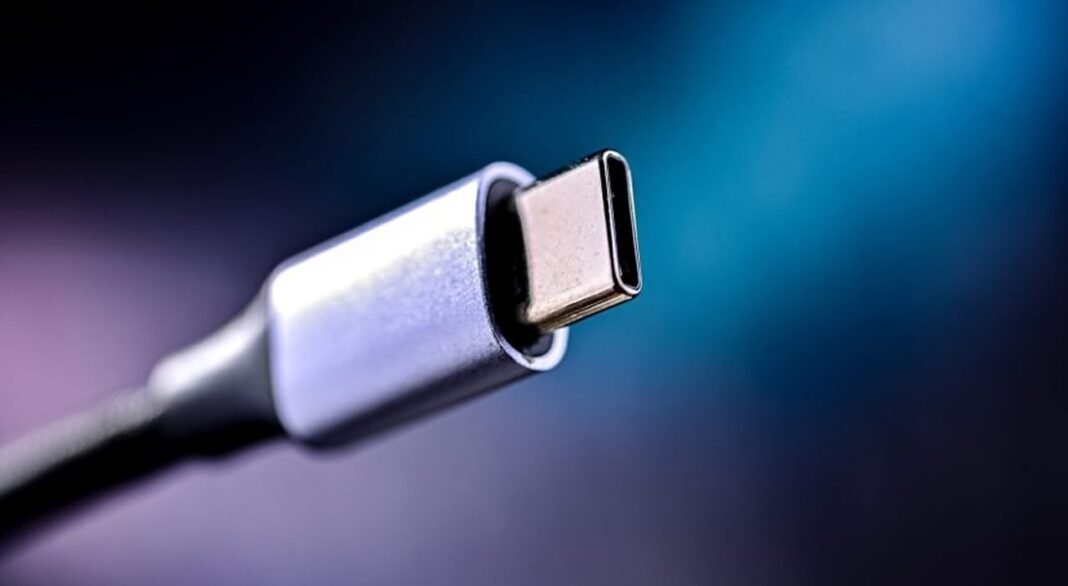
The component can also protect the power lines of USB-C ports, now found on many devices. These connectors are potential points of exposure to electrostatic discharge and electrical disturbances.
For manufacturers, the main benefit is being able to devote less printed circuit area to electrical protection. The freed space can be used for other components or help reduce the overall footprint of the board.
https://www.zdnet.fr/wp-content/uploads/zdnet/2026/11/cables-usb-c-les-differencier-pratique.jpg https://www.zdnet.fr/actualites/stmicroelectronics-un-compeutant-60-plus-petit-pour-des-apparatus-electroniques-plus-compacts-et-mieux-proteges-508267.htm?utm_source=rss_feed&utm_medium=link&utm_campaign=unknown