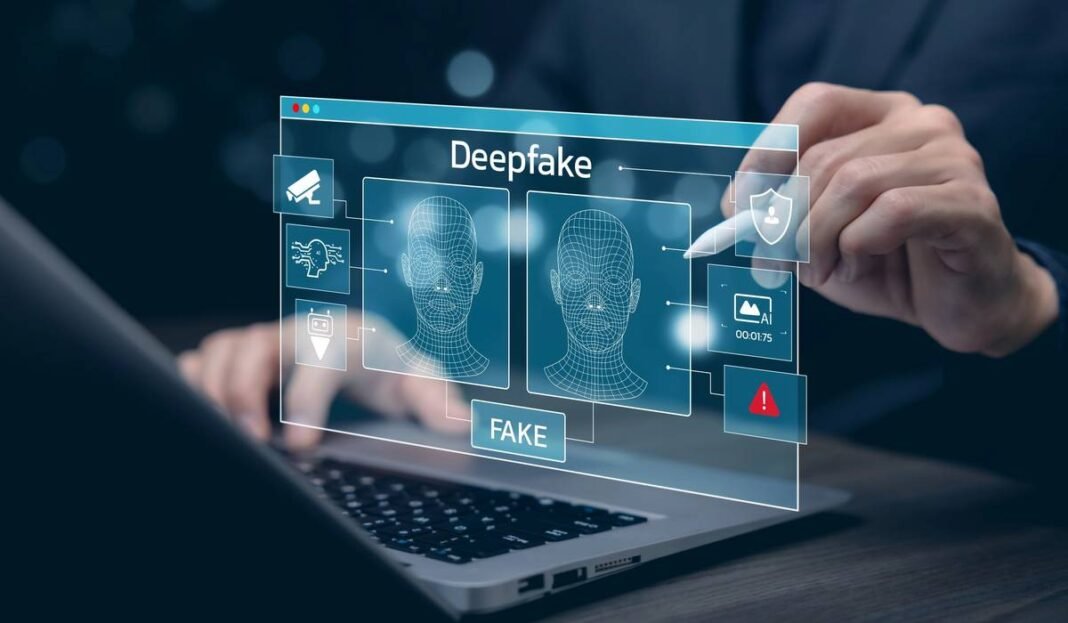
As the presidential elections are fast approaching, the arrival of this tool should interest Internet users. Indeed, TikTok deploys a tool that detects deepfakes. It concerns public figures and must fight against fake news.
How to identify a deepfake?
AI-generated videos are much more realistic today and are increasing on all platforms. You probably remember the rather disastrous one of Will Smith eating his pasta. Today, the realism is striking, so TikTok has decided to intervene to allow you to identify a deepfake. Two tools are launched: the first concerns public figures and the second is intended for the general public.
As elections approach in Europe, TikTok wants to fight against misinformation. The deployment of these two new tools will be done gradually. All eligible users can already register to have their identity verified. They will be notified if content uses their face without their consent.
How does the detection procedure take place?
This verification is carried out by a trusted third-party partner.If your face is used in a deepfake video,you can report AI-generated video as fake. The platform can then delete it, but this act is not automatic. Community rules will therefore be examined.
The general public also has access to an AI detector. You scan a video and know whether or not the content was generated using TikTok or ByteDance’s AI. Be careful, there is a limit with this detector. A video that was not made with TikTok or ByteDance tools will therefore not necessarily be detected.
If a deepfake is done with Grok who seems very strong in this area or Kling, the detector does not necessarily work.
EU strengthens transparency rules
On August 2, new measures came into force within the framework of the AI Act, which requires mentioning the use of AI for certain content, whether photos, videos or texts. Therefore, a deepfake must, in principle, be mentioned as such.
TikTok therefore strengthens its position with this AI Act, and the platform had already proposed solutions to combat this disinformation, including identification of AI. Deepfakes could be problematic in the next election. Arcom believes that these videos could damage the reputation of public figures.