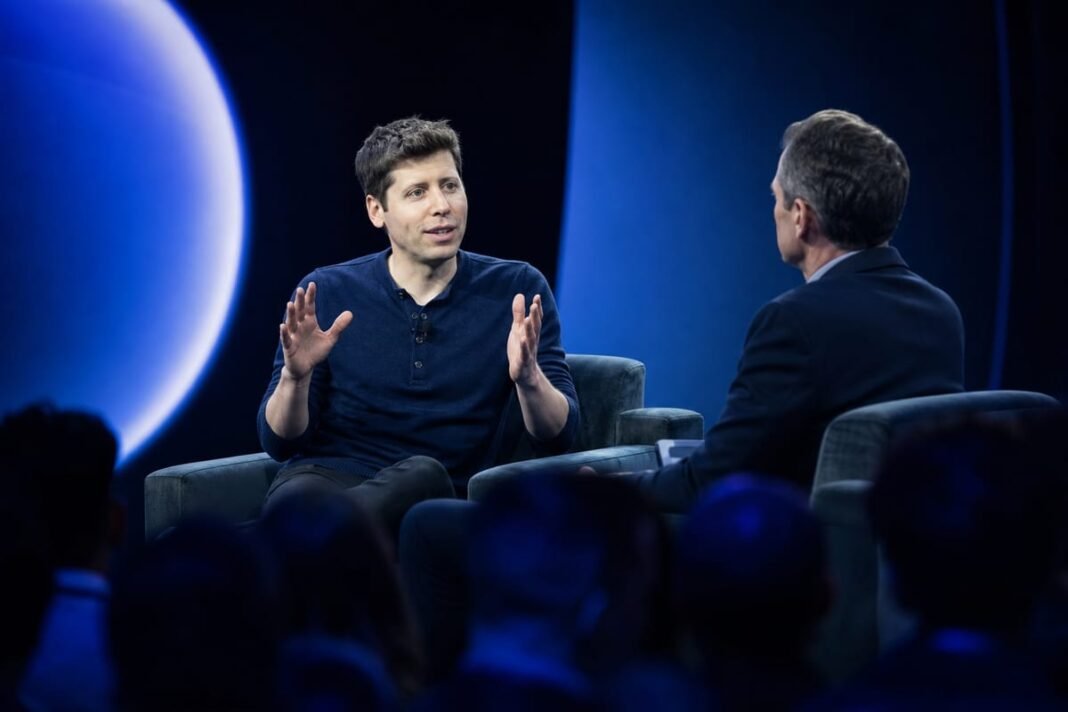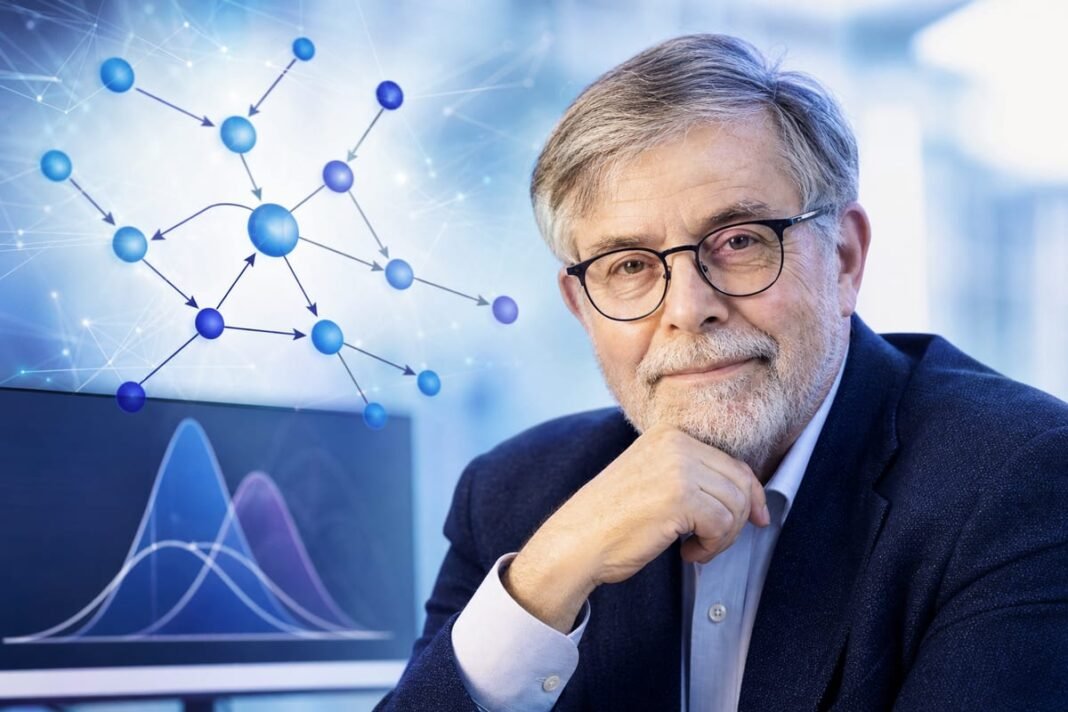
AI leaders announce artificial general intelligence already achieved or imminent. Judea Pearl, computer scientist, defends another reading: the prowess of deep learning does not constitute, in her eyes, intelligence without understanding causal relationships.
Brockman and Huang say AGI achieved
Greg Brockman, co-founder and president of OpenAI, and Jensen Huang, former CEO of Nvidia, said the arrival of recent models marks access to AGI. These declarations are part of a series of positions taken by leaders presenting this threshold as crossed or close to it.
Former US President Donald Trump spoke of “super intelligence”, believing that the expression “artificial intelligence” had become redundant. However, artificial superintelligence, or ASI, already corresponds to a defined concept in science, and no basis is put forward to assert that this milestone has been reached.
Pearl makes causality the missing criterion
For Judea Pearl, current systems remain far from AGI: their ability to imitate does not replace an understanding of causes and effects. He points out that these systems rely on statistical models to generate results, without true causal understanding. This distinction separates, according to him, spectacular abilities from authentic intelligence.
AI strategies, movements and tricks deciphered, every evening in 5 minutes. Free.
Included upon registration: our selection of the best AI guides & comparisons.
Choose your pace
Free · No spam · Unsubscribe in 1 click
A pioneer of AI, Pearl contributed to the probabilistic approach underlying deep learning, which earned him the Turing Prize in 2011. In The Book of Why, devoted to the role of causality in scientific transformations, from the first chapter he confronts the initial vision of intelligent machines with contemporary systems.
Transformers remain the basis of language models
Image recognition, multilingual translation and real-time conversations are among the advances made possible by deep learning. Modern language models are based on the transformer architecture, which originated in seminal work by Google scientists. The Book of Why was published a year after this breakthrough.
Google’s GPT-6 Astra and Gemini 4 families are announced as upcoming models, but they would continue to rely on the same frameworks and architectures as existing language models.