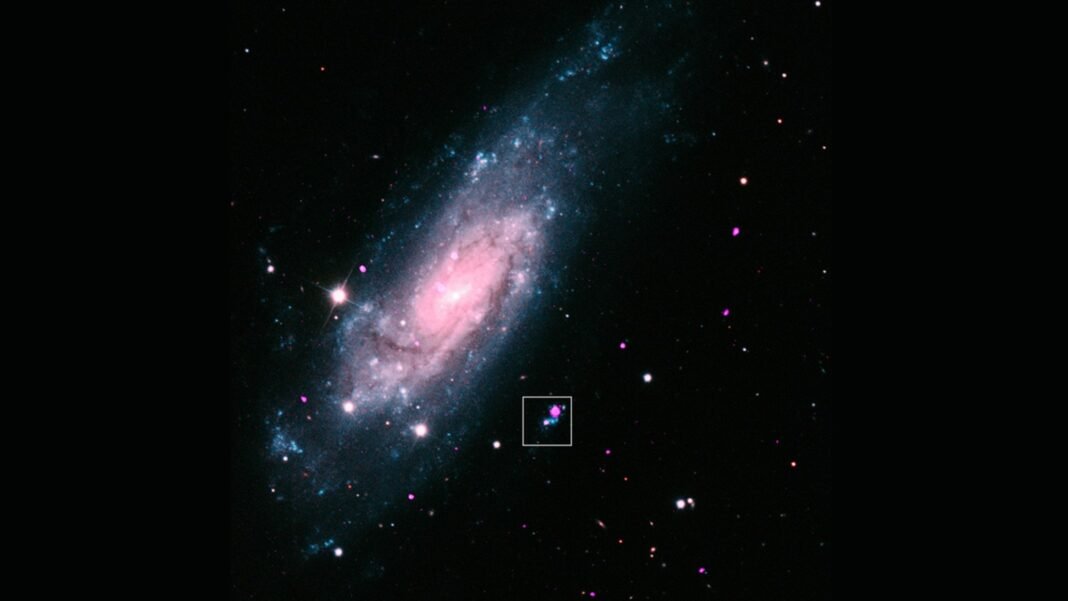
A particularly unstable star has been questioning scientists for nearly fifteen years. A study published this Monday, November 9, based on the Chandra telescope, finally finds an explanation for its strange behavior: a hidden companion which causes cyclical explosions similar to supernovae.
When the Chandra telescope captured it by chance in 2001 and 2002, the star AT 2016blu did not attract much attention.
Until January 12, 2012, when it exploded in what looked like a supernova, spotted by the supernova research program at the Lick Observatory in California. At that point, many telescopes across the planet turned towards it – but there was a problem. Not only did the signal not really resemble that of a supernova, but the star was still there and had stopped shining intensely.
Since then, astronomers have observed a cycle – with a period of particularly strong brightness that returns approximately every 113 days (or about three times a year) – before AT 2016blu returned to its usual state. In a study published this Monday, November 9 in the journal The Astrophysical Journal, a team of astronomers largely from the University of Virginia puts forward an explanation: a hidden companion.
27 explosions since 2012
The scene takes place 30 million light years from Earth – in the galaxy NGC 4559. The star AT 2016blu weighs at least 33 times the mass of the Sun. Astronomers have been monitoring it for around fifteen years to check whether its cycle of brightness continues regularly.
To learn more, the team turned to the Chandra space telescope. Active in space since 1999, it is specially designed to capture X-rays. Above all, it is the only X-ray telescope precise enough to distinguish AT 2016blu from another very bright source located right next to it.
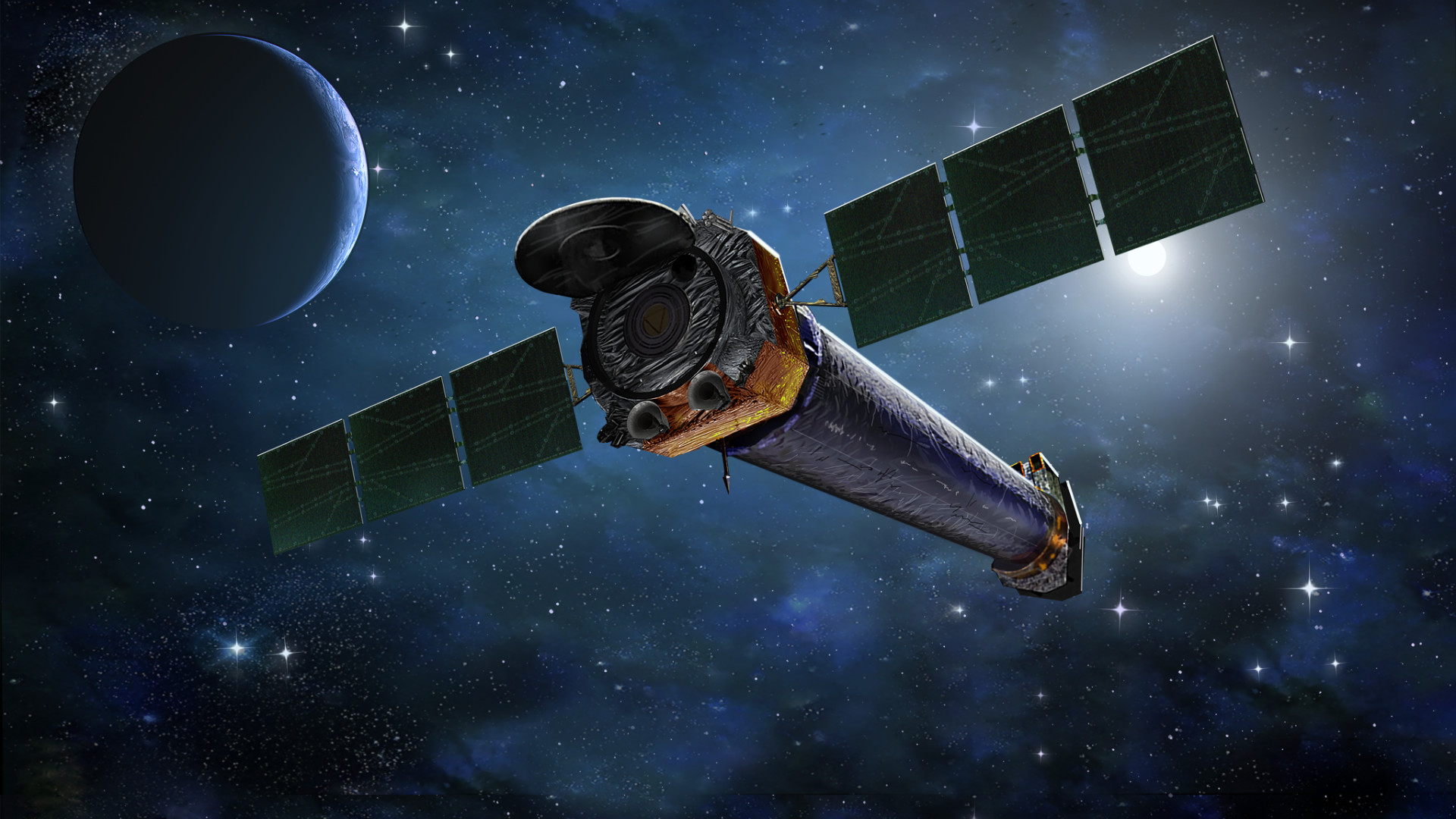
Between 2012 and June 2026, ground-based telescopes have recorded no less than 27 explosions of light coming from the star – in wavelengths visible to our eyes. Chandra only observed the star in X-rays at two times: in 2001-2002, before the eruptions, then during that of March 2026. At each of these 27 explosions, the process resembles that of a supernova, but the star emerges intact. During the March 2026 flare, the star was at least 100 times brighter in X-rays than in images taken by Chandra in 2001 and 2002.
A compact companion involved
For astronomers, the best explanation is this. AT 2016blu forms a pair with a neutron star or a black hole. The two stars revolve around each other in an oval orbit. At each close pass, this companion captures part of the material ejected by the star. This material rotates around it at a speed close to that of light and heats up to the point of glowing intensely in X-rays. Each explosion would therefore be the effect of this material being torn away by a tiny but extremely dense object.
This scenario also accounts for the strength of the X-rays emitted by the system. AT 2016blu is brilliant enough in this area to be classified as a candidate for the rank of “ultraluminous X-ray source”. Astronomers do not yet fully understand these rare objects. They also suspect that many of the abrupt changes in brightness observed on some stars before a supernova come from systems where a massive star orbits a compact object, or another massive star.
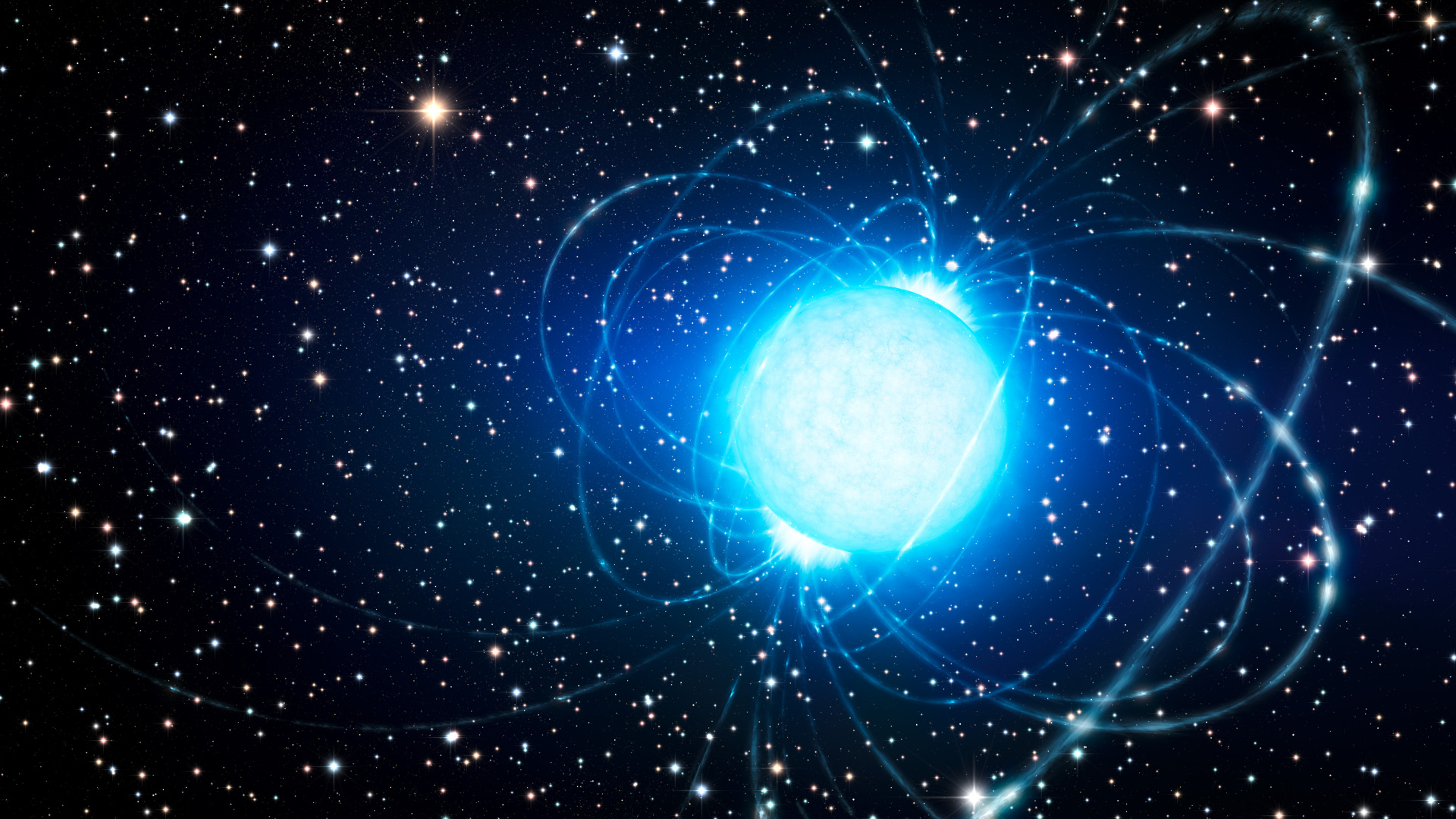
However, researchers were unable to precisely identify the compact object that serves as AT 2016blu’s companion, or say whether it is a neutron star or a black hole. It’s difficult to decide, because both types of objects are tiny and emit little light on their own. Chandra’s observations, however, make this companion the best explanation for the star’s eruptions.

All the tech news at a glance
Add Numerama to your home screen and stay connected to the future!