From November 16 to 20, the UN is holding a conference on the supervision of autonomous weapons. Military autonomy already exists at all stages of the engagement chain: observation, identification, selection and strike of targets. The challenge is to preserve human control over lethal decisions. Automation speeds up operations, but increases the risk of errors and illegal keystrokes, especially in ambiguous situations.
In 2017, a short film entitled Slaughterbots features a chilling commercial presentation: a tiny drone, a facial recognition device, an explosive charge, and an exploding mannequin. Presented with researcher Stuart Russell, this activist fiction from the Future of Life Institute – a controversial institution due to its proximity to certain American tech oligarchs – imagines the diffusion of these weapons and their use against civilians. It allows us to ask a highly political question: what happens to violence when machines can seek out and kill people without human intervention?
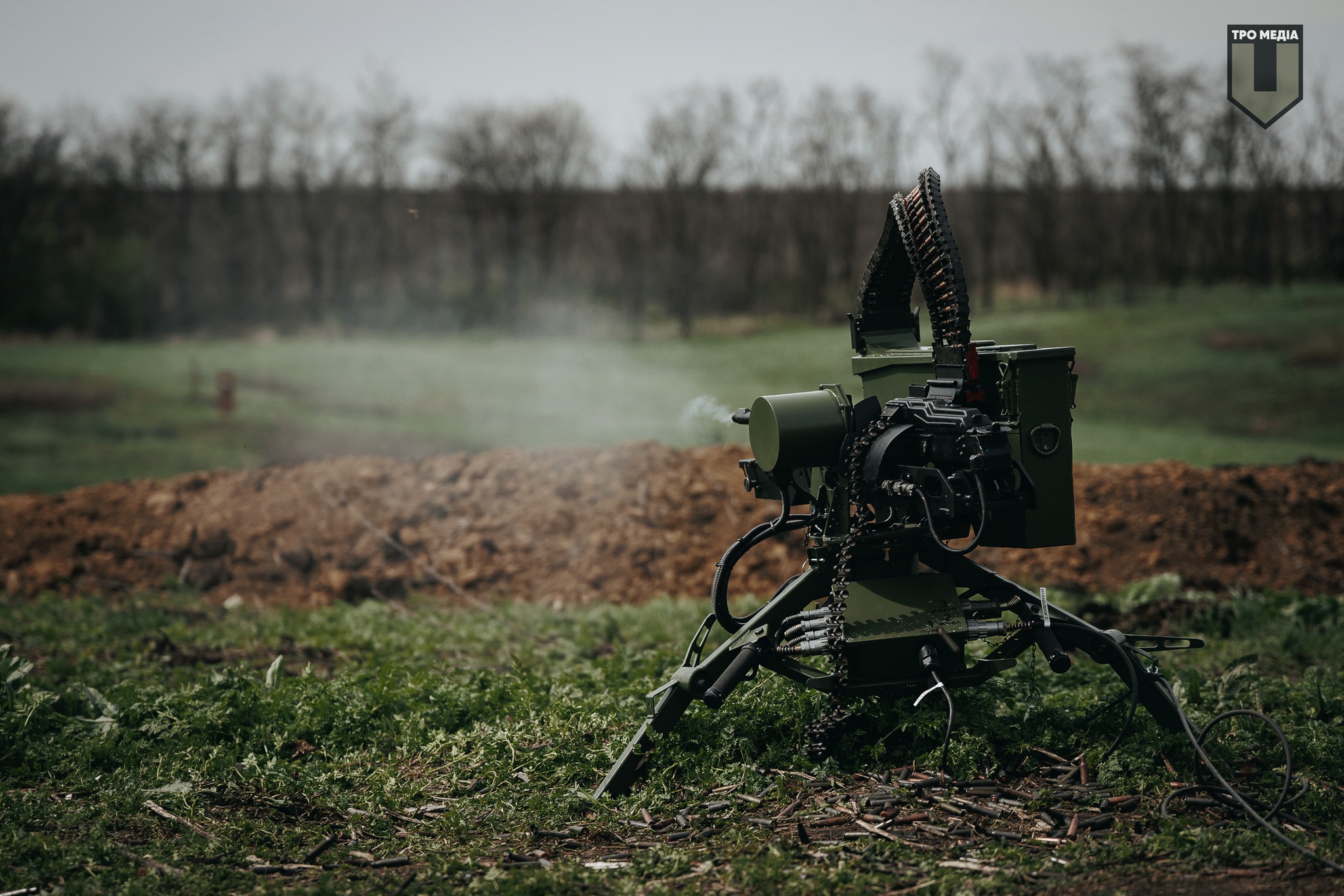
In September 2026, the question seems less futuristic. The Ukrainian Ministry of Defense announces tests of drones capable of detecting, tracking and then striking a moving vehicle, without piloting during final approach. The decision to strike, however, seems to remain human: only the final phase is carried out without a pilot. This limit should push us to keep a certain distance from the images of these new killer robots that are circulating, and to distinguish between unmanned weapons and autonomous weapons. The demonstrations do not tell us who chose the target, or authorized the shooting, exaggerating the impression of autonomy of these weapons.
To understand from what stage we could talk about fully autonomous weapons, the functional loop (loop which allows us to represent the entire “kill chain” of the military engagement chain) OODA offers a useful grid. Developed by the American Colonel John Boyd, it articulates four functions: observe, orient, decide, act. The function Observe consists of collecting information; Orientto interpret it; Decide consists of choosing the action; and finally Act to execute it and experience its effects. A fully autonomous weapon should, in theory, be able to accomplish this entire functional loop on its own, without real-time instructions or piloting.
Observe and orient, two functions already largely automated in the field
The function Observe is already fully automatable. Software is able to detect shapes, track objects and compare captured images to learned categories. In August 2026, the Ukrainian authorities described artificial vision tools used by soldiers for navigation, object recognition and terminal guidance.
It should be noted that obviously, these technologies are efficient but highly dependent on the context. Above all, in a military context, adversaries will use all the capabilities at their disposal to deceive and pollute these observation capabilities.
The function Orient seems to also be able to be made autonomous. Contemporary systems can recognize objects, but also merge multiple sources of intelligence to infer behaviors, affiliations or relationships between individuals. All with the aim of categorizing people and objects — a civilian population on whose territory military action takes place, for example. The Israeli Habsora and Lavender systems illustrate this development, by automating a significant part of the processing and cross-checking of information necessary for the identification of potential targets (here, members of armed Palestinian organizations) within this population.

Black Friday: Plaud Note Pro at -20%
From November 19 to 30, the Plaud Note Pro goes to €149 instead of €189! It records your meetings, transcribes and summarizes them for you, just at the press of a button. The Plaud Note, NotePin and NotePin S are also 20% off. In short, it’s time to stop wasting time at work!
Their use has also caused a lot of ink to flow as they provide targets, which will then be supplied to kinetic devices (in other words, weapons). Validation times by humans then become very short given the mass of targets to be processed (from a few seconds to a few minutes per target). From this point of view, this “industrialization” of intelligence really raises questions. How can a staff really analyze and process target recommendations that are continuous, and which can exceed a thousand, or even tens of thousands?
This observation allows us to make the distinction here between automation of the collection of information and the choice of targets, and the final judgment as to the opportunity to strike. The determination of the probability of belonging to an armed organization, the identification of a characteristic behavior or the monitoring of the geographical location of an individual (all indices on which these systems are based in particular) can be automated but do not determine, in themselves, that an attack against this person is lawful at the moment considered within the meaning of the law of war.
We can thus imagine that the target person is in the process of surrendering, or that he or she is hors de combat, two cases in which any use of lethal force is prohibited. The circumstances surrounding a target therefore modify the assessment of the opportunity of a strike, ultimately replanting human arbitration at the heart of the arbitrations to be carried out.

Automatic weapons with no human validation other than ignition already exist
The function Decidefor its part, requires specifying what is delegated to the machine. The human can designate a particular target in advance, then let the machine pursue it. It can also define a target profile and a perimeter within which the machine will select what it attacks. Or the human can decide to delegate everything to the machine, and leave it free to hit a target of its choice. From this point of view, the definition of the International Committee of the Red Cross (ICRC) for autonomous weapon systems tells us about the selection and engagement of targets without human intervention as a criterion for being able to use this term.
Its execution without permanent monitoring is in fact already a reality in certain systems. A report from the Stockholm International Peace Research Institute (SIPRI) in 2017 documented autonomous navigation and engagement functions, notably in “fire and forget” type missiles (a human launches a missile and the latter then works without human supervision), or the close defense of ships. Systems like the Phalanx (a cannon that defends the approaches of certain ships) can thus automate a sequence going from detection to engagement of a threat. A complete functional loop, from detection to hitting the target, can therefore for a long time be closed without human validation other than switching on the system.
Behind the killer robot, the shadow of human decision
Extending this autonomous action function to new targets or to a more ambiguous environment is, however, more complex. If using a cannon autonomously to deal with a drone that is flying and has a direct trajectory towards a military boat seems entirely feasible today, the same weapon becomes much more difficult to use in the context of surveillance of a boat that would approach the ship and whose dangerousness would have to be analyzed before opening fire. Between the pirate and the fisherman, what evidence indicators is likely to mobilize the machine?
In summary, we can certainly say that the autonomy of military robots already exists at each stage of the functional loop, and therefore potentially across the entire chain for an actor wishing to do so. If each day that passes seems to bring ever greater disinhibition on this subject, conveying the idea of an ever-developing autonomy, it is necessary to understand that this autonomy is not defined by emptiness – with or without humans – but by functions and contexts: what does the human delegate, and when.
Let’s take the example of the defense of a warship using an autonomous cannon: if it is not a human who will himself differentiate on a case-by-case basis between a fisherman and a pirate before opening fire, it will be him who will determine the selection factors so that the machine then applies them, always with human arbitrations. It is therefore not because the weapon does not need a human to press a button to validate its action that human control is absent, this control also being carried out by the rules of engagement fixed to the machine… by humans.
Increasingly autonomous weapons, but for what purpose?
Ultimately, the real fundamental question is this: why delegate more to the machine? The answers are numerous. Giving machines more autonomy makes it possible to react more quickly, lighten the load on operators or continue to operate when communications are cut. Terminal guidance by artificial intelligence of drones aims, for example, to continue an attack despite the jamming of remote communications. The survival of military systems and armed forces would therefore push more and more important steps to be delegated to the machine.
However, the fact that this is possible and responds to an ongoing trend among players in the world of defense does not prove that any additional delegation is advantageous. Reacting quickly to a projectile and interpreting an ambiguous scene are not the same trade-offs, as we saw in the case of defending a warship. Accelerating decision-making can here reduce the time available to verify an identification for example, and potentially lead to a tragedy, as in the case of the destruction of the Iranian civilian flight attacked by the American ship USS Vincennes in 1988, which caused the death of 290 people, with target engagement software which was in “autonomous response” mode, and whose choice of shot was not questioned by the officers present.
From this point of view, the argument “the adversary will do it, so we must align” certainly describes a form of competitive pressure, but it demonstrates neither the reliability of autonomous nor machine systems nor the relevance of their use in a specific case.
In a 2018 article, two researchers outlined two rules aimed at guiding the development of autonomous weapons: the system must be able to remain sensitive to human reasons and intentions if they are relevant, and its operation must be able to be analyzed by humans who understand its capabilities. In other words, humans must be able to change the choices of machines, and they must be able to understand how it arrives at this or that decision.

Nicolas Minvielle, Doctor in economics, specialist in innovation and defense issues, Audencia
This article is republished from The Conversation under a Creative Commons license. Read the original article.

All the tech news at a glance
Add Numerama to your home screen and stay connected to the future!