While the El Niño episode shakes up global thermal averages, climatologist Éric Guilyardi deciphers with Numerama the functioning of this major ocean anomaly.
The tropical Pacific Ocean is going through a phase of strong disturbances. To better understand what is currently happening on a planetary scale, oceanographer and climatologist Éric Guilyardi, researcher at the CNRS, provides rigorous scientific insight.
In an interview with Numerama, the expert discusses the deeper mechanisms of this thermal anomaly. Check out our full video on YouTube to understand the scale of this phenomenon.
El Niño: how a global thermal anomaly works
Contrary to popular belief, El Niño is not just a passing storm. This is a major climatic disturbance lasting about a year, caused by a complex coupling between the ocean and the atmosphere. In normal times, the trade winds push warm waters westwards, particularly towards Indonesia, which causes cold waters to rise to the east, off the coast of Peru. But in certain years, these winds weaken, blocking the upwelling of cold water and causing abnormal overheating of the ocean. To explore these scientific bases in more depth, you can consult our file detailing the complex functioning of the El Niño phenomenon.
This cyclical disruption, which returns every 2 to 7 years, has been documented by local populations for generations. Éric Guilyardi also recalls the historical origin of this name, given by Peruvian fishermen in reference to the child Jesus due to a usual rise in sea temperatures around Christmas.
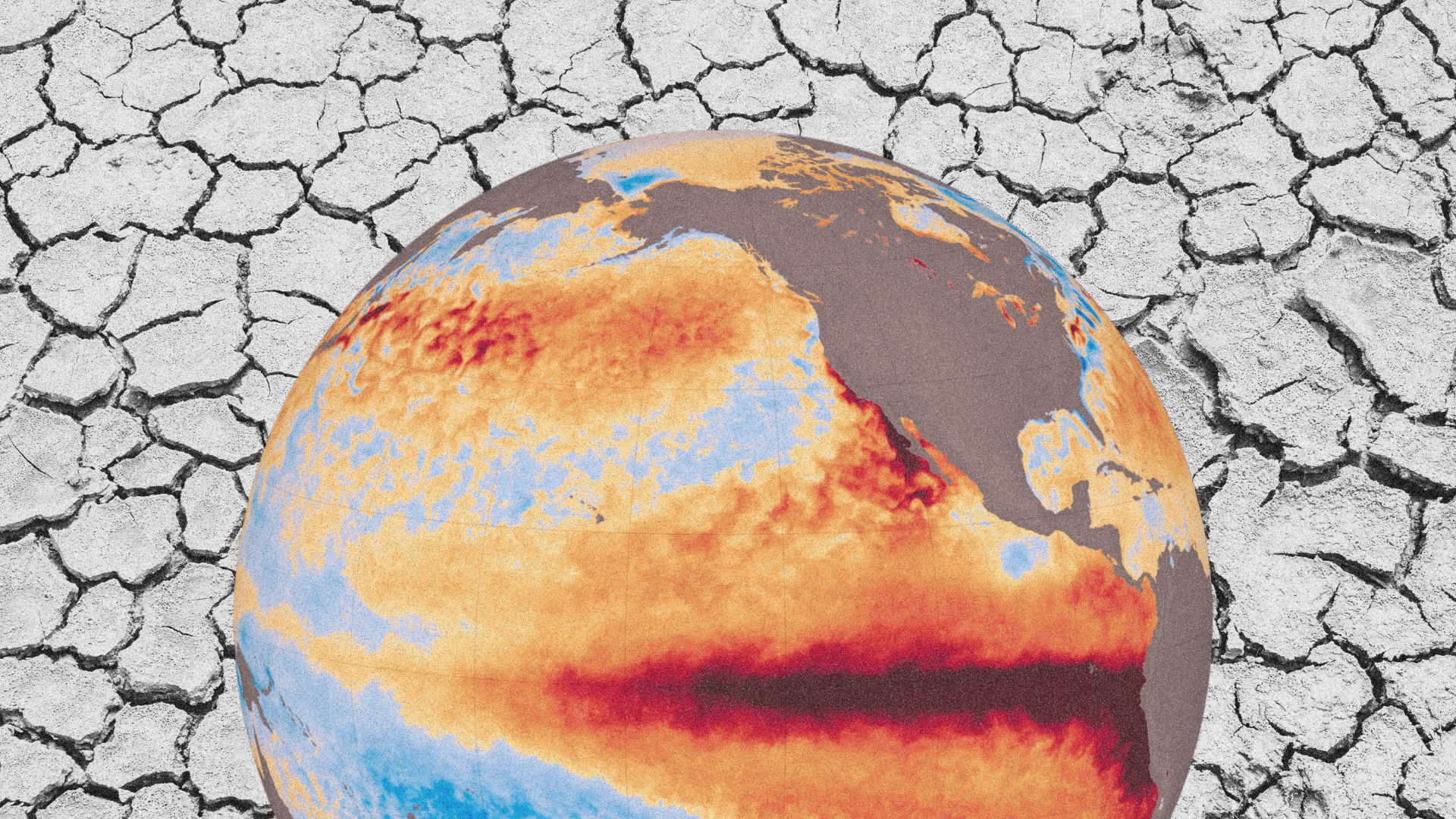
“ El Niño has absolutely no impact on European weather », underlines the scientist. If Western Europe escapes its direct consequences, the disturbances in tropical regions on the other hand prove to be of great magnitude. For the period 2026-2027, scientists agree on an extreme classification of the episode, characterized by a surface thermal anomaly greater than 2°C.
The overlap with global warming
The major challenge lies in the encounter between this natural anomaly and climate change caused by human activities. A warmer atmosphere contains more humidity, which directly increases the severity of precipitation. “ We have an average climate that is warming, so when we put the two together, we arrive at truly historic temperatures. », summarizes the scientist.
This anomaly warms about a quarter of the Earth’s surface, pushing the global average upwards. It is this physical mechanism which risks breaking new world temperature records. Science now makes it possible to predict these events 6 to 9 months in advance, offering companies valuable adaptation leverage to limit material damage.
To make sure you don’t miss anything, subscribe to the Numerama channel on YouTube.

All the tech news at a glance
Add Numerama to your home screen and stay connected to the future!

An exclusive editorial, a guide, a reading summary and the editorial agenda: this is what you will find every Thursday in AlwaysPlus, the tech newsletter written by Julien Cadot. Register for free here!