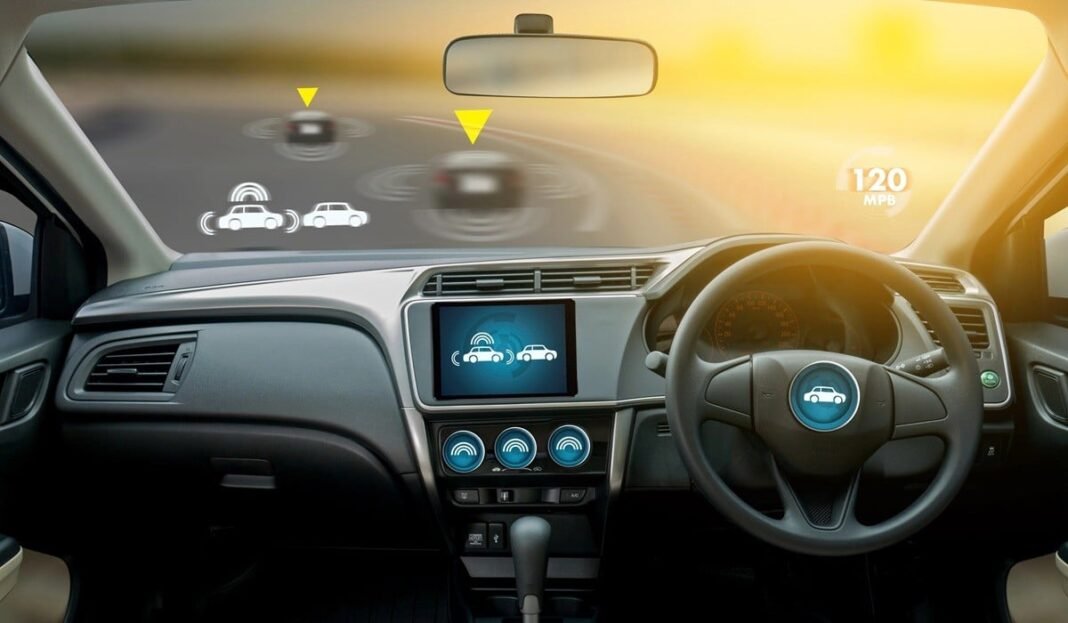
The Greater Paris Metropolis, the vehicle manufacturer Stellantis and the VTC operator Bolt have announced the deployment of a driverless VTC service by 2028. These new services will be deployed as a priority on the outskirts of the capital, because they will aim in particular to capture journeys by individual car. How will these new services complement public transport and taxis?
On October 23, 2026, the Greater Paris Metropolis, the car manufacturer Stellantis and the VTC operator Bolt paved the way for the deployment of autonomous mobility in the Paris region by launching a driverless VTC service by 2028. The first Peugeot electric vans in the “L4-Ready” version will be deployed in the peri-urban area of the north-west of Greater Paris. The project leaders aim to extend the service to around thirty municipalities by 2030.
Sites on the outskirts of Paris
If the first experimental sites have not yet been defined, the corridors could cover the areas of La Défense, Nanterre, Rueil-Malmaison or even the Saint-Denis hub, Villepinte and access to Roissy-Charles de Gaulle airport. This choice is undoubtedly linked to the level of autonomy of these first vehicles. Indeed, at level 4, they will require, to circulate, precisely mapped areas in order to avoid the sometimes unpredictable congestion of intramural streets.
These future services respond to one of the mobility handicaps in the metropolitan area. Indeed, mobility in the Ile-de-France region is, very largely, centered on radial routes. However, the Metropolis, which has 7.2 million inhabitants spread over 130 municipalities, is nevertheless home to numerous scattered employment centers and poorly connected activity zones. This new service, particularly aimed at working people, will complement existing and sometimes incomplete offers, such as that of the bus, by offering a shared service in order to capture individual trips on the outskirts of Paris.
Capturing the mobility of the private car
It is also in this area that the share of individual cars is the highest. Personal vehicles represent a significant portion of travel in France and remain stationary 95% of the time. This service will therefore make it possible to offer shared mobility to limit the use of a second vehicle in homes. Indeed, the Île-de-France Mobility Plan (PDMIF) 2030, adopted by the region, aims to reduce mobility by private car by 15%. If the gradual opening of the Grand Paris Express strengthens the greater Ile-de-France mobility belt, autonomous shuttles will make it possible to provide the first and last kilometer connecting home or business areas to RER and metro stations. The other interest of robotaxis will be to offer a service at unprofitable times for traditional operators. Travel to activity areas at very early or late hours constitutes a significant market. The same goes for nighttime mobility during off-peak hours. The cost of a vehicle with driver prevents the development of such offers. Also, the Greater Paris Metropolis will supervise these services to avoid empty journeys.
A profitable service in low density areas?
Furthermore, artisan taxis and VTC drivers concentrate a large part of their services in the Parisian hypercenter, towards Parisian train stations and airports. Autonomous shuttle services will instead focus on short and medium distances, neglected by independent drivers for reasons of profitability.
This experimental phase will thus make it possible to verify whether the service can operate in a low-density area, before potentially deploying robotaxis to around thirty municipalities by 2030. The Metropolis will also study the impacts on local jobs. Indeed, the development of autonomous VTCs will create new jobs in maintenance, service management and data security. Social stakeholders will also closely monitor developments in professions linked to this new offer.