Here is a proposal for an opinion/analysis article on this hot topic.
Why Nvidia ultimately cannot do without Jensen Huang, despite the scandals that precipitated his departure
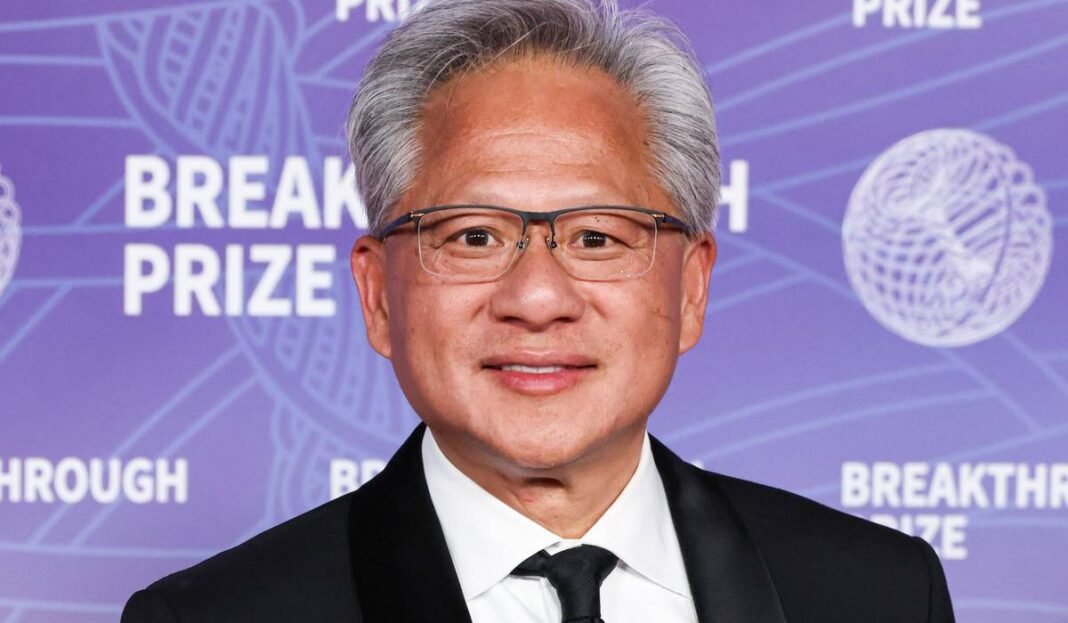
In the world of tech, empires sometimes falter to the rhythm of egos and controversies. However, the recent history of Nvidia has just offered us a turnaround of rare intensity. While ethical and managerial scandals seemed to have sealed Jensen Huang’s fate, the architect of the artificial intelligence revolution made a thunderous comeback. Behind this soap opera of governance lies an implacable reality: Nvidia, at the height of its power, remains deeply prisoner of the genius – and omnipotence – of its founder.
The fall of the “Godfather of Fleas”
A few months ago, the earthquake seemed final. Nvidia, which has become the stronghold of the world economy thanks to its graphics chips (GPU) essential to tech giants to train their AI, was shaken by a series of revelations. Alleged conflicts of interest, pressure on the supply chain, accusations of a toxic culture at the top of the hierarchy and gray areas over the management of certain acquisitions: shareholder and media pressure had become untenable.
Under pressure from the board of directors and to preserve the company’s reputation, Jensen Huang – instantly recognizable by his famous leather jacket and his Silicon Valley rockstar charisma – announced his withdrawal. A departure seen as the end of an era. The markets had shaken, but the Nvidia machine, equipped with billions of dollars and an army of brilliant engineers, had to continue to run without its historic captain.
The reality on the ground: an unmanned machine
This is precisely where the storyline stalled. Because if corporate governance requires heads when a scandal breaks out, technological capitalism obeys more brutal laws.
From the first weeks after departure, the cracks appeared. Nvidia is not a traditional software company; it is a hybrid colossus, at the crossroads of hardware, quantum physics, proprietary software ecosystems (like CUDA) and semiconductor geopolitics.
However, Nvidia’s strategy was not based on a five-year plan written in a management manual, but on the intuitive, quasi-messianic vision of Jensen Huang. It was he who, ten years ago, bet the future of the company on AI when everyone took him for a fanciful visionary. In his absence, major strategic decisions began to bog down. Historical partners (Microsoft, Google, Meta) have expressed concerns about the decision-making vacuum, and the share price, a barometer of confidence, has experienced worrying ups and downs.
The lethal weapon: CUDA and the irreplaceable vision
How can we explain that a group worth several trillion dollars is so dependent on a single man?
The answer is in one word: integration. Jensen Huang didn’t just sell chips; he created an ecosystem. CUDA, the software platform launched by Nvidia in 2006, has locked (in a good way) the entire AI industry into the company’s standards. Huang has always refused to separate hardware from software.
For investors and engineers, trying to drive Nvidia without it is like driving a Formula 1 car blindfolded. Potential successors lacked this rare blend: deep technical understanding coupled with aggressive boldness in international markets, particularly in the face of Sino-American tensions.
The return of the king: pragmatism or compromise?
Faced with the risk of destabilization of the global AI market – of which Nvidia is the beating heart – the board of directors had to swallow its principles. Internal investigations did not completely clear the CEO, but pragmatism ultimately prevailed over corporate morality.
Under the combined pressure of major investment funds and senior executives, an agreement was reached, leading to Huang’s triumphant return. Of course, safeguards have been put in place, and governance has been strengthened to prevent future abuses. But the message sent to the world is clear: in the frantic race towards AGI (Artificial General Intelligence), the world has not yet found a replacement for Jensen Huang.
Conclusion
The soap opera of Jensen Huang’s departure and return illustrates the fundamental contradiction of modern tech: we advocate decentralization, transparency and impeccable governance, but we remain dependent on quasi-monarchical figures to shape the future.
By taking back the reins, Huang saved his throne, and perhaps spared Nvidia an existential crisis. But this comeback poses a dizzying question: what will happen the day when Jensen Huang, for good, can no longer save his own empire?
Here is a rewritten, fluid and modern version of your content, stripped of unnecessary HTML tags:
Jensen Huang makes an express return to head Nvidia
Announced about leaving just two weeks ago, Jensen Huang has finally made his comeback at Nvidia. It must be said that the company and its investors quickly realized the void left by their emblematic CEO.
A dazzling comeback
Following a scandal linked to extramarital affairs, Jensen Huang was forced to resign. But his absence was short-lived: less than two weeks later, he regained his CEO chair.
This whirlwind departure demonstrates Huang’s crucial importance to the company. Internally and on the financial markets, the consequences of his departure were deeply felt. The announcement of his reinstatement, on Monday November 23, also provoked a surge in Nvidia shares of more than 30%.
An internal shock wave
Even though this forced transition only lasted about ten days, it was enough to sow trouble within the company. Very attached to their leader, the employees took the situation badly, especially since the board of directors had initially affirmed, on November 17, that a return of Huang was not possible.
Massive mobilization of employees and markets
Faced with this situation, there was widespread mobilization. An online petition, calling for the reinstatement of Jensen Huang, has collected more than 180,000 signatures (according to the magazine Time), while investors also showed their impatience.
It must be said that the boss of Nvidia has an essential address book in tech. He also benefited from strong support, including President Donald Trump – who reiterated his full confidence in him – Elon Musk, as well as the founder of Uber.
So much pressure which ended up convincing the board of directors to reverse course and rehire Huang, temporarily sweeping away the turmoil of the scandal which nevertheless continues to make headlines in the United States.
To go further