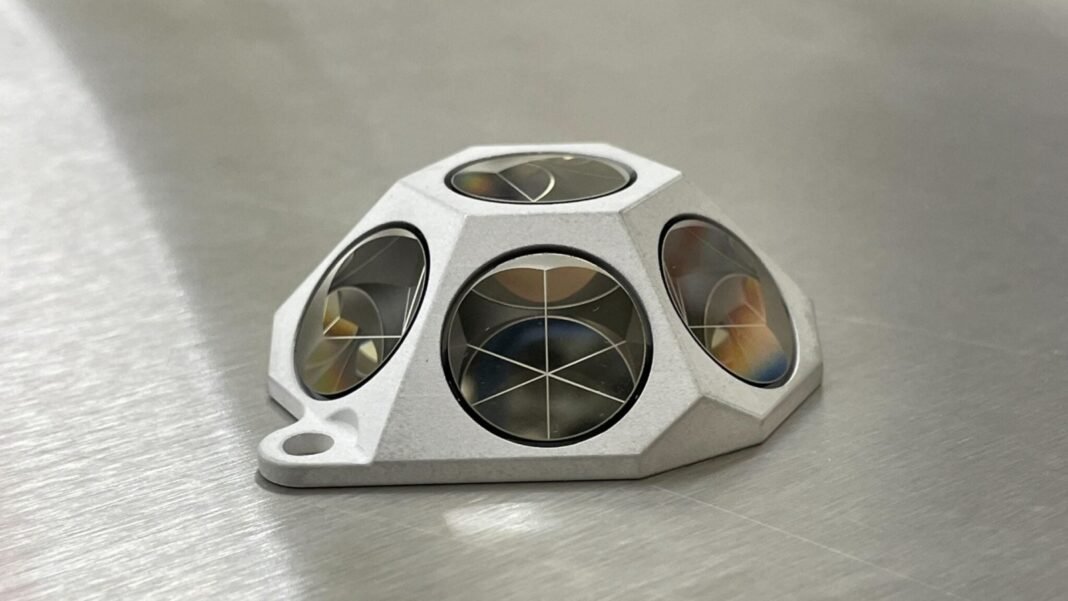
Using a system of laser retro-reflectors, a British company says it can spot satellites, even after they have stopped working. A first test in orbit, carried out this summer, has just validated the principle.
How can mirrors prevent the proliferation of space debris? According to the British company Foundational, these devices make it possible to measure the distance of a satellite to the nearest millimeter, even when it is no longer responding. This Tuesday, November 17, at the Space Tech Expo Europe show in Bremen, Germany, the company presented the results of a first test in orbit. At the beginning of October, Foundational had already announced a fundraising of 8.2 million pounds (around 9.6 million euros) to develop its technology.
The idea is this: if more and more satellites are deorbited at the end of their mission so as not to add to the ever-increasing mass of debris overhead, accidents can happen. If communication with a satellite is lost, it becomes impossible to bring it back down into the atmosphere. Ground-based radars and telescopes continue to track it, but with much lower precision than laser ranging, according to Foundational.
No connection, no energy source
For Foundational, it would therefore be necessary to install a device directly on the machine allowing it to be easily found in any circumstances. Foundational relies on retro-reflectors, mirrors capable of returning light exactly in the direction from which it came. Under these conditions, even a completely turned off satellite must be able to send back a signal if it is hit by a laser beam.
To ensure this, the London company has developed with the European Space Agency a small box called Retro-2, equipped with seven reflectors. It requires neither electronics, nor power supply, nor control of the satellite which carries it. It can therefore operate even on an out-of-service machine.
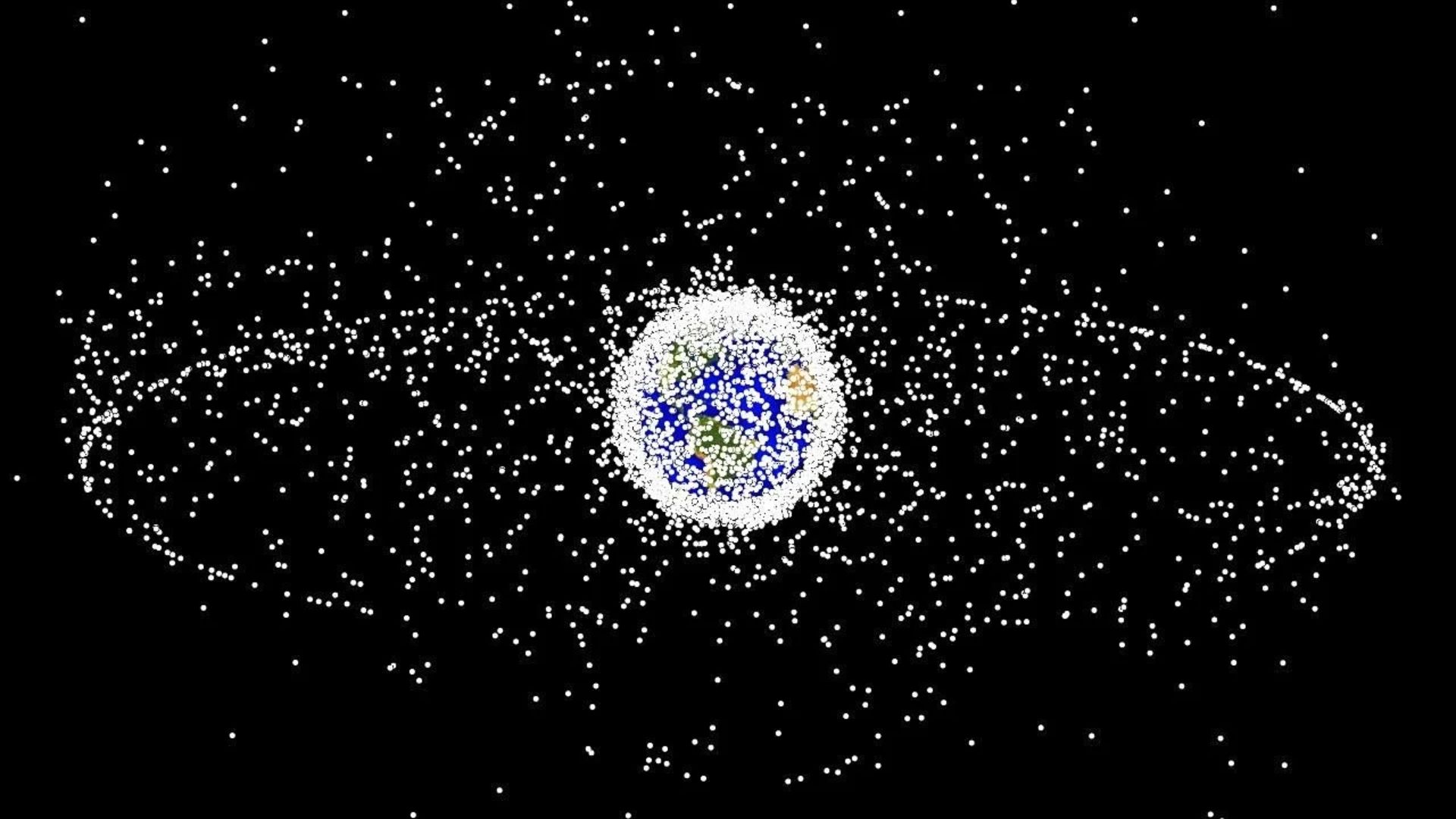
Retro-2 weighs only 50 grams. It was attached to a small satellite (a cubesat) on board an ION, the orbital transport vehicle from the Italian company D-Orbit, launched in July 2026 by SpaceX’s Transporter-17 mission. Over five passes, at distances between 609 and 866 kilometers from ground stations, it returned 6,111 laser shots. A single shot measures the distance of the satellite to within 4 millimeters. By averaging the measurements, the uncertainty drops to 0.6 millimeters, according to the company.
One solution among others
Arthur Cunningham, space systems engineer at Foundational, himself presents Retro-2 as a complement to other techniques put in place or to come to combat space debris, as he explained to Via Satellite. It is only useful for satellites that remain intact: a craft pulverized in a collision, for example, no longer has a reflector to target.
Retro-2 reflects light over an angle of 160 degrees: stations can target it from the horizon to the vertical, without the satellite needing to orient itself towards Earth. But a satellite in distress which rotates could, at times, present its reflector with its back to the ground and escape measurements. Finally, even 50 grams can count on the smallest satellites, where every gram on board is closely monitored.
At the same time, other solutions are being developed, also based on laser technologies, to accelerate the descent of these machines, for example. At the beginning of November, in Brasília, the European Space Agency (ESA) celebrated three years of its zero debris charter, which sets the signatories the objective of no longer adding debris to orbit by 2030. More than 250 organizations from 36 countries have signed it. However, the agency’s latest annual report notes that too few satellites are still leaving congested orbits at the end of their lives.
All the tech news at a glance
Add Numerama to your home screen and stay connected to the future!