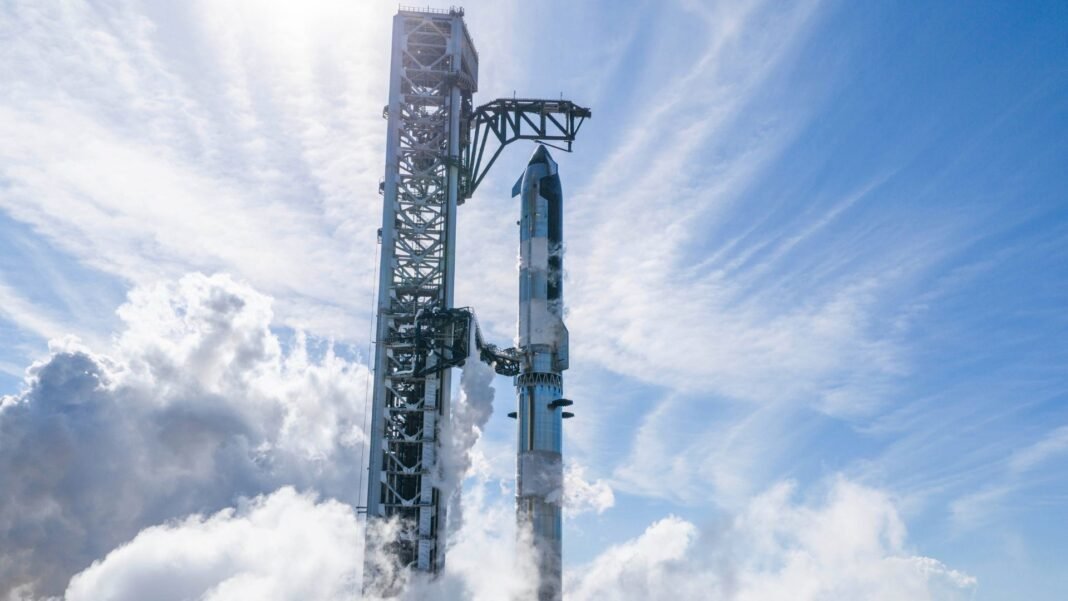
SpaceX’s Starship was caught by the arms of its launch tower in Texas this Saturday, November 14, 2026, after approximately 22 and a half hours of flight and 14 tours of the Earth. No orbital rocket upper stage had ever been recovered this way before, but the Super Heavy booster ended up in the Gulf of Mexico.
You almost have to see it to believe it. In nearly seventy years of orbital flights, never had a stage returned from orbit been caught by the tower that had seen it take off. And then SpaceX embarked on this somewhat crazy challenge, through the development of the Starship, a giant rocket that the American company wants to be fully reusable.
This Saturday, November 14, SpaceX achieved what no company or space agency had ever done. The upper stage of the launcher, called Ship 42, returned to the tower around 10:20 p.m. Paris time, after a space journey of more than twenty-two hours. No launcher had yet recovered its upper stage in this way. SpaceX itself abandons its Falcon 9 with every launch, and all previous Starships ended up in the ocean or were lost.
At SpaceX, we don’t shy away from our pleasure. “ It was the missing link », Launched Dan Huot, spokesperson for the company, during the broadcast, as reported by Space.com. He sees the “ Holy Grail » of spaceflight, a ship that plunges through fire before being grabbed mid-air by arms of steel. “ We caught a Starship, and now everything changes “, he added.
“ We did it! », enthused Kiko Dontchev, responsible for shooting at SpaceX. “ The Holy Grail of astronautics has just been reached “, added his college Jon Edwards. “ It was almost magical », added Jared Isaacman, the boss of NASA, who sent his congratulations to the company. And these are just some of the reactions circulating online.
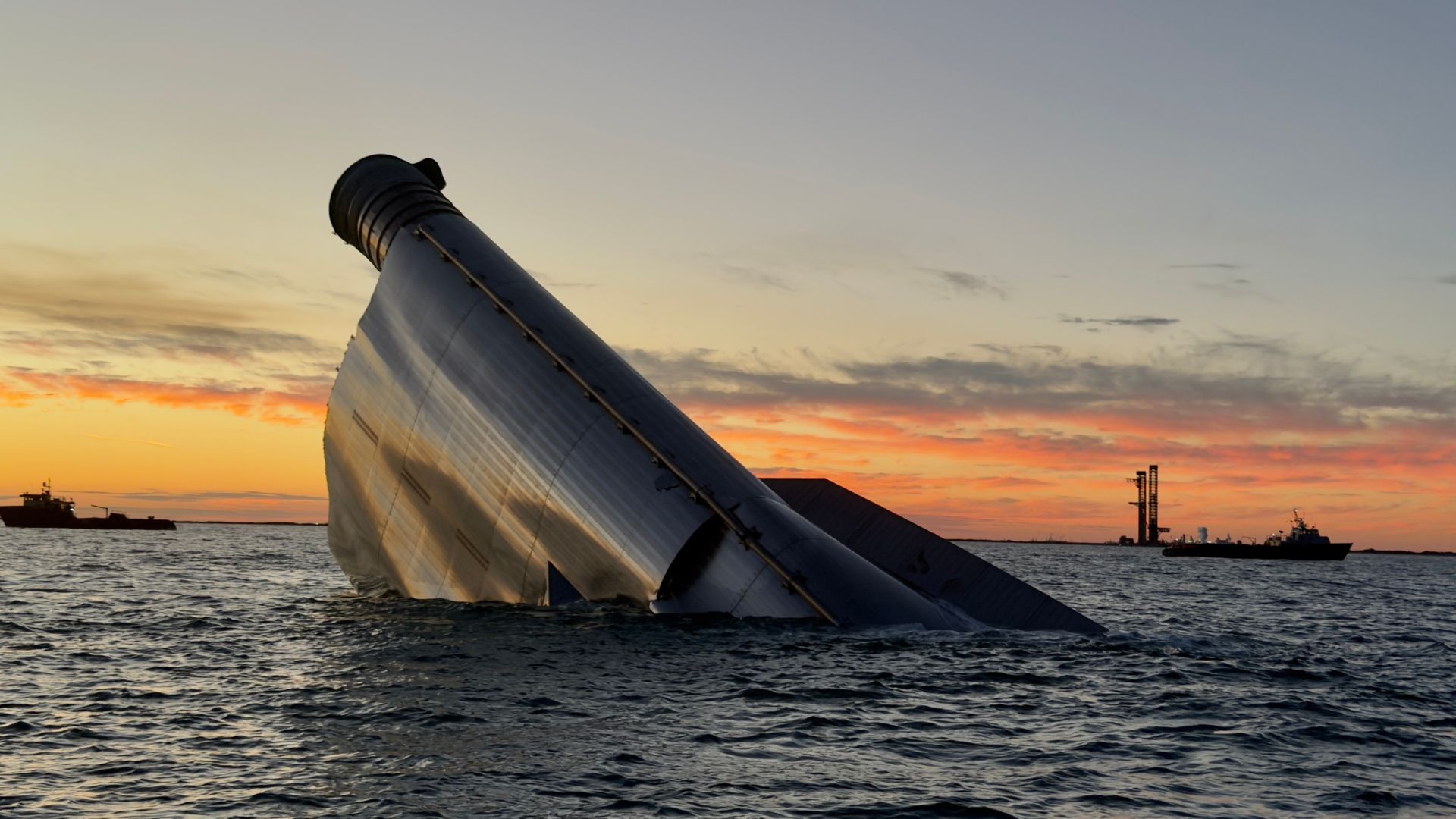
For the company, this success largely erases the lackluster start to this 15th Starship test flight. The rocket, which left Texas this Friday, November 13, should in theory be caught in two stages. First the thruster, then the ship. Unfortunately, the first stage, called Super Heavy, canceled its capture itself: a low fuel alert cut short its return maneuver, and its guidance system noticed that it was no longer in the right position.
The device ended up in the Gulf of Mexico, where it exploded just before hitting the water.
There therefore remained the entire second part of the mission to continue, and it was undoubtedly the most important. After all, SpaceX has already caught three Super Heavy boosters of its giant rocket with the mechanical arms of its launch tower, since October 2024. Above all, it was necessary to do it again with the new generation of the booster (the Booster 22 was the first Super Heavy V3 to attempt the exercise) and achieve a double capture, which will wait for a future flight.
Why catching up with Starship is a feat
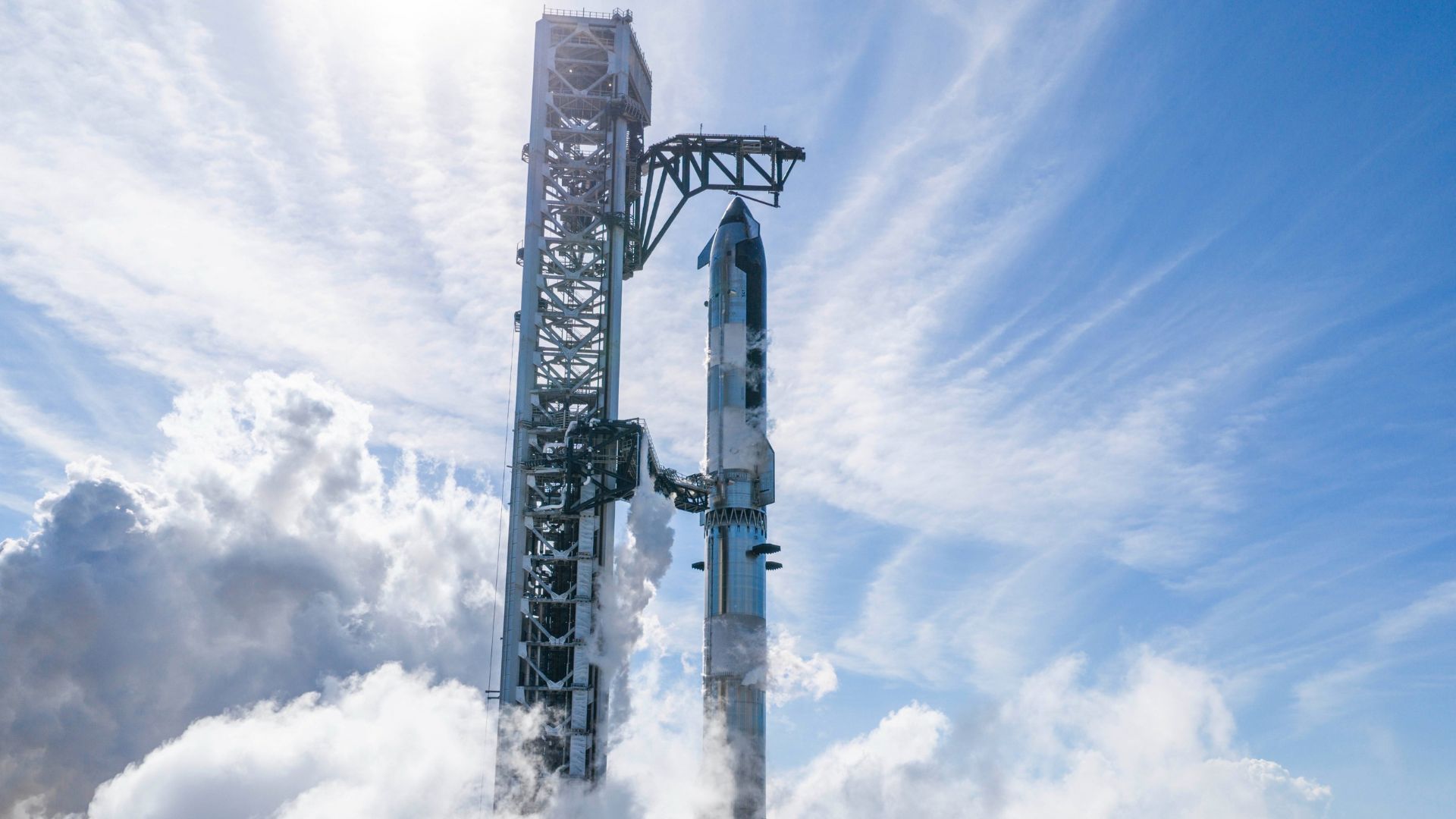
If capturing the Super Heavy is already quite an achievement, recovering the Ship is undoubtedly an even more remarkable feat. The spacecraft returns from much higher and much faster than the booster: in orbit, at an altitude of some 260 kilometers, it travels at nearly 26,500 km/h. It must first pass the fire test that constitutes atmospheric reentry, where the machine passes through a sheath of burning plasma.
To find out if the heat shield, made of tiles, would withstand the shock, SpaceX used its own cargo: three of the 26 Starlink satellites dropped into orbit carried cameras responsible for photographing the underside of the vessel, in addition to long-range ground cameras. It was in view of these images that the teams gave the green light for the return to Texas, rather than an emergency landing off the coast of Hawaii.
If the vehicle holds up, without falling apart, it must then decelerate and accurately return to the tower and move into position for its arms to grab it. To add to the difficulty, before joining Starbase, he had to fly over inhabited, although sparsely populated, regions of northern Mexico and southern Texas for the first time.
There, this 52 meter machine landed right between the arms of the tower, nicknamed Mechazilla. The feat is also due to the speed of the sequence. On September 28, a month and a half earlier, the 14th flight had only just placed a Starship into orbit for the first time, and this ship had finished its journey in the Pacific.
One mission later, his successor found himself in the arms of the tower, and that on the first try, while Elon Musk only judged success “more likely than not” before the flight. However, SpaceX did not quite obtain what it aimed for. Its mission description promised “ the first complete recovery of an orbital launch system », and the propeller, as we have seen, is missing.
Despite a mission not completely accomplished, it is difficult to see it as a half-failure. What’s more, Ship 42, during its space mission, released 26 satellites which will further expand the Starlink constellation. For SpaceX, this made it possible to kill two birds with one stone and, as during the previous flight, to already make the Starship profitable by entrusting it with operational activities.

All the tech news at a glance
Add Numerama to your home screen and stay connected to the future!